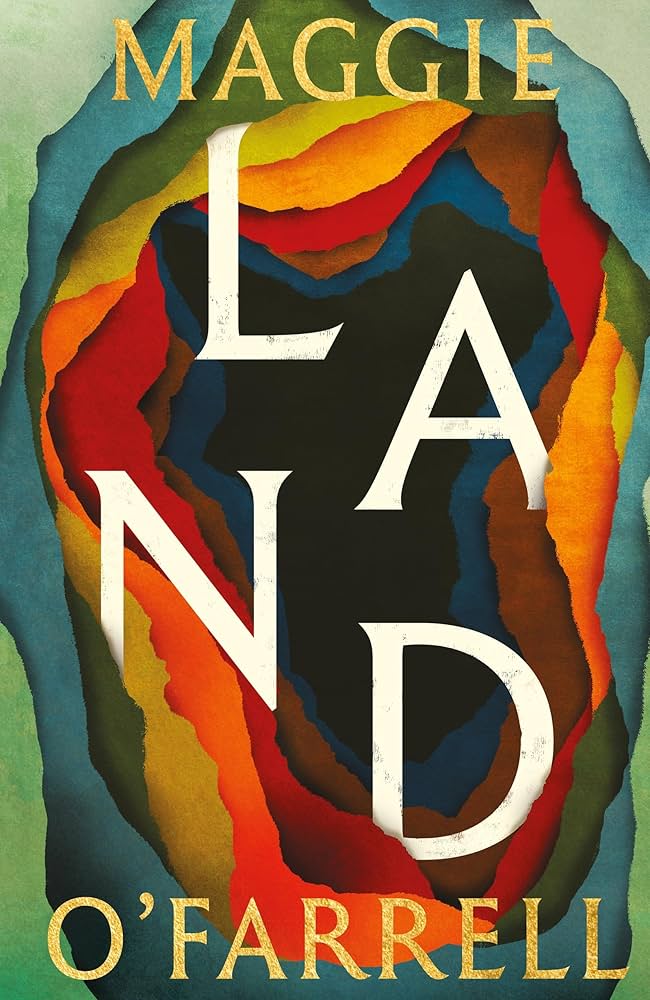
Land
| Published | 2026-06-02 |
| Series | standalone |
| Genre | Historical Fiction, Literary Fiction |
| Language | English |
| Publisher | Knopf (US) / Tinder Press / Headline (UK) |
| ISBN-10 | 0593320646 |
| ISBN-13 | 978-0593320648 |
📝Honest Review
i am being deliberately vague about what happens because it is one of those things that lands differently if you do not know it is coming. what i can say is that it sets the whole book in motion and the rest of Land is about what flows from that moment forward through years and generations. O'Farrell moves through time in this novel in a way that reminded me a little of how she handled the structure of Hamnet but feels more confident here. she will be in a scene and then suddenly she is twenty years forward and then she pulls back and you are in a different generation entirely and none of it feels disorienting because she has built the sense of place so strongly that you always know where you are even when you are not sure exactly when.
the land itself is the thing that holds it all together. there is a specific piece of ground in this book, a few acres of Irish soil, that keeps coming back through the generations and O'Farrell traces what happens to it and who has it and who loses it and what it costs people to be separated from it. this is not an abstract political point about colonisation although the politics are absolutely present. it is something more personal than that. she is writing about the specific grief of losing a place you belong to and the way that grief does not end with the generation that experienced it. it gets handed down. it shapes the people who come after even when they do not fully understand where the shape came from.
Liam is my favourite thing in the book and i want to stay on him for a moment because i think O'Farrell does something very difficult with him. he is ten years old and suddenly responsible for things he does not have the vocabulary to process. he has a dog who is loyal to him in the way dogs in books sometimes are and in real life always are and the relationship between the two of them is handled with a lightness that keeps the darker things in the story from becoming unbearable. i cried during a scene involving the dog and i am not embarrassed about it. it was the right emotional response to what was happening on the page.
the writing about the landscape of the west of Ireland is some of the best prose O'Farrell has produced. i said this in the what i liked section and i want to say it again here because i think it is the central achievement of the book. she is not describing landscape for atmosphere. she is writing about it as a living thing with its own history and its own claims on the people who live there and the people who want to take it away. there are passages here that made me stop reading and go back to the beginning of the paragraph and read them again not because i had missed something but because i wanted to be inside them for longer. that is a rare experience with any book.
the structure moves through generations and i want to be honest that not every generation gets the same depth. there are sections where O'Farrell is moving faster than i wanted her to and i felt the compression in a way that occasionally broke the spell a little. this is a problem the book has because it is ambitious not because it has failed. she is trying to do something with time that most historical novels do not attempt and when it does not quite work it is because of how much she is attempting not because she lacks the skill.
the ending is quiet and right and i will not say anything else about it except that it connects back to the opening in a way that made me want to start the whole book again immediately which is a thing that has only happened to me a handful of times as a reader.
five stars. it is the best novel i have read so far in 2026 and i would be surprised if it is not on every prize list worth being on by the end of the year.
Summary:
set in Ireland in the years before and during the Great Hunger, Land follows a father and his ten year old son who are working on a surveying job mapping land for British soldiers. when something happens to the father in a wood one day everything shifts and the boy Liam suddenly has to find a way to carry something much heavier than a ten year old should have to carry. the book moves through time and through generations and it is about what land means to people who have had it taken from them and what gets passed down through families even when nobody talks about it directly.
✅ What I Liked
i have read all of O'Farrell's novels and i think this is the best thing she has written since Hamnet and i say that knowing Hamnet won the Women's Prize and changed a lot of people's idea of what historical fiction can do. what she does in Land that she has not quite done before is work across time in a way that feels genuinely structural rather than just a technique. she goes forward and back through generations of the same family and the same piece of land and each movement adds something to what you understand about the present rather than just filling in background. the writing about the Irish landscape is extraordinary. i do not mean pretty nature description. i mean the kind of writing where you feel the specific cold of a particular morning in a particular field and understand why the people in the story cannot imagine living anywhere else. Liam as a character is one of the best children i have read in fiction in years. he is ten and he is carrying things no ten year old should carry and O'Farrell never makes him precocious or sentimental. he just does what he has to do and you love him completely by about page forty.
❌ What Could Be Better
the middle section moves through time quite quickly and there are one or two generations in the family history where i wanted more time and got less than i needed to feel the emotional weight properly. it is a problem of richness rather than thinness. O'Farrell has built such a full world that when she moves through parts of it quickly you feel the loss. the colonisation and political history is handled carefully but there are moments where i wished she had pushed it harder rather than letting the landscape do the work. these are small things in a book that is doing so much right and i would not change the overall shape of it but they are the reason i held back from calling it her best book outright without qualification.
📊Community Rating
🎭Vibe Check
Read spoilers, debates, and detailed user reviews in our discussion room.
Discover Your Next Great Read
Handpicked recommendations from our collection of literary treasures