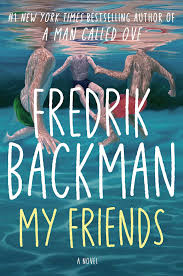
My Friends
| Published | 2025-05-06 |
| Series | standalone |
| Genre | Literary Fiction, Contemporary Fiction |
| Language | English |
| Publisher | Atria Books (US) / Simon & Schuster (UK) |
| ISBN-10 | 1982112824 |
| ISBN-13 | 978-1982112820 |
📝Honest Review
the book has two timelines running alongside each other. in the present Louisa is a young woman and an aspiring artist who becomes almost obsessed with a painting she sees at a gallery, one of those famous paintings that people study in school, and in the corner of it almost invisible unless you are really looking there are three small figures sitting at the end of a pier. the painting is fictional but it feels completely real. Louisa becomes determined to find out who those figures were and the novel follows her trying to do that.
the other timeline is the past and it is the better of the two. four teenagers in a small Swedish town in roughly the late nineties or early two thousands. Leo, who is the centre of the story, and three others who find each other the way people sometimes do when they are young and on the outside of things and they recognise something in each other that they have not seen anywhere else. there is music involved and art and the specific intensity of teenage friendship which is different from adult friendship because when you are that age the people around you are not a comfort, they are the whole world, and losing them would not be a disappointment but a catastrophe.
Backman writes teenagers really well and i want to say that specifically because a lot of literary fiction about young people makes them either too wise or too stupid and he does neither. Leo and his friends are smart and funny and clueless and brave and cowardly depending on the day and the situation and they talk to each other the way people who have known each other for years actually talk which means half the meaning is in what does not get said. there is a scene where Leo is trying to explain something to one of his friends and cannot find the words and the friend understands anyway and i read it twice because i thought it was one of the better pieces of writing about the gap between what we feel and what we can communicate that i had read in a long time.
the dual timeline structure is not always easy to make work but Backman uses it well here. you start the book knowing that something happened to this group of friends, something significant enough that one of them made it into a famous painting, and the whole past section is building toward what that thing was. the tension of knowing you are heading somewhere specific without knowing exactly where keeps you reading through the sections that might otherwise feel slow. there are some of those. Backman is not an efficient writer and My Friends has passages where he takes more time than the story strictly requires. i did not mind this as much as i sometimes do because the characters are good enough that spending extra time with them feels like a reward rather than a delay.
Louisa in the present timeline is doing something slightly different from the teenage characters. she is trying to understand something outside herself rather than trying to understand herself and that orientation gives her a different quality than Leo and his friends. her sections have an investigative momentum that suits the structure of the book and some of her best scenes are when she meets people who knew the figures in the painting and starts to understand what kind of friendship could produce something visible enough to end up in a painting that hangs in a gallery decades later.
the ending is generous. Backman is a generous writer and you know going into any of his books that he is not going to leave you without some kind of hope. i do not think that is a flaw exactly but it is a choice and it shapes the kind of book this is. if you want fiction that sits with ambiguity and refuses comfort this is not for you. if you want fiction that takes real pain seriously and then suggests that people can survive it and find each other again on the other side then this is very much for you and Backman does it better than almost anyone.
i cried. four and a half stars. if you have not read him before i would probably start with A Man Called Ove but if you have read Anxious People and liked it this is the same quality of feeling delivered in a bigger package and you should read it as soon as you can.
Summary:
somewhere in one of the most famous paintings in the world there are three small figures sitting at the end of a pier. most people walk past them without noticing. Louisa notices and she cannot stop thinking about who they were. the book moves between the present where Louisa is trying to find out the story behind the painting and the past where four teenagers in a small Swedish town are doing what teenagers do which is mostly trying to survive being young and finding each other across the awkward distances that separate people who do not yet know how to say what they mean. it won the 2025 Goodreads Choice Award for Best Fiction and sold over a million copies which for Backman feels about right.
✅ What I Liked
what i love most about Backman is the thing that is hardest to describe without sounding like you are being sentimental about it. he writes about ordinary people with an attention and a warmth that makes you feel like the person on the page is someone you actually know and when something happens to them you feel it the way you would feel it happening to someone real. My Friends does this better than anything he has written since Anxious People. the four teenagers at the centre of the story are so specifically drawn that i kept forgetting i was reading fiction. Leo and his friends feel like people you went to school with or wish you had and the friendship between them has the texture of something that actually developed over years rather than something a novelist constructed to serve a plot. the dual timeline also works really well here. Louisa in the present is a good character in her own right and her investigation into the painting gives the book a forward momentum that keeps the teenage sections from feeling like extended flashbacks. Backman is also genuinely funny in this book in the way he used to be in A Man Called Ove before his books got slightly more serious and i had missed that.
❌ What Could Be Better
Backman has a tendency to over-explain the emotional significance of what is happening and in My Friends he does it more than he needs to. there are moments where a scene is already doing everything it needs to do and then he adds a paragraph that tells you how to feel about it and i wanted to skip those paragraphs because the scene had already got there without them. some readers will not mind this at all because it is part of his style and it is what makes his books feel warm and accessible. but i have read enough of his work now to notice when the hand on the shoulder becomes a little heavy. the ending also resolves things a bit more completely than felt entirely honest to me. not dishonestly but in the way of a writer who loves his characters too much to leave them in quite as much uncertainty as life would actually leave them.
📊Community Rating
🎭Vibe Check
Read spoilers, debates, and detailed user reviews in our discussion room.
Discover Your Next Great Read
Handpicked recommendations from our collection of literary treasures