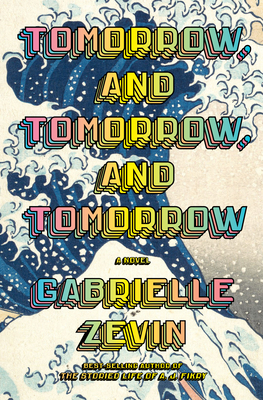
Tomorrow and Tomorrow and Tomorrow
| Published | 2022-07-05 |
| Series | Standalone |
| Genre | Literary Fiction |
| Language | English |
| Publisher | Knopf (US) / Chatto and Windus (UK) |
| ISBN-10 | 0735243344 |
| ISBN-13 | 978-0735243347 |
📝Honest Review
Summary:
Sam and Sadie meet as kids in a hospital and bond over video games. They lose touch. They find each other again at university in Cambridge Massachusetts and start making games together and become very successful very quickly. The book follows their friendship and creative partnership across thirty years from the early nineties to the late two thousands and it is about what it costs to make things with someone and what happens to two people when the work they share is also where they are most alive. It spent over a year on the New York Times bestseller list and was named one of the 100 best books of the 21st century by the Times in 2024.
✅ What I Liked
The friendship between Sam and Sadie is one of the best things i have read in contemporary fiction and i want to say that upfront because it is easy to describe this book as a love story and that description is not quite right. It is something more specific and more interesting than a love story. Sam and Sadie are not lovers for most of the book. They are something that does not have a clean name.
They know each other at a level that most people never reach with anyone and the relationship is more intimate than most romantic relationships in fiction while also being more painful and more difficult. Zevin understands that the people we create things with have a particular claim on us that is different from the claim of people we just love and the whole book is about what that claim feels like when it is working and when it breaks down. The games themselves are also genuinely interesting. I do not play video games and i cared enormously about every one of them.
❌ What Could Be Better
The book is nearly 400 pages and it earns most of them but there is a section in the middle involving a third character named Marx who becomes important to both Sam and Sadie and i think Zevin rushes through some of what should be the most emotionally significant parts of his arc. Something happens to Marx that the whole final section of the book depends on you feeling deeply and i did feel it but i think i would have felt it harder if Zevin had given me more time with him in the chapters before. A few readers i know also found the second half harder going than the first half because the stakes become less about the games and more about the damage the two main characters do to each other and that shift requires a different kind of patience.
I was fine with it but i understand why some people found it slower. The Shakespeare references which run through the whole book as a structural motif are well handled but occasionally they sat slightly heavily on the page like Zevin was reminding you of them rather than trusting you to carry them yourself.
Sam Masur and Sadie Green meet when they are children in a hospital in Los Angeles. Sam is recovering from a serious injury to his foot and Sadie is visiting her sister and they spend time playing video games together and it is the kind of connection that children sometimes make in circumstances that would not produce connections in adults. Then they lose each other. Years pass. They find each other again at university in Cambridge Massachusetts in the early nineties and they start making games together and everything that follows across the next thirty years comes from that reconnection.
What Zevin is writing about is collaboration and what it asks of people and what it takes from them. Sam and Sadie are both brilliant at making games and they are most alive when they are working together and the relationship between those two things is what the book is really exploring. The creativity is not a backdrop to the emotional story. It is the emotional story. What they make together is how they love each other and that means that the work can also be where they hurt each other most badly and Zevin is honest about how that works without ever being cruel about it.
I want to say something about Sadie because i think she is the more interesting of the two main characters and i have seen her discussed less than Sam in most of the coverage i have read. Sadie is trying to be taken seriously in a field that does not take women seriously without making her whole identity about that struggle and Zevin handles this with a lot of care. Sadie is competitive and sometimes difficult and occasionally wrong about things and also enormously talented and the book never reduces her to a symbol of anything. She is just a person trying to do the thing she is best at in a world that keeps putting conditions on whether she is allowed to do it. I found her more relatable than Sam which surprised me and i think says something about how specifically Zevin drew her.
Sam has a disability that affects his foot and the way Zevin writes about this is one of the things i admired most about the book. It is always present. It shapes how he moves through the world and how he thinks about his body and what he is capable of. It is not inspirational and it is not a metaphor. It is just a fact about his life that has consequences and costs and Zevin treats it with the same specificity she brings to everything else.
Marx is the third major character and he is in some ways the warmest thing in the book. He is Sam's college roommate and he becomes important to both of them in different ways and his presence in the story gives you a version of uncomplicated affection that the Sam and Sadie relationship is too complicated to provide. Something happens to Marx in the second half of the book that i knew was coming because someone had accidentally told me and i was still not prepared for it. I actually put the book down for a few minutes after a certain chapter. That is the measure of how well Zevin had made me care about someone who is not even the central character.
The video games in this book are fictional and Zevin creates them with the same attention she gives to the people. They have aesthetic philosophies and creative tensions behind them and the way Sam and Sadie argue about design choices tells you more about their relationship than most of the scenes where they are directly talking to each other about feelings. The games are also historically grounded in a way that felt completely right without ever becoming a timeline of gaming history. Zevin clearly loves this world and that love comes through without the book ever becoming a piece of nostalgia for people who grew up in the nineties gaming scene.
The Shakespeare in the title comes from Macbeth and the references to Shakespeare run through the whole novel in ways that are sometimes explicit and sometimes structural. Life as a series of tomorrows. The way time moves and what we do with it. I liked this more than i expected to and less than Zevin probably intended at some moments. When it works it feels like the book opening up into something larger than itself. When it does not quite work it feels like a reminder of what you are supposed to be thinking about and i wanted to think about it on my own.
The ending took me by surprise not because of what happens but because of the tone of it. Zevin ends on something quiet and precise and exactly right and i sat with it for a while before i felt ready to close the book. Five stars. One of the best novels i have read in the last five years and one of those books i wish i could go back and read for the first time again.
📊Community Rating
🎭Vibe Check
Read spoilers, debates, and detailed user reviews in our discussion room.
Discover Your Next Great Read
Handpicked recommendations from our collection of literary treasures