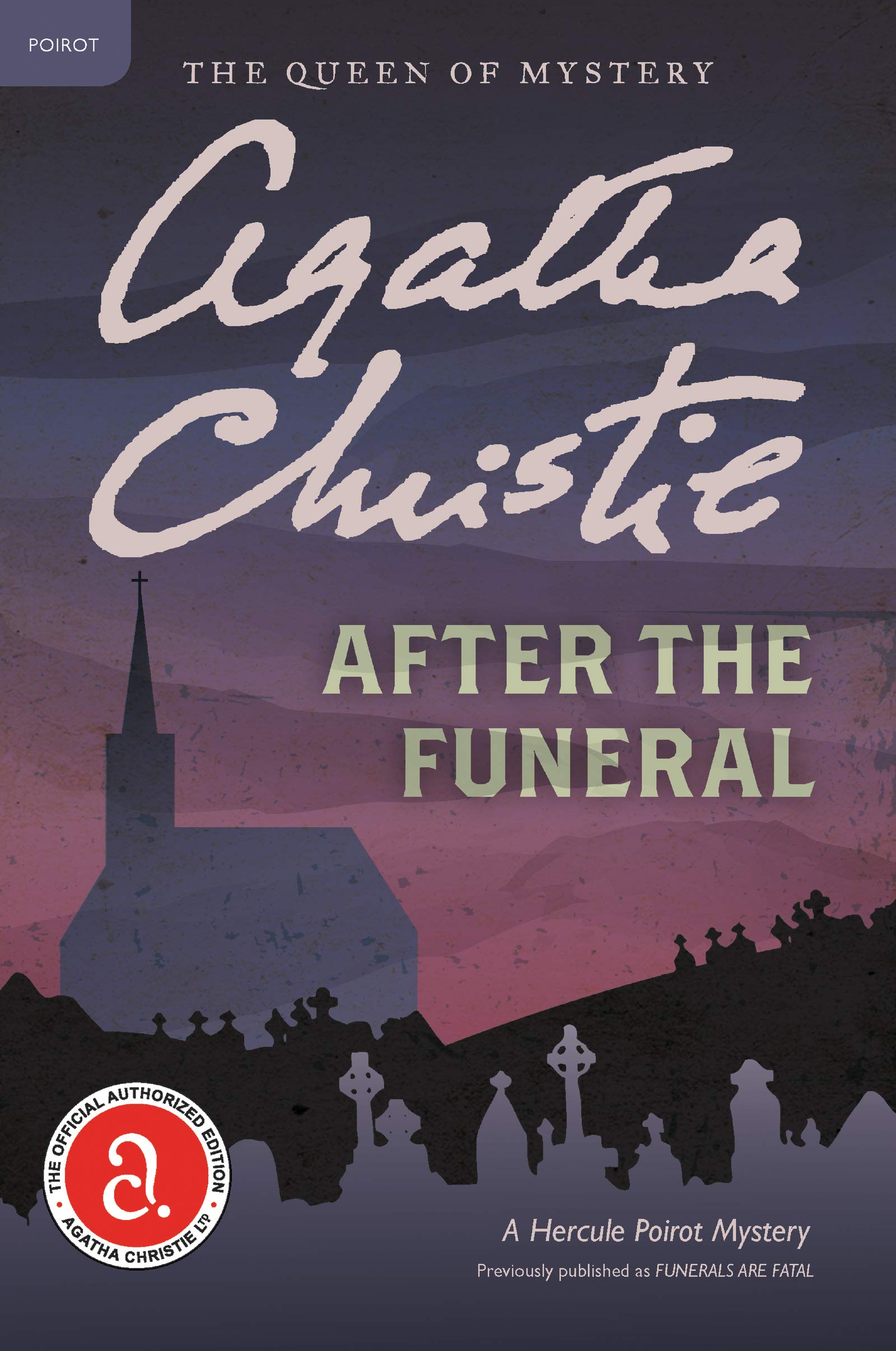
You spend a good portion of the book genuinely unsure whether you dislike these people or simply pity them, which is exactly where she wants you.
The opening gambit of the novel is one of the cleverest things Christie ever devised. Cora's remark at the funeral is so simple, so blunt, so immediately dismissed by everyone who hears it, that you move past it almost without thinking. And that is entirely the point. Christie is counting on you to treat Cora the way the family treats her, which is as a harmless eccentric whose blunt little observations don't quite connect to reality. She is doing something very subtle with the character of Cora throughout the book, and if you are paying the right kind of attention it is possible to see it. But the right kind of attention is the kind Christie has spent thirty years teaching you not to pay.
Poirot enters the story relatively late, which is unusual, and Christie makes it work beautifully. The first act of the book belongs almost entirely to the Abernethie family and their solicitor, and by the time Poirot appears you are already so deep in the tangle of relationships and secrets that his arrival feels less like a cavalry charge and more like a very calm person walking into a room full of noise and sitting down to think. He moves through the family quietly, asking questions that seem harmless, listening with an attention so complete it is almost physical. His eventual solution is one of those Christie moments where the rug is pulled and the floor turns out to have been somewhere completely different from where you thought you were standing.
There is also Miss Gilchrist, Cora's paid companion, who is one of the most brilliantly underwritten characters in Christie's entire catalog. She is so perfectly drawn in her ordinariness, her vague helpfulness, her seemingly total lack of significance, that I would be doing this review a disservice to say anything more about her. Just keep an eye on Miss Gilchrist.
The book is not without its slower passages. The middle section, in which Poirot conducts the bulk of his interviews, moves at a careful pace that may test readers who prefer a more urgent tempo. And the sheer number of Abernethie relatives requires some concentration in the early chapters to keep straight, particularly for readers who are coming to it without the aid of the family tree that some editions include. But neither of these things diminish what After the Funeral ultimately is, which is Christie writing at the height of her mature powers, utterly in control of her material, and pulling off a deception so precise it almost qualifies as an act of literary sleight of hand.
Book Summary
Richard Abernethie, the wealthy patriarch of a large and scattered family, dies quietly at home. His relatives gather at Enderby Hall for the funeral and the reading of the will, relieved that it is all over and already calculating what they stand to inherit. Then Cora Lansquenet, Richard's younger sister and the family oddity, says something that stops the room cold. "It's been hushed up very nicely, hasn't it. But he was murdered, wasn't he?" The family dismisses it as Cora being Cora. Then the very next day, Cora is found dead in her cottage, her head split open with a hatchet. Now the question she asked at the funeral is not so easy to dismiss.
What I Liked
The opening gambit involving Cora's remark is one of the most elegant misdirections in Christie's entire body of work. The Abernethie family is drawn with real psychological sharpness, every one of them flawed and believable. Miss Gilchrist is a quietly spectacular creation. And the final solution is both completely surprising and entirely, infuriatingly fair.
What Could Be Better
The middle section of Poirot's interviews moves slowly enough that the momentum dips noticeably. The large cast of relatives can be difficult to keep straight in the early chapters without careful attention.
Context Behind the Book
Agatha Christie, born in Torquay in 1890, is the most widely published fiction writer in history. After the Funeral was written during her remarkably productive 1950s period, when she was producing some of her most technically accomplished work. She wrote this novel partly while staying at Abney Hall, the same house that inspired the setting for Hercule Poirot's Christmas years earlier.