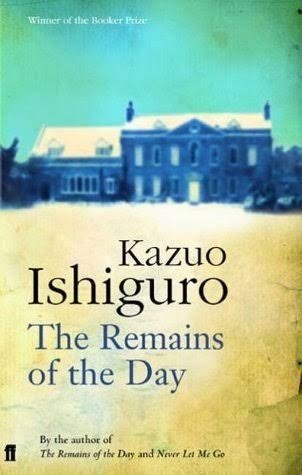
Even his memories often arrive wrapped in careful explanations, as though he is still trying to convince himself that every sacrifice was necessary.
That is what made Stevens such an interesting character for me. He is not simply cold or foolish. He is extremely good at living according to one set of rules, and that makes it much harder for him to admit those rules may have failed him.
Miss Kenton exposes that failure more clearly than anyone else.
Their relationship is built almost entirely from things left unsaid. She challenges him, teases him, becomes angry with him, and repeatedly tries to reach beyond the formal distance he insists on maintaining. Stevens notices far more than he admits, but he always seems to find a professional reason not to respond.
Some of the best scenes are painfully ordinary because of that.
A conversation about flowers or household work can suddenly feel intimate, then Stevens retreats behind his role again. Nothing dramatic happens, yet you can feel an opportunity disappear.
I found myself rereading a few of those moments because their meaning changes once you understand how much Stevens has trained himself not to acknowledge.
The political side of the novel works in a similar way. Lord Darlington becomes involved in serious political matters, but Stevens repeatedly insists that a servant should not concern himself with decisions made by gentlemen. That attitude allows him to remain loyal without ever fully confronting what his loyalty supports.
This is where the book's argument about duty became much more interesting to me.
Duty sounds noble when it means doing your work well. It becomes dangerous when it means refusing to judge the person you serve.
Stevens spends much of his life outsourcing that responsibility, and only much later does he begin to understand the cost. By then, the consequences are not only political. They are personal.
His relationship with Miss Kenton makes that cost impossible to keep abstract. The years he gives to Darlington Hall are also years in which another kind of life might have been possible.
That realization is where the novel hurt most.
I did occasionally struggle with how controlled everything remains. The narration is deliberately restrained, but there were moments when I wanted slightly more emotional access to Stevens. The political history surrounding Lord Darlington also stays filtered through Stevens's limited understanding, which fits the character but sometimes makes the larger stakes feel distant.
Still, I think the novel would lose something important if Stevens suddenly became emotionally transparent. His inability to speak plainly is part of the tragedy.
The Remains of the Day is not really a story about a road trip, and it is not simply a story about an old-fashioned butler. It is about what can happen when someone builds an entire identity around being useful to other people.
Stevens spends years believing dignity means never allowing personal feeling to interfere with duty.
By the time he begins to question that belief, the hardest part is not discovering that he was wrong.
It is realizing how much of his life has already been spent proving it.
Book Summary
Stevens, an English butler who has spent most of his life in service at Darlington Hall, takes a road trip through the countryside and begins looking back on the choices that shaped him. Much of what he remembers involves Miss Kenton, the former housekeeper with whom he shared a relationship neither of them ever quite allowed to become what it might have been.
What makes The Remains of the Day so effective is that Stevens's professionalism is both impressive and deeply sad. His idea of dignity gives him a way to perform his job almost perfectly, but it also gives him an excuse not to question his employer, his own feelings, or the life passing around him. The novel ends up asking uncomfortable questions about duty, regret, love, political responsibility, and what happens when someone hands over too much of their moral judgment to another person.
What I Liked
The relationship between Stevens and Miss Kenton was easily the part I cared about most. Almost everything important between them happens indirectly. A small argument, a doorway conversation, or a moment when one of them chooses not to say something can carry more weight than a dramatic confession would have.
I also liked how slowly Stevens's version of himself begins to crack. He sees dignity as emotional control and unquestioning professionalism, and for a long time he tells his story in a way that makes those qualities sound admirable. The longer he talks, though, the easier it becomes to notice what that definition has cost him.
The restraint worked especially well here because Ishiguro trusts the reader to notice the gap between what Stevens says and what he actually feels.
What Could Be Better
The same restraint that makes the novel powerful can also make it feel distant. Stevens keeps so much of himself under control that there were stretches where I wanted the book to push closer to the emotion rather than leave almost everything beneath the surface.
I also found the political history around Lord Darlington slightly too indirect at times. I understand why we experience it through Stevens's limited perspective, but the consequences of his employer's choices are important enough that I occasionally wanted a clearer sense of what was happening beyond the house.
Neither issue ruined the book for me, but both made certain sections feel cooler than the emotional material underneath them deserved.
Context Behind the Book
Kazuo Ishiguro's restrained narrators often place private memory against historical failure, allowing the reader to see truths they cannot admit.