✒ Literary Opinion · Book Reviews · Reading Culture
Are Five-Star Ratings Ruining Book Reviews? Why Readers Need More Than a Score
Goodreads now lets readers choose quarter stars. The more important question is whether any number can tell us why a book matters.
📖 Literary Criticism✍️ Shadab Alam📅 Nov 10, 2026⏱️ 12 min read
★THE BIG QUESTION: More precise star ratings are here. Are we getting better at judging books—or just better at counting our opinions?
A book has 3.7 stars. Do you read it, or keep scrolling? It is such an ordinary decision that we rarely notice how much authority we have handed to the decimal point. A novel that took its author years to finish can be judged in an instant by a number beside its cover. We know the number does not tell us everything, yet when there are hundreds of books competing for our attention, it is tempting to behave as though it does.
I understand the appeal. Ratings are quick, accessible and, at their best, democratically messy. You do not need a literature degree or a newspaper column to tell other readers that a book delighted or disappointed you. But a ranking becomes a problem when we stop treating it as the beginning of a conversation and start treating it as the final verdict. A challenging book and a forgettable book can land on the same average for entirely different reasons.
That tension has become newly visible in 2026. Goodreads introduced half- and quarter-star ratings in October, giving readers more precise ways to register their opinions. Earlier this year, researchers at Aarhus University highlighted evidence that apparently middling averages can conceal works with considerable literary standing and sharply divided audiences. Put those developments together and an uncomfortable question emerges: are we improving the precision of our scores while overlooking the complexity of the books themselves?
The argument: Star ratings are useful signals of reader satisfaction, not universal measurements of literary worth. A thoughtful review explains the experience behind the score—and sometimes explains why the score is misleading.
What actually changed on Goodreads in 2026?
On 5 October 2026, Goodreads announced a change readers had requested for years: ratings in quarter-star increments, from 0.25 to 5.0. A reader who previously struggled to choose between three and four stars can now select 3.25, 3.5 or 3.75 instead. Existing whole-star ratings are not automatically changed, and written reviews continue to work as before. For people who keep careful reading diaries, this is a welcome improvement, not an ominous development.
There is a revealing detail in Goodreads' own explanation. Even after the change, the rating histogram on a book page still uses five bars, with fractional ratings grouped into whole-star categories for display. In the example given by the company, a 3.5-star rating appears in the three-star bar, while a 3.75 appears in the four-star bar. A reader can express finer distinctions, but the public summary still compresses those distinctions into a simpler visual language. The platform has improved the input without entirely changing the way we see the result.
None of this means Goodreads has promised that its averages measure artistic excellence. Its official guidelines distinguish a personal star assessment from a written review that explains the reasons behind it. That distinction is worth holding on to, because a number is not a miniature essay. It can say whether somebody was satisfied; it cannot reliably tell us what the book was attempting, which expectations it challenged, or whether a reader's frustration might also reveal a strength in the work.
A surprisingly revealing study of supposedly average books
The strongest case against treating averages as literary verdicts comes not from nostalgia for professional critics, but from research. In a study published in 2025 and discussed by Aarhus University in January 2026, Pascale Feldkamp Moreira and colleagues examined a corpus of roughly 9,000 American novels published between 1880 and 2000. They focused on 2,150 titles in the middle quarter of Goodreads averages, a particular band running from 3.72 to 3.91 stars. Then they compared those titles with other indicators of literary recognition and influence.
Approximately 30 percent of the books in that middle-rated subset also appeared in alternative measures associated with literary importance or quality. That is not proof that a third of all middling books are hidden masterpieces, and the study was not a universal test of aesthetic value. It is a finding about a defined group of American novels and the limits of one popular measure. Still, it challenges the easy assumption that a respectable but unspectacular average tells us a book has little to offer.
The researchers also observed that among some titles recognized by other literary indicators, higher numbers of ratings were associated with greater disagreement between readers. That matters because controversy and indifference can produce deceptively similar averages. Imagine one book that everyone considers pleasant but unremarkable, and another that half its readers adore while the rest find it maddening. If both settle around the same number, the averages have erased the most important difference between them: the intensity and nature of the responses.
The university highlighted books such as James Joyce's Ulysses, William Faulkner's The Sound and the Fury and Vladimir Nabokov's Lolita as examples of works that can divide readers because of demanding form, unsettling subject matter or controversial themes. These are not arguments that every reader must admire them. They are reminders that literary significance and immediate enjoyment are not identical. A book can frustrate one reader for the very reason another reader considers it extraordinary.
Two readers can give three stars for opposite reasons
Consider a hypothetical reader who gives a literary novel three stars because the plot moves slowly and the ending offers no clear resolution. Another gives the same book three stars because its prose is beautiful, but the characters are emotionally distant. The shared score looks like agreement. Read their explanations and it turns out they are responding to different aspects of the novel, perhaps even praising what the other person dislikes. The average has not merely shortened their opinions; it has made them appear more alike than they really are.
Expectations complicate things further. A reader arriving from a thriller's marketing campaign may want relentless momentum, while a reader drawn to the author's earlier work may be waiting for an intricate portrait of grief. Neither expectation is wrong. But if a publisher's cover suggests one kind of experience and the text supplies another, ratings may register the disappointment of an unmet promise as readily as they register the quality of the writing. That is valuable information for a prospective buyer, but it does not answer the same question as a close literary assessment.
There is a difference, too, between saying that a book was not for you and saying that it failed. I may dislike the emotional distance in a novel while admiring how deliberately its author uses that distance. I may love a romance because it offered exactly the comfort I needed, while recognizing its familiar construction. These positions become easier to express when the written review is allowed to carry the meaning and the stars remain a shorthand. A score should summarize an experience, not replace the work of explaining it.
The problem is not ordinary readers having opinions
It would be a mistake to turn this criticism of ratings into a defence of a closed literary establishment. For much of publishing history, the loudest critical voices came from a relatively narrow set of institutions and cultural gatekeepers. Reader platforms opened space for people whose tastes, languages, identities and genre loyalties were not always represented in newspaper review pages. A reader who spends every evening with romance or horror may notice things a critic outside that community misses. That expertise deserves respect, even when it does not come with a formal title.
Star ratings also solve a real practical problem. Somebody with a limited budget may want to know whether a book delivers the sort of reading experience it advertises. Someone choosing an audiobook for a long commute may care about pacing and narrator performance more than stylistic experimentation. A parent selecting a middle-grade novel may need reader feedback that is highly specific to age and content. Those questions are legitimate, and large collections of reader responses can be useful when we understand what they are measuring.
The danger appears when a platform designed for many personal purposes produces one authoritative-looking average, and everyone begins reading that average as a universal ranking. A score can become a social cue: this book is safe to praise; that one is too risky to pick up. The irony is that communities meant to broaden literary taste can unintentionally narrow it when numerical consensus becomes the main discovery tool. Diversity of opinion matters most when we can still see the differences.
When the rating becomes a weapon
The limits of rating culture are particularly visible when people judge a book without having read it. In June 2023, Elizabeth Gilbert postponed her planned novel The Snow Forest after a wave of objections from Ukrainian readers and others concerned about its Russian setting during Russia's war in Ukraine. The novel received large numbers of negative Goodreads ratings before publication. The criticism reflected real political anger and genuine concerns about cultural representation, but the ratings could not have been assessments of a finished text that those participants had not read.
Gilbert publicly explained that she wanted to respond to readers' pain, and observers disagreed sharply about her decision. This is not a story in which every critic was acting in bad faith, nor is it evidence that discussion of a book's politics should be prohibited. Readers are entitled to challenge a premise or object to an author's public choices. The narrower problem is the use of a book-rating mechanism to register a judgment about something other than the reading experience the score appears to describe.
Goodreads' current guidelines explicitly say that rating or reviewing activity unrelated to a book's content, or designed to manipulate its average, may be restricted. They also allow reviews based on advance reading copies, which are not the same as speculative ratings from people who have never encountered the text. That distinction is essential. The answer is not to demand that readers become apolitical, but to protect the meaning of a review: a claim about a book should disclose whether it comes from reading the book, reacting to its publicity, or protesting something outside its pages.
What star ratings genuinely do well
For all their weaknesses, scores remain useful when treated as one layer of evidence. A very large number of independent readers repeatedly identifying a difficult opening, a rushed ending or an unreliable translation may be pointing toward a pattern worth investigating. Ratings can also help readers filter a crowded list, especially when combined with genre, format, content notes and detailed reviews. A useful number is not the enemy of careful reading; the problem is asking it to do a critic's job as well as a catalogue's.
Services such as The StoryGraph offer another reminder that readers want information beyond a single figure. Alongside fractional stars, its features include mood and pacing information, content warnings, reading journals and personal tags. Those categories are still imperfect, but they acknowledge that a reader often needs to know what kind of experience a book offers. A melancholic slow burn may be exactly right for one person and completely wrong for another, no matter how many stars appear beside it.
There is also no need to shame the person who finishes a light, predictable novel, enjoys it immensely and gives it five stars. Pleasure is a substantial part of reading, not an embarrassing distraction from serious literature. But pleasure has many forms: reassurance, suspense, surprise, intellectual resistance, aesthetic astonishment and the difficult recognition of something true. The trouble begins when every one of those experiences must compete on the same scale without a sentence explaining what was valued.
How to use book reviews without letting them choose for you
Before looking at the average, try reading the publisher's synopsis and a few pages of the book itself. Ask what the novel appears to be attempting rather than whether strangers have approved it. Then sample a positive and a critical review, preferably ones that give specific examples without spoiling the plot. When both reviewers describe the same characteristic—slow pacing, elaborate prose, frequent shifts in viewpoint—their disagreement may help you decide whether that characteristic sounds appealing to you.
Pay attention to the shape of the reaction rather than just the mean. A book attracting intense love and dislike may be more interesting for your purposes than one generating universal mild approval. Look at who is reviewing it: someone who regularly reads that genre may understand its conventions, while a newcomer may be responding to them as if they were defects. And notice the publication date of the reviews, since public controversies and adaptation announcements can change what draws people to a book.
Most importantly, leave room to be surprised. If you abandon every book with an average below an arbitrary threshold, you may miss the strange novel, awkward debut or difficult classic that would have stayed with you for years. The point is not to ignore other readers, but to hear them as people with individual histories and expectations. A review is most useful when it teaches you how someone encountered the work, not when it pretends that the rest of us must reach the same verdict.
What a genuinely useful book review should say
At Epiloguely, I would rather read an imperfect, sharply observed review than a flawless-looking five-star endorsement with nothing beneath it. A good review explains what the book tries to do and how successfully it carries that intention through character, language, structure and emotional effect. It notices concrete moments: a conversation whose meaning changes on a second reading, a clumsy transition, a repeated image that gathers force, or an ending whose refusal to resolve things feels either earned or evasive. That specificity gives another reader something to test against their own tastes.
Fairness matters just as much as conviction. A reviewer can dislike a book and still identify its intended audience, just as someone who loves a novel can acknowledge a weak subplot. Readers need not pretend to have objective access to artistic truth, but they do owe the work an honest account of their response. The strongest criticism is neither a promotional blurb nor a performance of cruelty. It is a reasoned invitation to think about the book more closely—even when the answer is that the reader should probably choose something else.
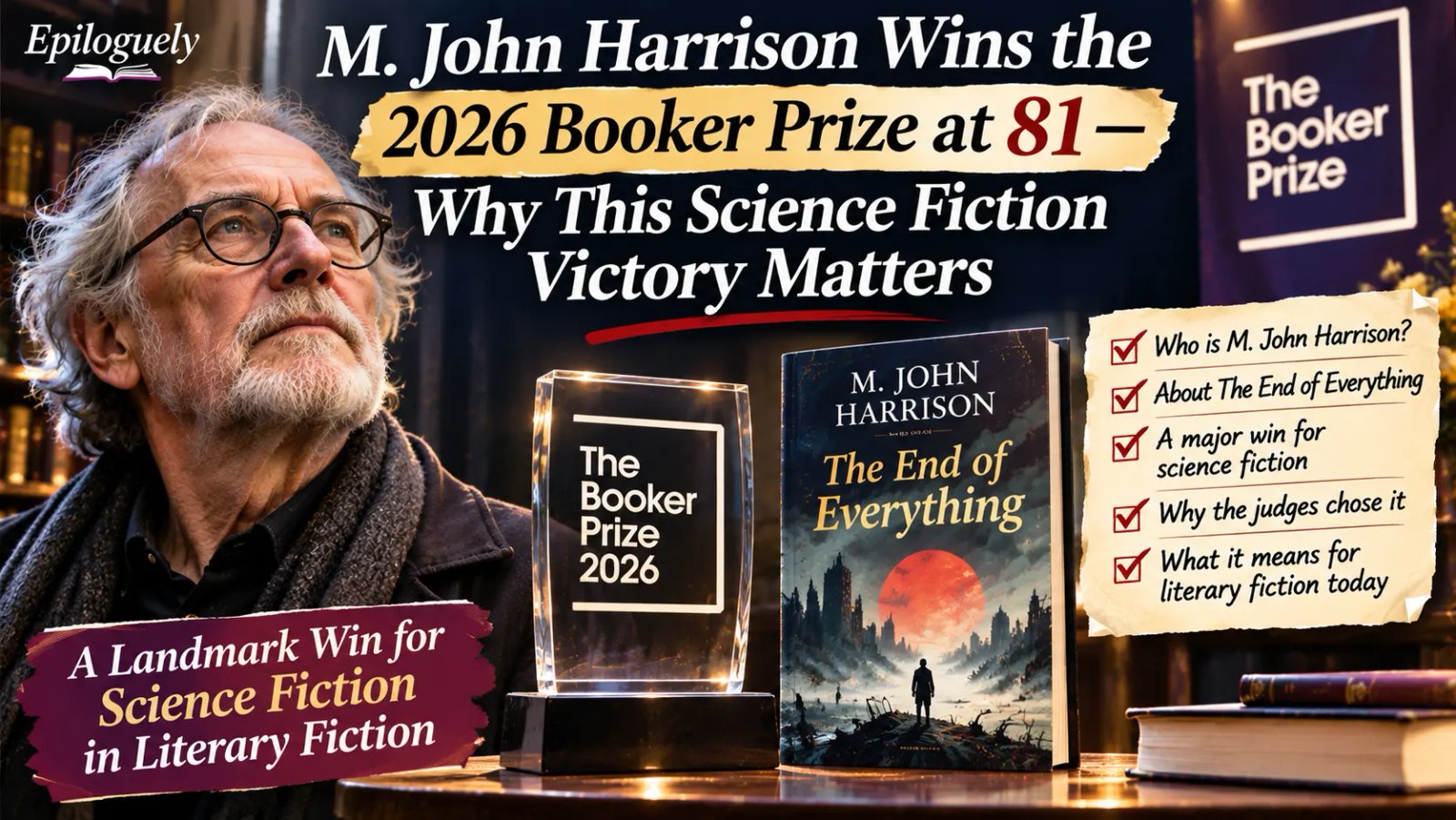
That kind of reviewing takes more effort than tapping a star icon. It also offers more lasting value because it can remain useful after the average shifts and the online conversation moves on. Readers looking for a useful contrast can see how M. John Harrison's 2026 Booker Prize victory reopened questions about genre and literary prestige, or explore our report on the changing market for book adaptations. Those stories show different ways a book acquires cultural value that no reader-rating average can fully describe.
Epiloguely's view: keep the stars, but don't stop at them
Five-star ratings have not ruined book reviews. They have made a particular kind of response unusually visible, and that visibility can overwhelm more thoughtful forms of judgment. Goodreads' new fractional ratings are a reasonable improvement for people who want precision, and research on divided audiences offers a good reason not to confuse precision with depth. A number can tell us how an audience reacted; it cannot tell us everything the audience was reacting to, much less what a novel may mean to a reader who approaches it differently.
I would not give up reader ratings, and I would certainly not return book culture to a handful of supposedly authoritative voices. I would simply put the written explanation back in charge. Read the comments that disagree with one another, read the opening pages, and let the book itself have a chance to answer. The best work of criticism is not to hand us the correct score. It is to make us curious enough to keep reading—and thoughtful enough to know why we stayed.