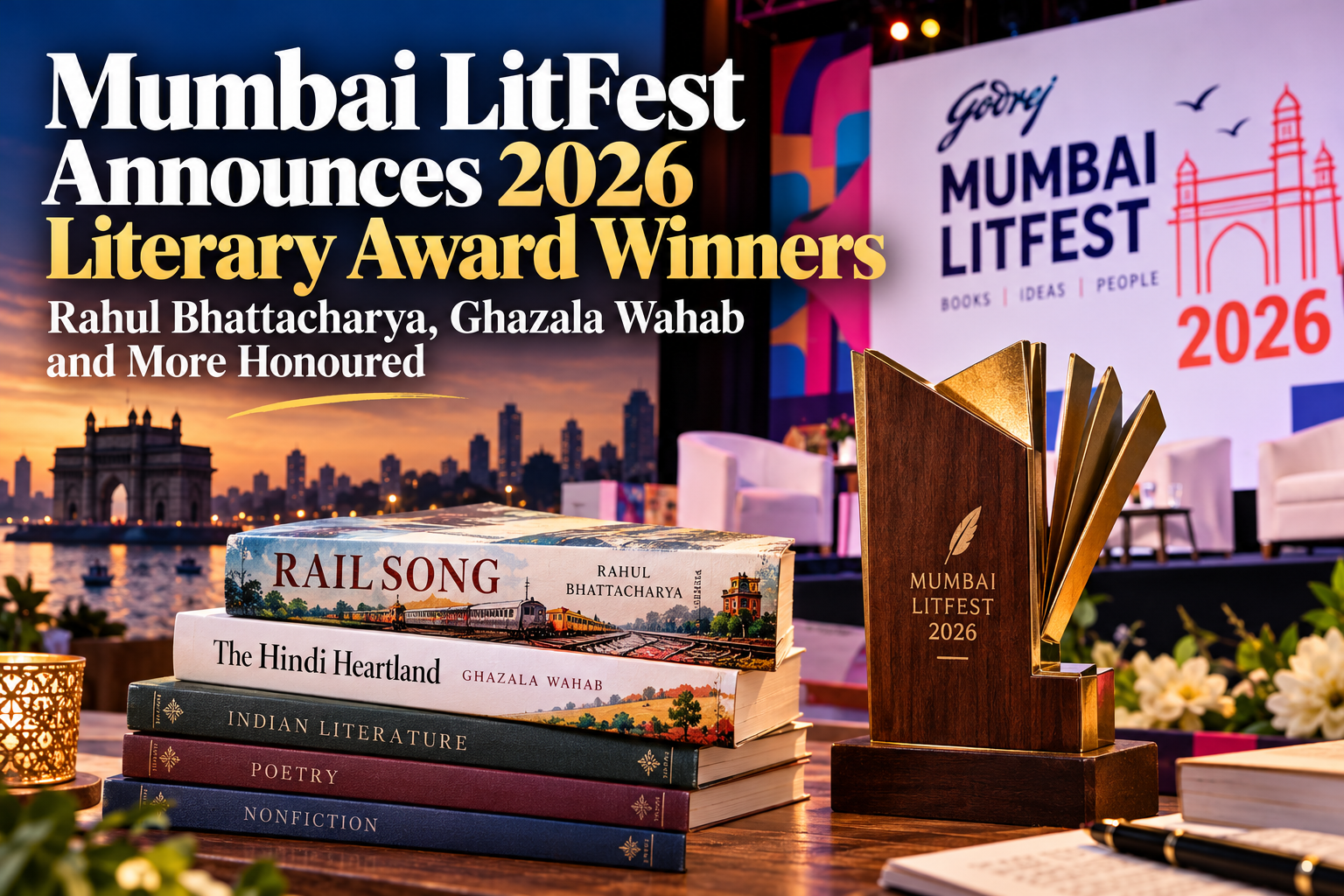
🏆AWARDS ANNOUNCED OCTOBER 25: Rahul Bhattacharya and Ghazala Wahab took the leading book honours; five winning titles were named across fiction, nonfiction, debut and business categories.
Mumbai's Literature Live! festival closed on October 25, 2026, with a celebration of books that approach contemporary India from strikingly different directions. At the 17th edition of Godrej Literature Live! The Mumbai LitFest, Rahul Bhattacharya's Railsong: A Novel received Fiction Book of the Year, while Ghazala Wahab's The Hindi Heartland: A Study won Non-Fiction Book of the Year. Three further awards recognised a fiction debut, a nonfiction debut and a business book. Together, the winners reflect a literary landscape in which imaginative storytelling sits alongside examinations of migration, work, social structures and economic ambition.
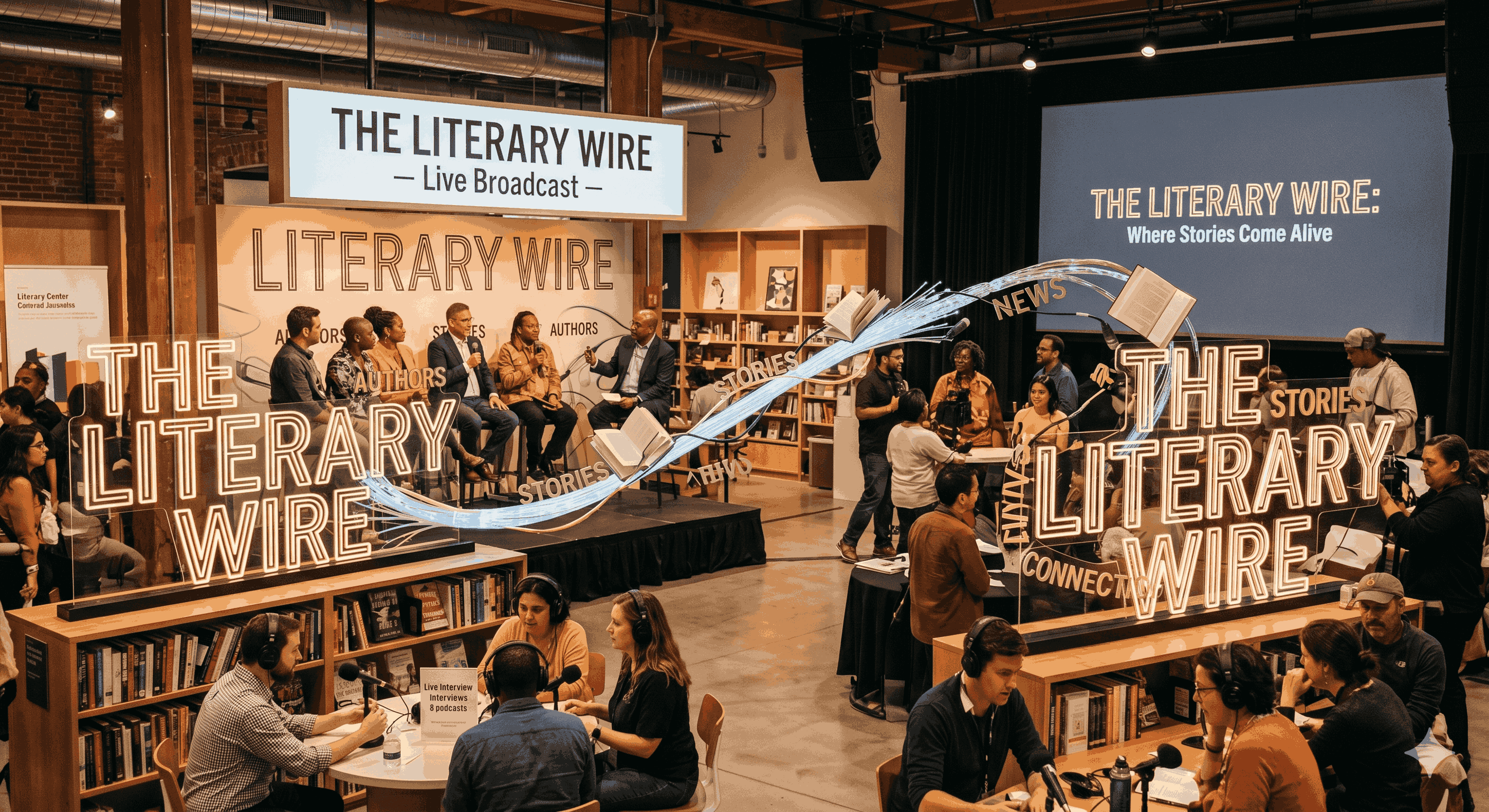
The closing ceremony also honoured novelist Irwin Allan Sealy with the Godrej Literature Live! Lifetime Achievement Award and named Hindi poet Gagan Gill the festival's 2026 Poet Laureate. The programme was held at the National Centre for the Performing Arts (NCPA), Nariman Point, where the festival brought writers and audiences together over three days, October 23–25. Reports on the completed festival describe participation by approximately 130 writers, thinkers and performers from 18 countries, in more than 40 sessions.
The awards' significance goes beyond the names printed on a winners' list. By recognising established writers and debut authors separately, the programme places books from different stages of a literary career on the same public platform. It also makes room for narrative nonfiction and business writing alongside novels, suggesting a broad understanding of what constitutes notable contemporary writing.
2026 winners at a glance
Five winning books, alongside honours for a novelist and a Hindi poet
The literary-award results were announced at the festival's closing ceremony on Sunday, October 25, 2026. The following awards and book titles are corroborated by the festival programme and post-event reports.
📅
Award ceremony
25 October 2026
🏆
Book categories
Five winners
📚 Complete list of 2026 literary award winners
Book of the Year – Fiction: Railsong: A Novel — Rahul Bhattacharya (Bloomsbury India).
Book of the Year – Non-Fiction: The Hindi Heartland: A Study — Ghazala Wahab (Aleph Book Company).
Best First Book – Fiction: Good Arguments — Deepika Arwind (Simon & Schuster India).
Best First Book – Non-Fiction: Wild Wild East: Exiled Americans, Enslaved Indians and the Systemic Abuse of the H-1B Visa Programme — Tanul Thakur (Context/Westland Books).
Business Book of the Year: Running Behind Lakshmi: The Search for Wealth in India's Stock Market — Adil Rustomjee (Hachette India).
Lifetime Achievement: Irwin Allan Sealy.
Poet Laureate 2026: Gagan Gill.
These seven recognitions should not be confused with seven competing book categories: there were five winning book categories, while the Lifetime Achievement and Poet Laureate titles separately honoured individual literary contributions. Reports also identify a Publisher of the Year award, discussed below because currently accessible sources disagree on its recipient.
📖 Rahul Bhattacharya's Railsong wins Fiction Book of the Year
Rahul Bhattacharya emerged as the festival's fiction winner for Railsong: A Novel, published by Bloomsbury India. The distinction places his work above a competitive shortlist that also featured Jeet Thayil's The Elsewhereans and Stephen Alter's The Greatest Game: Being the Further Adventures of Kimball O'Hara. Those nominations underline the diversity of literary approaches considered in this year's fiction field, from established novelists working with distinct voices and forms.
The win provides a timely reason for readers to seek out Railsong itself, rather than viewing it only as another addition to a prize list. For an Indian literary award, the fiction category carries an important symbolic role: it introduces one novel as a representative example of the year's literary imagination while drawing attention to shortlisted works that might otherwise receive less mainstream coverage. The award is a jury's selection, not a claim that one book can objectively stand above every novel published in India.
📰 Ghazala Wahab's The Hindi Heartland takes the nonfiction prize
In nonfiction, Ghazala Wahab was recognised for The Hindi Heartland: A Study, published by Aleph Book Company. The win foregrounds a work whose title signals a sustained attempt to understand a region frequently invoked in Indian political, social and cultural discussions. In a literary-awards environment often dominated by fiction headlines, the nonfiction result draws attention to the value placed on research-driven books and serious engagement with contemporary India.
Wahab's book prevailed over fellow shortlisted works A Sixth of Humanity: Independent India's Development Odyssey, by Devesh Kapur and Arvind Subramanian, and Scamlands, by Snigdha Poonam. These books reflect contrasting approaches to nonfiction: national development, social investigation and regional study. Together they suggest why the nonfiction category can be particularly revealing as a snapshot of the questions Indian writers and readers are asking in 2026.
✨ Two debut awards spotlight Deepika Arwind and Tanul Thakur
The award for Best First Book – Fiction went to Deepika Arwind for Good Arguments, published by Simon & Schuster India. She was selected from a shortlist that included Sayantan Ghosh's Lonely People Meet and Zeenath Khan's The Sirens of September. The separate debut category is especially meaningful for newer writers: recognition at this stage can bring wider readership, invitations to literary events and attention from booksellers, though such outcomes cannot be assumed for every winner.
For Best First Book – Non-Fiction, the prize went to Tanul Thakur for Wild Wild East: Exiled Americans, Enslaved Indians and the Systemic Abuse of the H-1B Visa Programme, published under Westland's Context imprint. The book's subject places cross-border labour and the experiences of workers at the centre of the prize conversation. Its selection came from a shortlist that also included Ipsita Chakravarty's Dapaan: Tales from Kashmir's Conflict and Dr Cyriac Abby Philips's The Liver Doctor.
Taken together, the two first-book wins are a reminder that the debut label does not describe a single kind of writing. One award recognises an emerging literary imagination in fiction; the other draws attention to reported and researched material with significant social implications. Highlighting both helps the festival introduce fresh voices without treating their work as interchangeable.
💼 Adil Rustomjee wins Business Book of the Year
Adil Rustomjee received the Business Book of the Year award for Running Behind Lakshmi: The Search for Wealth in India's Stock Market, published by Hachette India. The title points to the enduring appeal of books that examine financial aspiration, market participation and ideas of prosperity through a distinctly Indian context. Its inclusion alongside fiction and narrative nonfiction signals that the festival's understanding of books and ideas reaches beyond traditional literary genres.
The other shortlisted business books were BuildIt: Building Blinkit in an Evolving India by Albinder Singh Dhindsa and Tatyasaheb: The Story of a Bombay Entrepreneur by Tejaswini Apte-Rahm. While these titles approach business through different subjects, their shared recognition reveals a category interested in the stories behind entrepreneurship, markets and economic change. The award should be understood as an editorial and literary recognition, not an endorsement of any investment approach.
🏅 Irwin Allan Sealy and Gagan Gill receive special literary honours
Beyond the competitive book awards, the festival presented its Lifetime Achievement Award to novelist Irwin Allan Sealy. The honour acknowledges a sustained literary career rather than selecting a single new title. Sealy's published work includes The Trotter-Nama, The Everest Hotel and The Brainfever Bird; these books also appear in the festival's official programme for his awards session. Recognising an author across decades of writing provides a different kind of literary perspective from the annual assessment of new releases.
The festival also named Gagan Gill its 2026 Poet Laureate. Gill's recognition ensured that Hindi-language poetry held a visible place alongside awards whose nominated book lists largely focused on prose. It is an important distinction in a multilingual literary culture: major literary gatherings can celebrate current publishing success while also honouring the depth and continuity of writing in Indian languages.
📍 Three days of books and conversations at Mumbai's NCPA
The 2026 festival ran from October 23 to 25 at the National Centre for the Performing Arts in Nariman Point, Mumbai. Post-event coverage describes a programme involving around 130 writers, performers and thinkers from 18 countries across more than 40 sessions. The programme included discussion of fiction, journalism, culture, business, theatre and contemporary public life. These events provided context for an awards ceremony that was part of a broader three-day gathering, not a standalone book-industry function.
Sessions and performances featured prominent cultural figures including Gulzar and Javed Akhtar, alongside authors, artists and speakers from different fields. Festival reporting also describes children's programming, workshops and theatre events. The combination matters because literary festivals can connect a reader's interest in a single prizewinning novel to conversations about language, history, politics, performance and the creative process itself.
🔎 A publisher-of-the-year reporting discrepancy
Several post-event reports, including Scroll and festival wrap-up coverage, identify Westland Books as Publisher of the Year. However, the festival's currently accessible official Literary Awards 2026 webpage displays Penguin Random House India under the same award. Because those sources conflict, Epiloguely is not treating the recipient as conclusively established here. Readers looking for a definitive record should consult the organiser's latest official clarification or an updated awards announcement.
This discrepancy does not affect the five book-category winners, nor the Lifetime Achievement and Poet Laureate honours, which are consistently reported across the available sources. Keeping the distinction visible matters: an awards roundup should offer readers a reliable record, not hide uncertainty behind the appearance of completeness.
🌏 Why the 2026 Mumbai LitFest awards matter
The broadest story emerging from the 2026 winners is the range of writing being recognised. The fiction prize acknowledges a contemporary novel, while nonfiction takes readers into questions of place and society. The first-book categories extend attention to emerging voices, and the business award makes space for writing about money and economic life. The special honours for Sealy and Gill add a longer historical and linguistic perspective to what might otherwise be a snapshot of a single publishing year.
Literary prizes can influence discovery, but their strongest value to readers may simply be to create a pathway into books they have not encountered. A winner announcement should invite examination of the shortlisted books as well as the prize recipients. For readers deciding what to explore next, the 2026 Literature Live! awards offer a particularly varied starting point, from Railsong and The Hindi Heartland to Good Arguments, Wild Wild East and Running Behind Lakshmi.
🔗 Sources & References
📌
Editorial verification (28 October 2026): The award ceremony took place on 25 October. Some published coverage conflicts with the official awards webpage concerning Publisher of the Year; this article flags that discrepancy rather than claiming an unverified definitive recipient. The five book winners are consistently reported.
More Literary Awards and Publishing News
Discover major prize winners, author milestones and the books shaping literary conversations.
Explore Epiloguely News