Why Book-to-Screen Adaptations Are Dominating 2026
From literary classics and BookTok romances to science-fiction blockbusters and franchise prequels, the stories taking over screens in 2026 increasingly began life on a page. The reason is bigger than Hollywood “running out of ideas.”
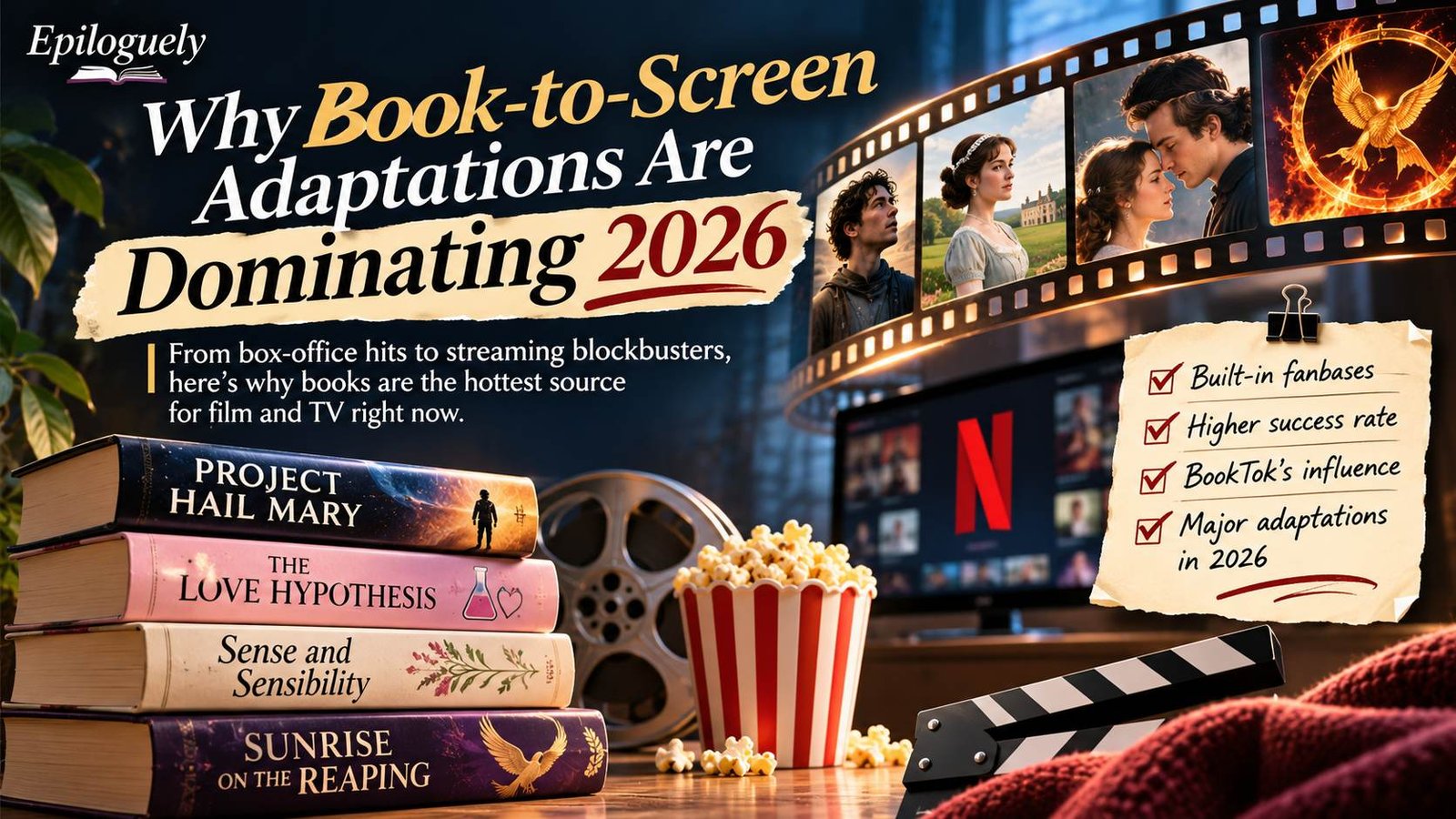
Spend a week looking at what is playing in cinemas and what is filling streaming homepages in 2026 and one pattern becomes difficult to miss: the book is everywhere.
A romance readers already highlighted and argued about becomes a Prime Video movie. A Nobel Prize winner's novel becomes prestige science fiction. Jane Austen returns in yet another form. Stephen King gets reinterpreted for a new generation. A decades-old literary epic becomes a streaming series. And in November, one of the year's biggest theatrical releases will take audiences back to Panem through Suzanne Collins's Sunrise on the Reaping.
This is easy to mock. Every time another adaptation is announced, someone asks the same question: has Hollywood run out of original ideas?
But that complaint misses what is actually happening. Books are not dominating screens because filmmakers have suddenly stopped imagining new stories. They are dominating because publishing, fandom, streaming and social media now form a remarkably efficient system for identifying stories people may already be willing to watch.
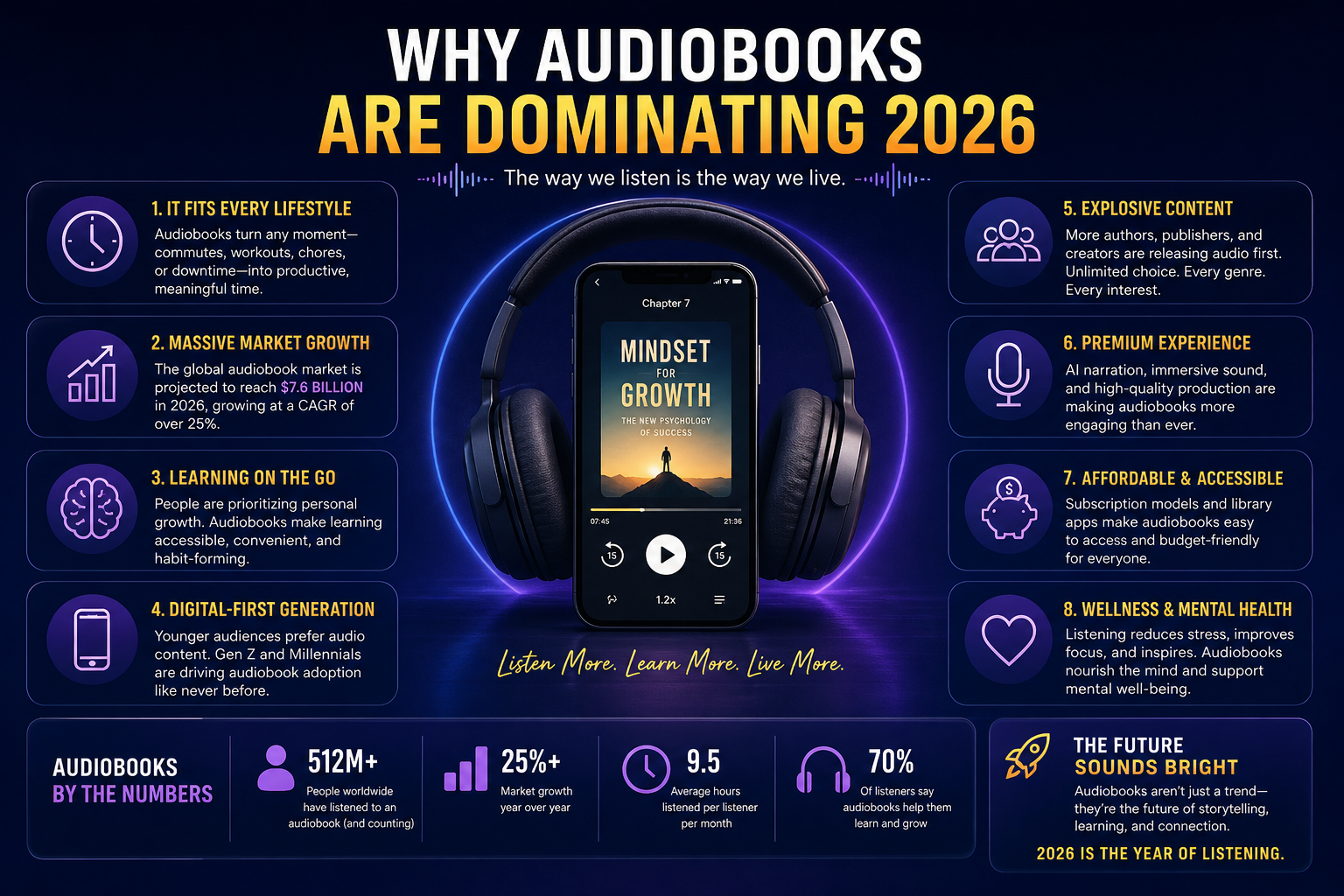
Because books arrive with several advantages at once: a tested story, measurable reader demand, recognisable intellectual property, existing characters and worlds, built-in publicity, franchise potential and a second marketing engine in the publishing industry. Streaming platforms also have evidence that audiences watch them. Netflix says book-based titles generated more than 9 billion global views in 2025 and accounted for nearly 20 percent of all hours watched on the service.
The numbers explain why streaming services keep coming back to books
The strongest argument for adaptation culture is not aesthetic. It is behavioural.
Netflix reported in May that book-based titles generated more than 9 billion global views during 2025 and represented nearly one-fifth of all hours watched on the platform. During the first thirteen weeks of 2026, adaptations held the No. 1 position on Netflix's English TV Top 10 for eight weeks.
That does not mean every adaptation succeeds. It does mean one of the largest entertainment platforms in the world has a large enough data set to know that viewers repeatedly choose stories that existed first as books.
And the phenomenon is not confined to streaming. Amazon MGM's Project Hail Mary, based on Andy Weir's 2021 novel and starring Ryan Gosling, opened theatrically in March. By July, Amazon said the film had earned more than $680 million worldwide, making it the third-highest-grossing movie of the year at that point, before moving to Prime Video.
A blockbuster like that teaches studios a simple lesson: readers are not a niche audience. A successful novel can be the foundation of mainstream global entertainment.
The book is not replacing the movie pitch. Increasingly, the book is the movie pitch — plus an audience report, a character bible and years of free market research.
Why proven stories matterSeven reasons books are such attractive source material in 2026
A successful book has already survived one marketplace
Film development is expensive. Even before a camera rolls, studios spend money on rights, scripts, talent, scheduling and years of development. A bestselling novel cannot guarantee a successful movie, but it does provide evidence that a story has already persuaded people to spend money and time on it.
That proof comes in different forms. It may be millions of copies sold. It may be a long life on bestseller lists. It may be a cult audience that grows slowly over years. It may be BookTok posts that suddenly turn an older novel into a current cultural object.
Books arrive with an audience that can become a marketing department
When Netflix adapted Emily Henry's People We Meet on Vacation, Henry described the readers as the reason the film existed. The novel had sold more than two million copies in the U.S. before its screen life began, and fans had already spent years discussing Poppy, Alex, favourite scenes and dream casting.
The studio therefore does not need to explain why anyone should care about the premise from zero. It needs to convince existing readers that the adaptation understands the book while also inviting new viewers in.
This can create extraordinary organic publicity. Casting announcements become news. A teaser is analysed against passages from the novel. Readers re-post old quotes. The marketing campaign begins inside a community that existed before the first trailer.
BookTok makes reader demand visible in real time
Studios have always watched bestseller lists, but social reading communities reveal something sales figures cannot: what exactly readers are emotionally attached to.
They can see which relationship inspires thousands of edits, which villain becomes strangely beloved, which line gets quoted, which scene readers insist must survive an adaptation and which older book suddenly feels culturally current again.
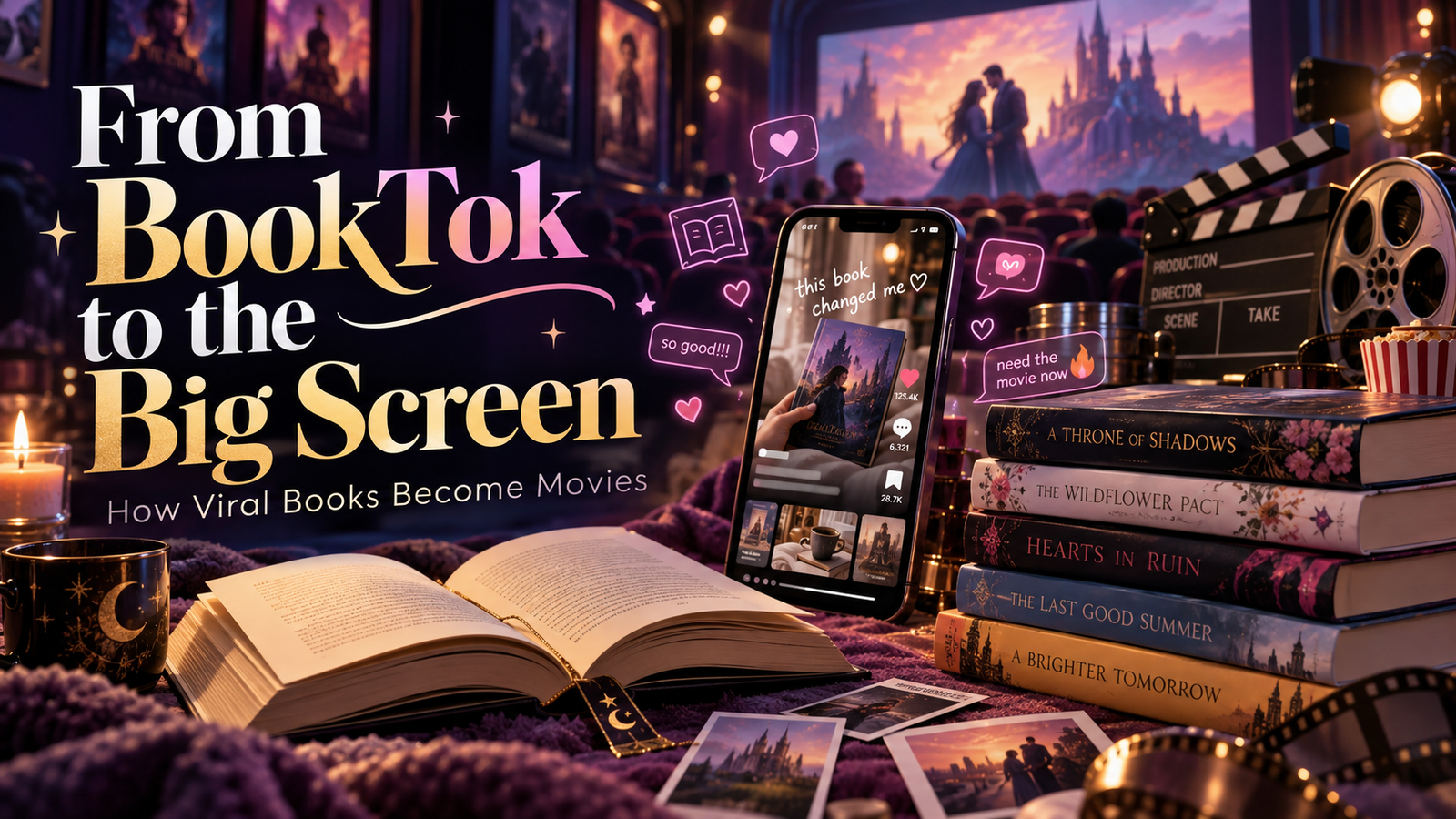
Our article From BookTok to the Big Screen looks more closely at this pipeline. The important point is that virality does not greenlight a movie by itself. It makes enthusiasm legible.
A novel can contain more world than one movie needs
Streaming services and studios do not only want a two-hour story. They often want worlds capable of continuing.
A novel series already offers sequel architecture. A long standalone may contain enough subplots for a limited series. A fantasy world can support prequels, companion stories and spin-offs. Even a classic can be reinterpreted for a different generation without anyone pretending the earlier adaptation has ceased to exist.
The Hunger Games demonstrates the franchise logic clearly. Lionsgate says the first five films earned more than $3.3 billion worldwide. On November 20, the studio returns to Panem with Sunrise on the Reaping, adapted from Suzanne Collins's 2025 prequel novel.
Publishers and studios can market the same story twice
When a movie approaches release, the original book becomes new again. Publishers issue tie-in covers, move backlist titles onto front tables and time new editions around trailers and theatrical campaigns.
Publishers Weekly reported this year that film attention was already lifting sales of Andy Weir's standard Project Hail Mary paperback before the official tie-in edition arrived. Publishing executive David Pavia explained that tie-ins are ideally placed on shelves months before the movie so they can ride the film's marketing cycle.
This means the relationship is circular. A book helps sell a movie. The movie then sends viewers back into bookstores, where some discover the author's entire backlist.
Classic books offer recognition without depending on one fandom
October 2026 alone brought new versions or reinterpretations of Sense and Sensibility, East of Eden, Carrie and Treasure Island. None needed to become viral in 2026 to be recognisable.
Classics give filmmakers a different advantage: cultural memory. Even viewers who have never read Jane Austen may understand the emotional promise of an Austen adaptation. Stephen King's Carrie arrives with decades of horror history. John Steinbeck's East of Eden comes with literary prestige and previous screen history.
The creative question becomes less “will people understand what this is?” and more “why this version now?”
Books provide the kind of depth television increasingly wants
A novel that once seemed too large for a two-hour movie can now become six, eight or ten episodes. That changes which books are considered adaptable.
East of Eden is a useful example. Elia Kazan's famous 1955 film focused on only part of Steinbeck's multigenerational novel. The 2026 Netflix version has room to approach the material as a series instead, changing the relationship between page count and screen time.
Streaming has not made adaptation easy, but it has created more shapes for a book to become. Some stories want a movie. Others want a limited series. Some may work better in animation or theatre — as our piece on Piranesi and the problem of adapting the “unadaptable” explores.
2026 has made the range of adaptations impossible to ignore
The striking thing about this year is not simply the number of adaptations. It is how little they resemble one another.
Project Hail Mary
Andy Weir's science-fiction survival novel became a Ryan Gosling blockbuster and, according to Amazon, passed $680 million worldwide before arriving on Prime Video. It shows that a concept-heavy science novel can become mass-market spectacle.
People We Meet on Vacation
Emily Henry's bestselling romance became Netflix's first screen adaptation of her work. The platform quickly expanded the relationship, developing Funny Story and Happy Place with Henry herself writing both scripts.
The Love Hypothesis
Ali Hazelwood's BookTok-friendly STEM romance moved to Prime Video in September with Lili Reinhart and Tom Bateman. You can read our full review of The Love Hypothesis movie.
East of Eden and Carrie
Two American classics returned as streaming series in October, proving that the adaptation boom is not only about new bestsellers. Familiar texts can be sold again through new formats, stars and generational perspectives.
Sense and Sensibility
Jane Austen's 1811 novel returned to cinemas yet again. The persistence of Austen adaptation culture shows that a story can remain commercially adaptable for centuries when its emotional conflicts survive changes in costume and social context.
Sunrise on the Reaping
The next Hunger Games film arrives November 20. Lionsgate announced the adaptation alongside Suzanne Collins's novel, demonstrating how tightly publishing and cinema can operate once a literary property becomes a proven global franchise.
But a built-in audience is also a built-in problem
Readers are valuable because they care. They are difficult for exactly the same reason.
A person watching an original film has no previous version of the protagonist living in their head. A reader does. They have imagined the face, the voice, the room, the chemistry and the rhythm of important scenes. By the time casting is announced, the official adaptation may already be competing with years of private imagination and fan-created versions.
This is why apparently small changes become enormous online arguments. A line is missing. A character's hair is wrong. A location changes. A supporting figure disappears because the screenplay needs to save twenty minutes. Readers do not experience those choices as neutral production decisions; they experience them as changes to something they feel they already know.
Director Brett Haley said that honouring the emotional arc of Poppy and Alex was essential in People We Meet on Vacation. That is a useful way to think about adaptation fidelity. A movie can remove scenes and still feel faithful. It can also reproduce dialogue almost exactly and somehow miss the book completely.
The hardest adaptation question is not “what can we cut?” It is “what did readers actually fall in love with — and can that feeling exist in another medium?”
Faithfulness is more than accuracyThe adaptation boom can become creatively lazy
There is a legitimate criticism hiding inside the “Hollywood has no ideas” complaint.
If studios become too dependent on recognisable intellectual property, original screen stories face a harder path. Executives may prefer a mediocre book with a measurable audience to a brilliant screenplay with no existing fanbase. The more expensive production and marketing become, the more tempting familiarity looks.
Adaptation can also become a form of risk management that mistakes popularity for cinematic potential. Some novels succeed precisely because of interior narration, structural tricks or the intimacy of reading. Their popularity does not automatically mean they want to become films.
Piranesi is an obvious example. Susanna Clarke's novel is built around perception, architecture, memory and a journal voice that controls how the reader understands reality. The challenge is exciting precisely because translating it requires invention, not transcription.
The best response to adaptation culture, then, is not to demand fewer adaptations simply because they are adaptations. It is to demand that filmmakers have a reason to adapt them.
Why authors are becoming more visible inside the adaptation process
Another 2026 pattern is that some authors are no longer distant names in the credits.
Emily Henry executive produced People We Meet on Vacation, then Netflix announced that she would write the screenplays for Funny Story and Happy Place. Ali Hazelwood received a producer credit on The Love Hypothesis. Authors with highly engaged communities can function as creative collaborators and as reassurance to readers who worry that a studio will misunderstand the source material.
This does not mean authors control every choice. Film and television are collaborative businesses, and the person who wrote the novel is only one part of a much larger production system. But their public involvement has marketing value because readers increasingly want evidence that the adaptation has some connection to the person who created the story.
It also changes authorship itself. A novelist can now write a bestseller, build a direct community through social platforms or newsletters, executive produce the adaptation and then write another screenplay for the same streaming platform. Publishing and Hollywood are becoming less like separate industries that occasionally shake hands.
The real winner may be the backlist
One of the most interesting parts of the adaptation boom happens away from cameras.
Movies turn old books into current books.
A novel published five, ten or fifty years ago can suddenly receive a new cover, a front-table display, renewed reviews, audiobook attention and thousands of searches from viewers who want to know “what happens in the book?” Publishers do not have to create a new manuscript to benefit. The intellectual property already exists.
Publishers Weekly reported that Amazon Publishing saw film attention drive readers from Colleen Hoover adaptations into the rest of her catalogue. The same logic works for classics on an even longer timeline. A new Sense and Sensibility does not merely compete with previous versions; it can create another generation of people who buy Jane Austen.
This is one reason adaptations are likely to remain central to publishing strategy even if Hollywood's tastes shift. The value does not flow only from page to screen. It flows back.
Are adaptations replacing original movies?
Not completely, and the distinction matters.
Original films still break out. Audiences still respond to new characters and stories. But the competition for attention has become brutal. A streaming homepage contains thousands of options. A theatrical release must persuade people to leave home. Marketing is expensive, and cultural attention fragments quickly.
A familiar title solves the first few seconds of that problem. You already know what Frankenstein, Pride and Prejudice or The Hunger Games means, even before a trailer explains the new version.
That advantage can absolutely crowd out originality if studios use it lazily. But the most interesting adaptations are not the ones that merely exploit recognition. They are the ones that use recognition as the starting point and then justify their existence.
The 2026 slate contains both sides of the equation: hugely commercial contemporary novels, prestige literary fiction, science fiction, horror, romance, children's literature and classics that filmmakers have been adapting for generations. That diversity suggests the current boom is not one trend. It is a business model applied across almost every genre.
What happens next?
The easiest prediction is that the pipeline will continue.
Netflix is already developing more Emily Henry adaptations. Lionsgate still has Panem. HarperCollins and Netflix are coordinating a major publishing programme around Greta Gerwig's forthcoming Narnia: The Magician's Nephew, including new editions and collector releases ahead of the 2027 film. Authors with visible online audiences continue to attract screen interest. Classics remain permanently available for reinterpretation.
What may change is the audience's patience.
As more books become films and series, “based on the bestselling novel” stops being a novelty. It becomes background information. Adaptations will still gain attention from recognition, but recognition alone will not make them feel necessary.
That is probably healthy. The boom has proven that readers are a powerful cultural audience. The next phase should prove that adapting their favourite stories requires more than buying the rights.
2026 is not the year books conquered Hollywood. Books have shaped cinema for more than a century. It is the year the connection became impossible for audiences, publishers and platforms to ignore.
My final viewThe reason book-to-screen adaptations dominate is therefore both simpler and more interesting than “Hollywood is out of ideas.” Books are one of the few places where entertainment companies can find an original story and familiar intellectual property at the same time.
That contradiction is extraordinarily valuable. The story can be new to the viewer while already loved by millions of readers.
And as long as a novel can create that combination — discovery for one audience, recognition for another — the path from bookshelf to screen is going to remain very crowded.
Sources & References
Netflix Tudum — From Page to Screen: New Book Adaptations Coming to Netflix in 2026 for Netflix's figures showing more than 9 billion 2025 views for book-based titles, nearly 20 percent of total viewing hours, and adaptation performance in early 2026.
About Amazon — Project Hail Mary for the film's 2026 theatrical and Prime Video performance, including Amazon's reported worldwide box office total of more than $680 million.
Publishers Weekly — These Books Are Getting Their Movie Makeovers for reporting on tie-in editions, film-driven backlist sales and publisher timing around theatrical marketing.
Netflix Tudum — Adapting People We Meet on Vacation for Emily Henry and director Brett Haley's discussion of reader expectations and preserving the novel's emotional core.
Netflix Tudum — Funny Story and Happy Place adaptations for Netflix's announcement that Emily Henry will write both forthcoming screenplays.
Lionsgate — Sunrise on the Reaping for the November 20, 2026 theatrical date, Hunger Games franchise figures and the adaptation announcement.
Variety India — Every Book Adaptation Coming in October 2026 for the unusually dense October slate, including East of Eden, Carrie, Sense and Sensibility, Whalefall, Klara and the Sun and others.
Publishers Weekly — To Watch or Not to Watch: October 2026 for contemporary publishing-industry coverage of October's unusually large adaptation slate.
Publishers Weekly — HarperCollins and Netflix's Narnia publishing programme for an example of publishers and screen companies coordinating editions, collector products and adaptation marketing.
Read the book, watch the adaptation — then argue about both
Explore more book-to-screen stories, literary trends, reviews and publishing culture on Epiloguely.
Explore Epiloguely