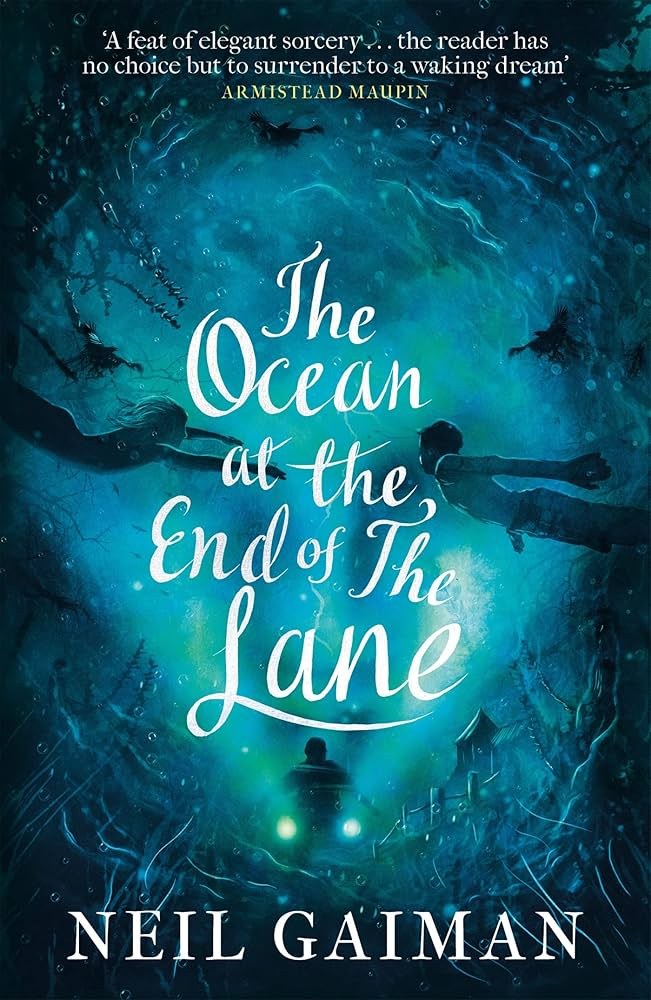
ocean is also the part I can recall most clearly, which says more than a general compliment would.
The people gave memory its real pressure through the pond that may be an ocean. The child narrator's limited understanding makes ordinary adult cruelty and supernatural danger feel equally uncontrollable. I understood the mistake before I forgave it, and that gap gave childhood more force.
I did lose confidence when the women can feel archetypal, and the fantasy rules remain intentionally vague. The book had already earned my attention, so the weakness around memory was frustrating rather than fatal.
The book circles around memory, childhood, sacrifice, imagination, trauma, family, and what adults forget children survived. I did not agree with every conclusion, but I liked being asked to judge actions connected to memory, particularly around the pond that may be an ocean, rather than accept a ready-made moral.
The quietest pages connect memory to childhood more convincingly than the louder scenes do.
Readers who enjoy fantasy, horror, coming-of-age with moral friction will probably get the most from it. I finished still thinking about memory.
Book Summary
An adult returns to his childhood home and remembers a terrifying episode involving ancient beings, a dangerous visitor, and the strange Hempstocks. At the center of the book, The child narrator's limited understanding makes ordinary adult cruelty and supernatural danger feel equally uncontrollable. Its main concerns include memory, childhood, sacrifice, imagination, trauma, family, and what adults forget children survived, though the plot keeps those ideas tied to relationships and consequence.
What I Liked
What worked for me was the pond that may be an ocean, the Hempstock women, and the precise emotional texture of childhood fear. The book also benefits from this character choice: The child narrator's limited understanding makes ordinary adult cruelty and supernatural danger feel equally uncontrollable. I remembered the scenes around the pond that may be an ocean more clearly than the larger speeches.
What Could Be Better
The weaker part for me was that the women can feel archetypal, and the fantasy rules remain intentionally vague. It did not erase what worked in The Ocean at the End of the Lane, though it made the structure feel more visible than I wanted.
Context Behind the Book
Neil Gaiman writes across novels, comics, film, and children's literature, often bringing myth and fairy-tale logic into modern domestic life.