Willem remains central; JB and Malcolm become more distant. I missed the balance of the opening chapters because the early group dynamic contains a liveliness that the later focus largely replaces with intensity.
The relationship between Jude and Willem is the heart of the novel. It develops over years and changes category without losing the foundation of friendship. Willem's patience can feel almost impossible, but there are many small domestic scenes where their connection becomes real: meals, travel, illness, work schedules, and the quiet negotiation of touch. The book understands that caring for someone is not a single noble act. It is repetition, frustration, boundaries, failure, and choosing to return.
The prose is controlled and often beautiful. Yanagihara can move through years quickly, then spend pages inside a single moment of panic or physical pain. New York is less a realistic city than a world where the friends' careers become unusually successful and their apartments, houses, travel, and cultural lives grow increasingly rarefied. That lack of ordinary financial limitation gives the story a near-fable quality. Material success removes external problems so the novel can isolate the one problem nobody's money or talent can solve.
This is also where my largest reservation begins. Jude's past becomes more extreme with each revelation. Every possible form of abuse appears, often through a sequence of adults who exploit him. The accumulation eventually stopped deepening my understanding and began to feel like the author testing how much suffering one character could contain. I do not use the phrase trauma porn lightly, but i understand why it follows this book. There are passages where pain seems not only represented but curated for maximum devastation.
The novel is skeptical about therapy and recovery. Jude receives medical care and has people willing to help, but psychological treatment rarely becomes a believable path. His refusal is consistent with his character, yet the book builds a world where love is enormous and still repeatedly powerless, while trauma appears almost metaphysically permanent. Some readers find that honesty. Others find it irresponsible. I moved between both responses.
The length creates intimacy because we spend decades with these people, but it also creates exhaustion. Scenes of self-harm and crisis recur with variations, and after a point i knew the emotional movement before the scene finished. A tighter novel might have been less overwhelming, though perhaps overwhelming is part of what Yanagihara intends.
The final section is devastating, but not all devastation feels earned in the same way. Some losses emerge from the characters and time. Others feel like the novel deliberately removing every remaining source of hope. I cried, but i was also angry at how clearly the book wanted that response.
Book Summary
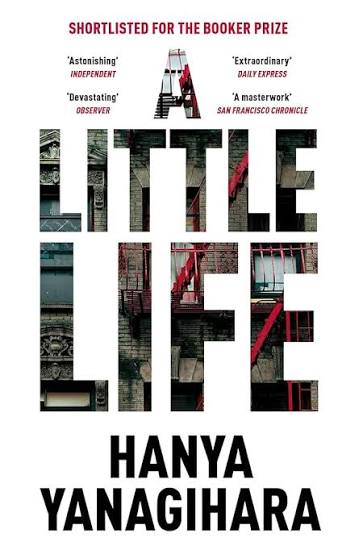
Four college friends move to New York and build adult lives in law, acting, art, and architecture. Over time the novel narrows around Jude St. Francis, a gifted lawyer whose intelligence and professional success conceal severe physical injury, self-harm, and a childhood marked by prolonged abuse. His friendships, especially with actor Willem and former professor Harold, become forms of family, yet Jude remains convinced that love cannot alter what happened to him or what he believes he is. Spanning decades, the book examines friendship, chosen family, ambition, disability, trauma, and the limits of care. It is also exceptionally intense and includes repeated graphic material involving abuse, violence, self-harm, and suicide.
What I Liked
The long duration allows the friendships to change in ways short novels rarely show. People become successful, jealous, distant, dependable, selfish, and necessary at different times. Even though the balance eventually shifts toward Jude, the sense of a shared adult history remains.
Jude and Willem's relationship contains some of the most convincing care in the book. Yanagihara is strongest in domestic detail: food, medication, travel, work, touch, and the routines through which one person learns another person's fear. Harold's love for Jude offers a different kind of chosen family and gives the novel moments of genuine warmth without pretending affection can erase trauma.
What Could Be Better
The amount of suffering placed on Jude eventually feels constructed rather than discovered. Each new section of his past adds another form of abuse, and the accumulation reaches a point where it no longer increases complexity. It increases pressure on the reader. I understand why many people experience this as exploitative.
The book also gives recovery very little imaginative space. Jude's distrust of therapy is believable, but treatment remains marginal while self-destruction receives hundreds of detailed pages.
Context Behind the Book
Hanya Yanagihara is an American novelist and editor whose fiction is known for moral discomfort, intense relationships, and characters shaped by secrecy and suffering. Her first novel, The People in the Trees, examined scientific ambition and abuse through an unreliable central figure. A Little Life was shortlisted for the Booker Prize and the National Book Award and became both widely loved and strongly criticized, especially for its treatment of trauma and self-harm. Yanagihara later published To Paradise, another large novel structured around love, illness, and alternative versions of American life. Her work often refuses conventional recovery narratives, a choice that produces much of its emotional force and much of the debate around it.