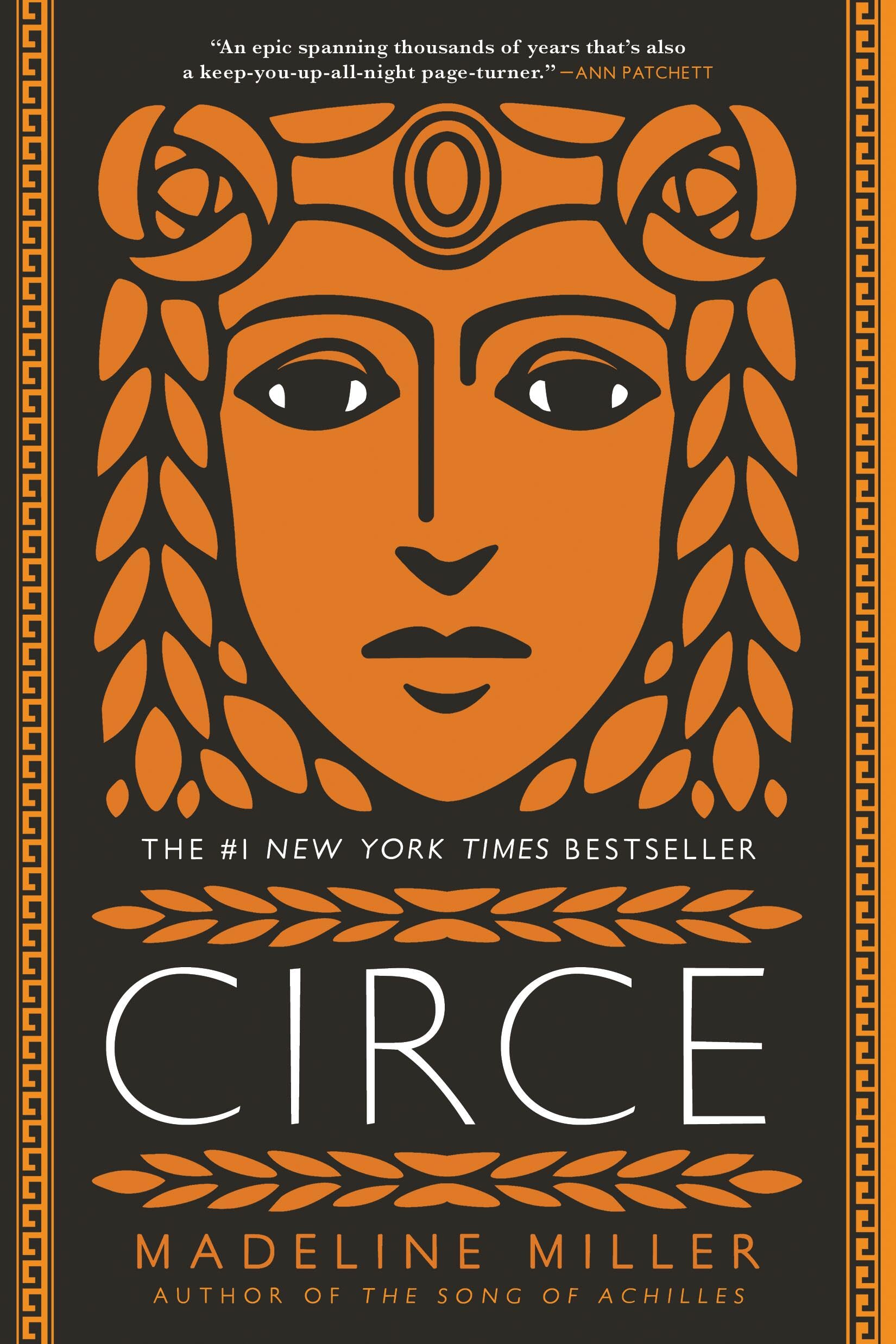
Circe Review
| Published | 2018-04-10 |
| Series | Standalone |
| Genre | Mythological Fiction, Fantasy, Historical Fiction |
| Language | English |
| Publisher | Little, Brown and Company |
| ISBN-10 | 0316556343 |
| ISBN-13 | 978-0316556347 |
📝Circe — My Honest Review
Written and reviewed by Shadab Alam. The opinions and rating in this review are my own.
Summary:
Circe is born to the sun god Helios but grows up as the least valued member of an immortal family. She lacks the beauty and effortless power of the gods around her, yet discovers a different ability: witchcraft created through patience, knowledge, and transformation. After using that power, she is exiled to the island of Aiaia, where figures from Greek myth pass through her long life, including Hermes, Daedalus, Odysseus, Penelope, and Telemachus. The novel reimagines the witch from the Odyssey as a woman learning how to survive violence, solitude, motherhood, and immortality. It is less a retelling of one myth than a complete life built from the spaces between many famous stories.
✅ What I Liked
The best thing about the book is the way Circe's power develops through work. She is not suddenly revealed as secretly superior to everyone who mocked her. She learns by gathering plants, making mistakes, paying attention, and continuing when nobody is there to praise her. That makes her independence feel earned.
Aiaia is also a wonderful setting. Because Circe remains on the island while centuries pass, the book can bring different myths to her without losing its center. Miller is especially good with Odysseus, who is attractive and damaged in equal measure. She understands why people follow him and why living close to him would be exhausting.
I also loved the treatment of immortality. The gods remain unchanged because change would require admitting need, grief, and consequence. Circe becomes more human as she becomes more willing to be changed by what she loves. That idea gives the ending real emotional force.
❌ What Could Be Better
The opening in Helios's palace is important, but it is the slowest part of the novel. The cruelty of Circe's family is established early and then repeated, and i was waiting for exile because that is where she begins making choices rather than simply reacting to contempt.
A few mythological figures arrive, perform their recognizable role, and leave before the relationship has time to deepen. The episodic structure is part of a life that lasts centuries, but it sometimes makes the middle feel like a sequence of beautifully written encounters rather than one continuous narrative.
The final section resolves several emotional questions with more neatness than i expected. I liked Circe's decision, but the path toward it becomes slightly more conventional after a novel that had spent so much time resisting conventional heroic structure. Readers looking for constant action may also find the book quiet; much of its power comes from solitude, reflection, and gradual change rather than plot.
Circe is born in the halls of Helios, god of the sun, but she does not look or sound like the immortals around her. She is mocked for her mortal voice and treated as weak by a family that values beauty, power, and cruelty. Her first acts of kindness are dismissed. Her first experience of love humiliates her. When she discovers that she can transform the world through witchcraft, the discovery is both liberation and danger.
After using her power in a way the gods cannot ignore, Circe is exiled to the island of Aiaia. This sounds like the point where the story would become small, but the island gives Miller a fixed place through which centuries of myth can pass. Hermes visits. Daedalus arrives. The Minotaur and Scylla enter the story. Odysseus and his men eventually reach the shore. Circe is often at the edge of stories usually centered on famous men, and the novel quietly changes those stories by making her the person who remembers what the heroes needed from everyone else.
The first third took me a little time. The world of Helios is deliberately cold and repetitive, full of immortal beings hurting each other because nothing has lasting consequences for them. Circe begins as someone desperate to be loved by people who do not respect her. I understood what Miller was building, but i did not feel fully connected until exile forced Circe to live without their approval.
Once she reaches Aiaia, the book becomes much stronger. Witchcraft is not presented as a sudden gift that solves her life. It is work. Circe gathers plants, experiments, fails, tries again, and learns the limits of what she can change. I liked this more than the usual fantasy version of power because skill gives her independence without making her safe. Immortality does not protect her from violence, loneliness, or fear.
The novel's most famous episode, when sailors arrive and Circe turns men into pigs, is given a history that changes its meaning without making it simple revenge. Miller is interested in what repeated vulnerability does to someone who has finally found a way to defend herself. Circe's response is frightening, but the book makes clear that fear came first. It does not reduce her to victim or avenger. She becomes capable of mercy and cruelty depending on what survival seems to require.
Odysseus is handled particularly well. He is clever, charismatic, exhausted, manipulative, and able to make every story sound as though he is its necessary center. Circe sees his appeal and also sees the damage in him. Their relationship is important, but the book does not allow her life to become a waiting room for his arrival. The later sections, involving Penelope and Telemachus, deepen this idea by showing what heroic stories leave behind in the people who have to live after the hero is gone.
The theme i responded to most was time. Circe is immortal, but immortality in this book is not the absence of loss. It is the guarantee that you will outlive almost everything you learn to love. The gods avoid this pain by refusing to change. Circe becomes more human precisely because she allows experience to alter her. Her growth is slow because it takes centuries, and Miller makes that slowness feel emotionally believable.
The prose is controlled and vivid. There are sentences that feel ancient without sounding translated, and the natural world of the island is rendered with real texture. Occasionally the mythological cameos feel arranged for recognition, as though another famous name is arriving because the novel needs to connect Circe to the larger map of Greek myth. Most are integrated well, but a few pass too quickly to become more than episodes.
I also thought the final movement was slightly more orderly than the middle. Circe reaches a decision about what kind of life she wants and the book gives that decision a satisfying symbolic form. I believed it, but part of me missed the uncertainty and strangeness of the island chapters where no obvious future had been promised.
Four and a half stars. It is a story about a witch, but the magic is not the deepest transformation. The deeper change is Circe learning that being unwanted by powerful people is not the same thing as being without value. Miller takes a figure remembered for what she did to men and gives her a life that exists before, after, and beyond them.
📊Shadab's Rating
🎭Vibe Check
Read spoilers, debates, and detailed user reviews in our discussion room.
Discover Your Next Great Read
Handpicked recommendations from our collection of literary treasures