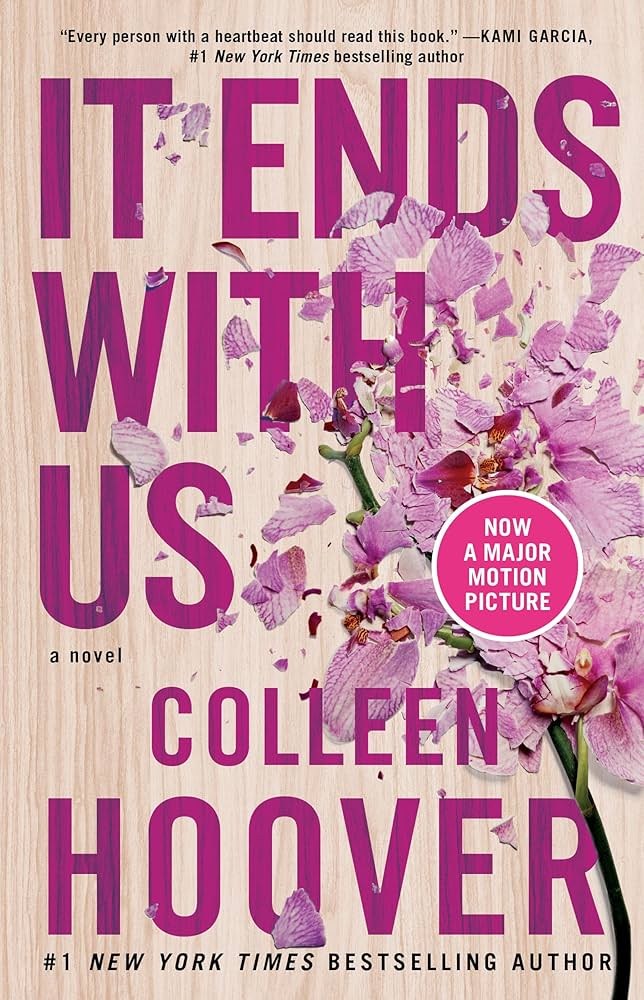
It Ends with Us Review
| Published | 2016-08-02 |
| Series | It Ends with Us |
| Genre | Contemporary Fiction, Romance, Domestic Drama |
| Language | English |
| Publisher | Atria Books |
| ISBN-10 | 1501110365 |
| ISBN-13 | 9781501110368 |
📝Epiloguely Editorial Review
Written and reviewed by Shadab Alam.
It Ends with Us initially looked like a story I could understand in fairly simple terms: a relationship becomes abusive, the main character has to decide what to do, and the novel explores how difficult leaving can be. What made it more interesting to me was the way love complicated that picture. Lily does not stop caring about Ryle the moment he hurts her, and the book is strongest when it refuses to pretend that recognizing abuse automatically makes every emotional decision easy.
Lily meets Ryle, a successful neurosurgeon who is confident, charming, and intense in a way that initially feels romantic. At the same time, memories of her first love, Atlas, and of the abusive marriage she witnessed between her parents continue to shape how she understands relationships. Those two parts of her life begin to overlap in uncomfortable ways. She has already seen what abuse can do to a family, yet knowing that history does not protect her from finding herself inside a similar pattern.
That is where Lily’s perspective became important for me. The novel does not present her as someone who fails to understand what is happening simply because she stays. She notices changes, questions her own reactions, remembers what she once thought about her mother, and gradually discovers how different abuse looks when you are the person inside the relationship. It is much easier to say someone should leave when love, memory, fear, hope, and practical consequences are not involved.
I thought the book handled that contradiction better than its simpler moral moments. Lily can love Ryle and still be harmed by him. She can remember his kindness and still understand that kindness does not cancel violence.
Reader Reviews
0 published written reviews · Reader star ratings remain separate from the editorial rating.
📊Reader Rating Breakdown
🎭Vibe Check
Use the separate comment-style discussion room for spoilers, endings, characters, theories, questions, and replies. Formal reader reviews stay on this page.
Discover Your Next Great Read
Handpicked recommendations from our collection of literary treasures