People who believe they are being rational often end up making choices that look a lot like discrimination once those choices affect someone they know.
The couples with different string lengths were especially effective. A number printed nowhere and visible only through a piece of string suddenly becomes something that can change how two people imagine their future together. The book does not need a complicated magic system because the emotional consequences of the idea are enough.
The political side of the novel is more uneven. Once governments and public figures begin responding to short-stringers, the story becomes much more openly about discrimination. I understood what Erlick was trying to explore, but some characters started to feel less like people and more like representatives of a particular argument. The politics could also be surprisingly straightforward for a situation that would probably become incredibly messy in real life.
I wanted the book to push harder in those moments.
There are difficult questions sitting just outside the story: What happens when someone refuses to reveal their string? Could insurance companies demand the information? What about people close to the apparent cutoff between “short” and “long”? The novel touches the edges of these problems, but sometimes moves on before they become uncomfortable enough.
The pacing also changes quite a bit depending on which character the book is following. Some sections pulled me in immediately, while others felt like they existed mainly to move the larger argument forward. Still, the ensemble mostly works because mortality does not affect everyone in the same way. One person becomes frightened, another becomes reckless, someone else turns the information into a political weapon.
That variety is what kept the premise alive for me.
'The Measure' is strongest when it stops asking the abstract question of whether knowing your lifespan would be good or bad and instead asks what people would actually do with that knowledge. The answer, unsurprisingly, is not especially flattering. Some people become kinder. Others find new reasons to divide the world into groups.
I do think the novel occasionally makes its characters carry ideas a little too obviously, and I wish it had spent more time on the messier consequences of discrimination. But the central premise is strong enough that I kept thinking about it after finishing the book.
Not because I wanted to know what my own string would say.
Because I was not completely sure whether I would open the box.
Book Summary
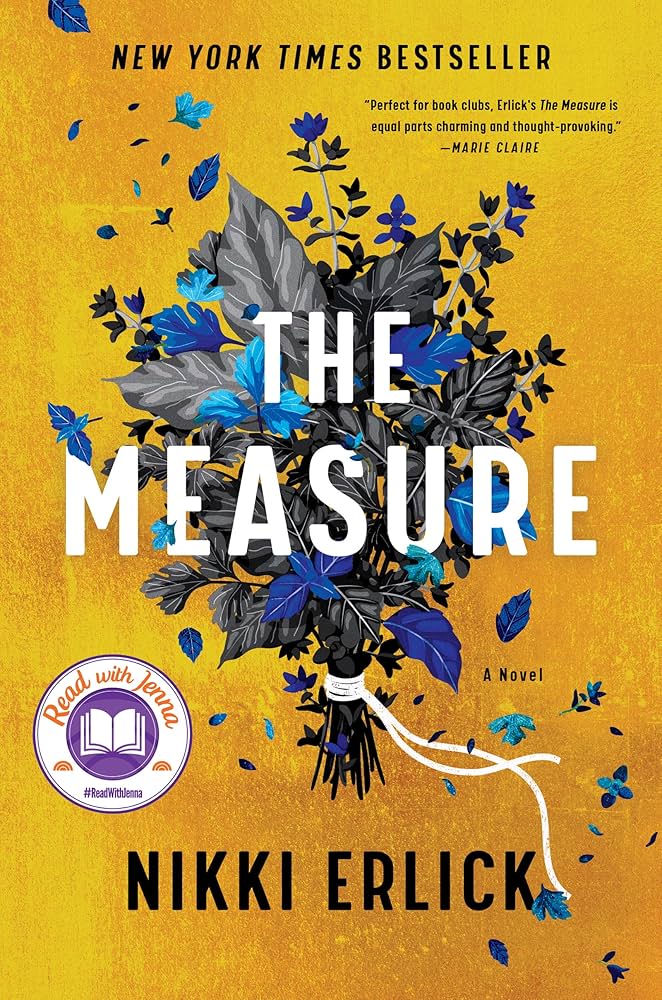
One day, every adult receives a mysterious box containing a string that reveals how long they will live. Some people open theirs immediately. Others refuse. Before long, the strings begin affecting relationships, careers, politics, and the way people judge one another. Through a group of connected characters, The Measure explores what knowing the length of your life might do to love, fear, privacy, discrimination, and personal choice. The book never finds a perfectly comfortable answer, which is probably why its central question stays with you: if the box appeared at your door, would you really want to know?
What I Liked
The premise works best when it stops being a big philosophical question and starts interfering with ordinary life. I especially liked seeing what happens to couples whose strings are very different, and how quickly a piece of private information becomes something employers, politicians, and other people feel entitled to judge. Following several characters also helps because no two people respond to the strings in quite the same way. Some become afraid, some angry, and others simply try to keep living. Those differences gave The Measure much of its emotional weight.
What Could Be Better
A few characters felt too closely tied to a particular argument, almost as if they were there to represent a viewpoint rather than exist as fully complicated people. The political side of the story could feel simplified for the same reason. I also kept wondering about situations the rules never really explore—privacy, insurance, people who refuse to reveal their strings, and all the messy cases that would inevitably appear. The novel was still easy to stay with, but some of its strongest ideas could have hit harder if it had been willing to make them messier.
Context Behind the Book
Nikki Erlick's debut uses one clear speculative premise to examine mortality, social division, fear, and institutions turning private information into public categories.