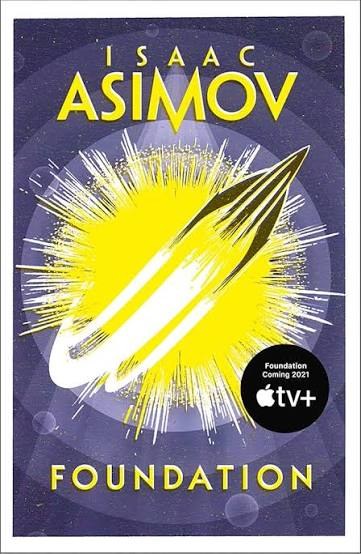
to shorten the coming dark age. That setup creates an immediate question about history, yet the answer shifts once prediction becomes personal.
I kept returning to history, prediction, institutions, knowledge, religion, trade, power, and the limits of planning. The book is better when history and prediction appear in behavior, especially in who gets believed and who carries the cost afterward.
The material I kept returning to was the historical scale and pleasure of watching political crises resolved through ideas rather than battles. These moments make the stakes around prediction clearer without spelling them out.
The weaker stretch comes from the fact that characterization is thin, women are nearly absent in the opening volume, and outcomes can feel too neat. Another reader may accept the choice as part of the genre, but I found it distracting because prediction and the historical scale deserved more room.
The book leaves enough room for disagreement about history, especially around the historical scale, which made my own reaction more precise.
I did not love every choice, but I believed Foundation's interest in history. That interest in Foundation remained after the plot settled.
Book Summary
Mathematician Hari Seldon predicts a galactic empire's collapse and creates a community intended to shorten the coming dark age. The emotional pull comes from the fact that The true protagonist is the Foundation itself, while individual leaders appear as temporary problem-solvers in a centuries-long plan. The novel deals with history, prediction, institutions, knowledge, religion, trade, power, and the limits of planning without offering a completely clean answer.
What I Liked
The best material for me was the historical scale and pleasure of watching political crises resolved through ideas rather than battles. I also responded to the way The true protagonist is the Foundation itself, while individual leaders appear as temporary problem-solvers in a centuries-long plan. Together, those choices made the people in Foundation feel more important than the premise.
What Could Be Better
I was less convinced because characterization is thin, women are nearly absent in the opening volume, and outcomes can feel too neat. I could understand the intention in Foundation, yet the execution felt easier than the surrounding material.
Context Behind the Book
Isaac Asimov was a prolific science-fiction writer and science popularizer whose Foundation stories helped establish the multi-generation galactic saga.