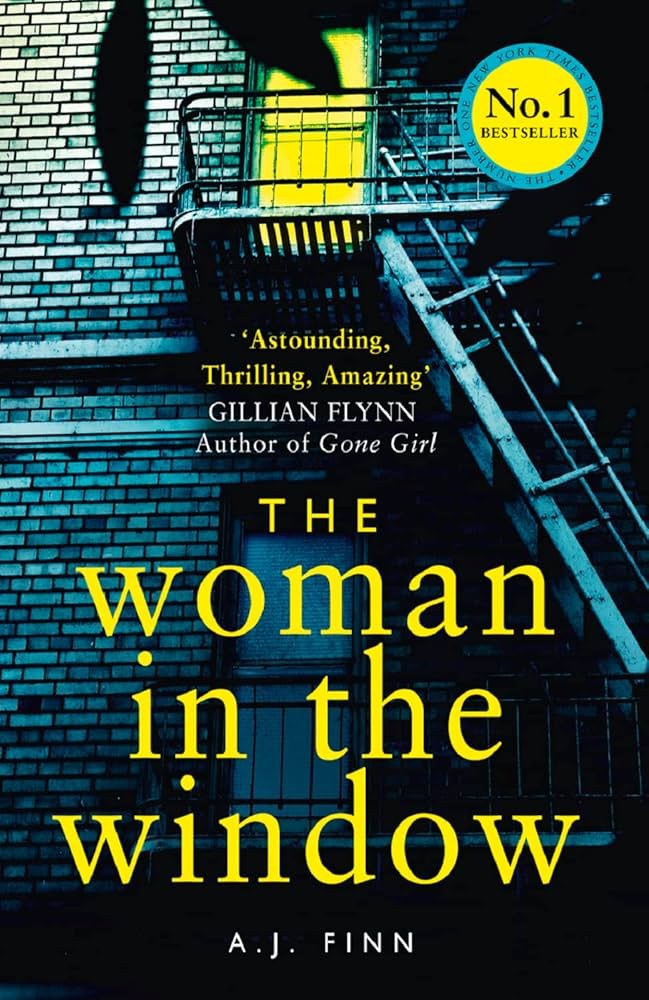
The Woman in the Window Review
| Published | 2018-01-02 |
| Series | Standalone |
| Genre | Psychological Thriller, Mystery |
| Language | English |
| Publisher | William Morrow |
| ISBN-10 | 0062678418 |
| ISBN-13 | 9780062678416 |
πThe Woman in the Window β My Honest Review
Written and reviewed by Shadab Alam. The opinions and rating in this review are my own.
Summary:
An agoraphobic woman watches neighbors from her New York home and believes she has witnessed a crime nobody else accepts. At the center of the book, Anna's isolation, medication, drinking, trauma, and love of old films make her unreliable without making her unworthy of concern. Its main concerns include trauma, perception, loneliness, credibility, fear, isolation, and how vulnerable witnesses are dismissed, though the plot keeps those ideas tied to relationships and consequence.
β What I Liked
My favorite parts involved the confined setting, film-noir references, voyeurism, and uncertainty around what Anna saw. They worked especially well because Anna's isolation, medication, drinking, trauma, and love of old films make her unreliable without making her unworthy of concern. In The Woman in the Window, the result felt specific rather than manufactured.
β What Could Be Better
My reservation is that the influences are obvious, twists are heavily signaled, and the villain becomes theatrical. Another reader may accept it, but I felt The Woman in the Window lose some control there.
An agoraphobic woman watches neighbors from her New York home and believes she has witnessed a crime nobody else accepts. The same pressure returns through the confined setting, which makes trauma feel lived rather than arranged.
I was most attentive during the confined setting, film-noir references, voyeurism, and uncertainty around what Anna saw. The confined setting is also the part I can recall most clearly, which says more than a general compliment would.
The people gave trauma its real pressure through the confined setting. Anna's isolation, medication, drinking, trauma, and love of old films make her unreliable without making her unworthy of concern. I understood the mistake before I forgave it, and that gap gave perception more force.
I did lose confidence when the influences are obvious, twists are heavily signaled, and the villain becomes theatrical. The book had already earned my attention, so the weakness around trauma was frustrating rather than fatal.
The book circles around trauma, perception, loneliness, credibility, fear, isolation, and how vulnerable witnesses are dismissed. I did not agree with every conclusion, but I liked being asked to judge actions connected to trauma, particularly around the confined setting, rather than accept a ready-made moral.
Several scenes improve on reflection because the confined setting acquires a different meaning later.
I would return to The Woman in the Window for the confined setting, though I would still argue with its treatment of trauma.
πShadab's Rating
πVibe Check
Read spoilers, debates, and detailed user reviews in our discussion room.
Discover Your Next Great Read
Handpicked recommendations from our collection of literary treasures