Legal identity and social identity do not align. The younger generations inherit discrimination even when Korea is a place they barely know. Lee shows how prejudice becomes structural without reducing every Japanese character to a villain. Kindness exists, but it does not erase the system surrounding it.
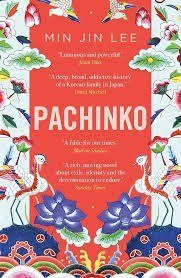
The title refers to the pinball-like gambling game that becomes one of the few industries where Korean immigrants can build wealth. Pachinko is looked down upon, associated with vice and criminality, yet it gives several characters a route into stability that respectable institutions deny them. The game also becomes a useful image for lives shaped by chance and by a board designed before the ball begins moving. The characters make choices, but they do not choose the obstacles.
Hansu is one of the most difficult characters and one of the reasons the novel stays alive. He protects Sunja's family at important moments and also attempts to control them. His money solves real problems, but accepting it creates new forms of dependence. Lee never turns him into a secret romantic hero or a simple villain. He believes his understanding of the world is realism, and sometimes he is correct. The damage comes from his belief that being correct gives him the right to decide for everyone else.
The family expands and the point of view moves between many people: Sunja, Isak, Kyunghee, Yoseb, Noa, Mozasu, Solomon, and others. This breadth creates the feeling of a true saga, though it also means some transitions happen abruptly. A character who has occupied the center may disappear for many pages, and years can pass in a sentence. I occasionally wanted the novel to remain longer with a relationship before history moved it forward.
The prose is clear and mostly restrained. Lee does not decorate suffering. Important events can be stated in a few direct sentences, which sometimes made them hit harder than a longer dramatic scene would have. There are moments where the narration tells us the future of a minor character in a sudden aside. I came to like this because it creates the sense that every person has a life beyond the part the main family happens to witness.
The final sections move toward Solomon, the generation raised with more money and more apparent freedom. His education and international career suggest that the old barriers may have weakened, but the novel is not interested in a simple progress story. Respectability remains conditional. The family has changed its class position without escaping the question of belonging.
Sunja is not written as a grand historical heroine. She is practical, proud, capable of endurance, and sometimes unable to see how her own ideas about shame shape the people she loves.
Book Summary
In colonial-era Korea, teenage Sunja becomes pregnant by wealthy businessman Koh Hansu and refuses to become his kept mistress after learning he is married. A young minister, Isak, offers marriage and takes her to Osaka, beginning a family life shaped by migration, poverty, war, and anti-Korean discrimination in Japan. Across four generations, Sunja's children and grandchildren pursue education, religion, business, respectability, and belonging while repeatedly discovering that success does not erase the identity society assigns them. The pachinko industry becomes both a source of survival and a symbol of lives moved by choice inside systems built by history and chance. The novel is an expansive family saga grounded in ordinary work and sacrifice.
What I Liked
The novel makes history personal without making it small. Colonialism, war, and discrimination are present, but they reach the characters through food, housing, school records, jobs, marriage, and the names they are allowed to use. That gives the large timeline emotional weight.
Sunja is an extraordinary central figure because Lee never needs to make her extraordinary in a public sense. Her strength is practical and repetitive. She works, feeds people, protects her children, makes mistakes, and keeps going. Hansu is equally well drawn in a completely different way. His help is real and so is his control, and the book refuses to simplify that contradiction.
What Could Be Better
The point of view moves across so many characters that a few relationships are left just when they become most interesting. The early generation receives the deepest development, while some later figures, particularly around Solomon, feel more like parts of the novel's argument about modern Japan than people known with the same intimacy as Sunja.
Time jumps can also be abrupt. Major emotional changes sometimes happen between sections and are summarized after the fact.
Context Behind the Book
Min Jin Lee was born in Seoul and moved with her family to the United States as a child. She studied history at Yale and trained as a lawyer before turning fully to fiction. Her first novel, Free Food for Millionaires, explored class and ambition among Korean Americans in New York. Pachinko grew from years of research into the lives of ethnic Koreans in Japan and became a finalist for the National Book Award. Lee is known for combining large social questions with detailed family life, particularly the relationship between money, migration, education, and belonging. Her characters are rarely symbols alone; they disagree about the best way to survive the same historical pressure.