than its buildup suggests. This is where I could see the author's plan around power more clearly than the character's need.
I became most involved through the people caught in power, especially around the women-led political world. Ead's divided loyalty and Sabran's growth center the western story, while Tané presents another view of duty and ambition. This is where my sympathy became complicated rather than automatic, because faith carries a real cost.
The sections I enjoyed most involved the women-led political world, dragons, large lore, and slow development of trust between Ead and Sabran. Those sections find a rhythm that suits the book's interest in faith.
The larger subject is power, faith, historical distortion, duty, love, inheritance, and the political use of myth. I appreciated that power is tied to money, family, work, and the women-led political world rather than left as an abstract idea.
I also noticed how often power appears through routine while faith remains unspoken.
My rating is 4.4/5. The ending left me with power, not with a neat sense that every problem had been solved.
Book Summary
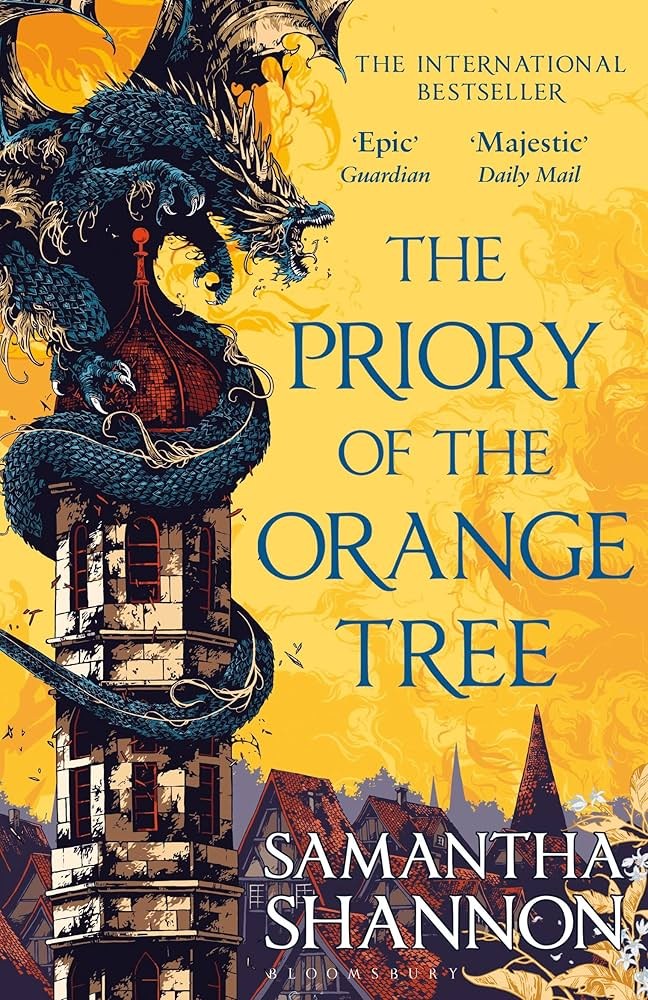
Queendoms, secret orders, dragon riders, and divided religious traditions must confront the return of an ancient enemy. Ead's divided loyalty and Sabran's growth center the western story, while Tané presents another view of duty and ambition. What follows is a story concerned with power, faith, historical distortion, duty, love, inheritance, and the political use of myth, told through pressure on trust, identity, and ordinary decisions.
What I Liked
I liked the women-led political world, dragons, large lore, and slow development of trust between Ead and Sabran. Ead's divided loyalty and Sabran's growth center the western story, while Tané presents another view of duty and ambition. Those details gave The Priory of the Orange Tree a distinct emotional shape, and the writing trusted the scenes instead of explaining every idea twice.
What Could Be Better
My main problem was that the eastern storyline receives less depth, and the final conflict resolves faster than its buildup suggests. The Priory of the Orange Tree remained readable, but those choices reduced the force of scenes that should have landed harder.
Context Behind the Book
Samantha Shannon is a British fantasy writer known for large-scale world-building and women-centered speculative fiction about myths inherited and challenged.