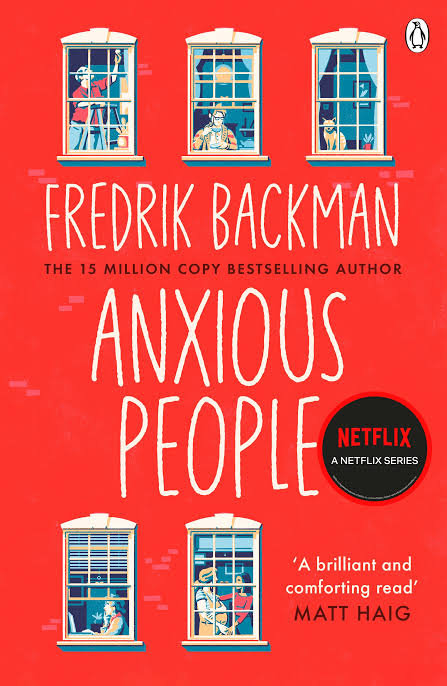
Anxious People Review
| Published | 2020-09-08 |
| Series | Standalone |
| Genre | Contemporary Fiction, Comedy, Mystery |
| Language | English |
| Publisher | Atria Books |
| ISBN-10 | 1501160834 |
| ISBN-13 | 9781501160837 |
πAnxious People β My Honest Review
Written and reviewed by Shadab Alam. The opinions and rating in this review are my own.
Summary:
A failed bank robber accidentally takes apartment viewers hostage, and the investigation reveals that nearly everyone present carries private fear. The story is shaped by the ensemble first looks like comic types, then becomes a group whose worst behavior is connected to pain. Its strongest elements include the absurd hostage setup, father-son police relationship, structural misdirection, and compassionate reframing of each person, while its larger concerns are anxiety, suicide, parenting, marriage, forgiveness, fear, strangers, and how people interrupt despair. The result is a contemporary fiction novel that combines a clear narrative situation with questions that continue beyond the ending.
β What I Liked
I especially liked the absurd hostage setup, father-son police relationship, structural misdirection, and compassionate reframing of each person. Those elements gave the book its most memorable emotional and visual identity. The story is strongest when it trusts scenes, objects, routines, and conversations to reveal its ideas without stopping to explain everything. The character work also stayed with me: the ensemble first looks like comic types, then becomes a group whose worst behavior is connected to pain.
β What Could Be Better
My main issue was the sentiment can be heavy, twists depend on withheld information, and some jokes repeat. These choices did not ruin the reading experience, but they made some sections feel less convincing than the strongest parts. Readers expecting a very different rhythm or tone should know that before starting.
On paper, the plot sounds simple: A failed bank robber accidentally takes apartment viewers hostage, and the investigation reveals that nearly everyone present carries private fear. In practice, the book is more interested in the private compromises produced by that situation.
The character work is where I became properly invested. The ensemble first looks like comic types, then becomes a group whose worst behavior is connected to pain. That tension keeps the people from becoming symbols with names attached. Even when I disagreed with a decision, I could usually see the fear, pride, loyalty, or habit behind it.
What worked best for me was the absurd hostage setup, father-son police relationship, structural misdirection, and compassionate reframing of each person. These are not decorative details. They create the part of the book I could feel rather than merely understand. The writing is strongest when an object, room, routine, or repeated action carries an idea without a long explanation.
Under the plot, the book is really thinking about anxiety, suicide, parenting, marriage, forgiveness, fear, strangers, and how people interrupt despair. I liked that these concerns overlap. An act of protection can become control, a romantic choice can also be selfish, and a victory can create a different kind of damage. That moral overlap gave me something to think about after the plot ended.
The setting is never just background. It pressures the characters, limits their choices, and reveals what they have learned to treat as normal. That relationship between place and behavior made the world feel complete.
One reason the book feels substantial is that it does not isolate its ideas from ordinary behavior. The concerns around anxiety, suicide, parenting, marriage, forgiveness, fear, strangers, and how people interrupt despair appear in who gets interrupted, who performs confidence, who is allowed privacy, and who has to absorb the consequences of another person's decision. I found those smaller patterns more convincing than any single speech. They also kept the story human when the premise became dramatic, symbolic, or larger than everyday life.
As a reading experience, Anxious People gave me enough clarity to stay oriented while still leaving room for uncertainty. I did not need every motive explained, but I needed to understand the emotional direction of the scenes, and most of the time I did. The book's best passages make the reader participate by noticing a pattern before it is confirmed. That involvement is one reason the story remained in my mind after I had finished the final page.
My own response changed while I was reading. Early on I was mainly following the mechanics of the story; later I became more interested in the emotional excuses people make for themselves. That shift is a good sign. It means the book did not simply deliver a failed bank robber accidentally takes apartment viewers hostage, and the investigation reveals that nearly everyone present carries private fear. and stop there. It used the premise to make me reconsider who deserved sympathy, which choices were avoidable, and how much context should change a moral judgment.
The pacing generally suits the material, although there are places where an emotional point is repeated after it is already clear. I still rarely felt that the author had lost control of the destination.
My main reservations are connected to the sentiment can be heavy, twists depend on withheld information, and some jokes repeat. These issues did not erase what I liked, but they changed how fully I believed the story. At times I could feel the author moving pieces into place, and once I noticed that pressure the emotion became slightly less natural.
The ending stayed with me because rescue often looks like staying, listening, and making one practical choice. It does not settle every question, but it completes the emotional movement the book has been building.
My rating is 4.5/5. I would recommend it to readers who are drawn to contemporary fiction, comedy, mystery and do not mind a story with genuine rough edges. Its strongest images and questions are likely to remain longer than many plot details.
πShadab's Rating
πVibe Check
Read spoilers, debates, and detailed user reviews in our discussion room.
Discover Your Next Great Read
Handpicked recommendations from our collection of literary treasures