This is where I could see the author's plan around childhood more clearly than the character's need.
I became most involved through the people caught in childhood, especially around the battle-room games. Ender's empathy makes him an effective strategist, and the tragedy is that institutions exploit the same quality that might prevent violence. This is where my sympathy became complicated rather than automatic, because manipulation carries a real cost.
The sections I enjoyed most involved the battle-room games, tactical problem-solving, school pressure, and moral reversal of the final training. Those sections find a rhythm that suits the book's interest in manipulation.
The larger subject is childhood, manipulation, leadership, empathy, war, obedience, intention, and consequence. I appreciated that childhood is tied to money, family, work, and the battle-room games rather than left as an abstract idea.
One brief exchange about manipulation, tied to the battle-room games, did more for me than the longer explanations around it.
I would give it 4.4/5. My final response is closer to admiration than comfort, mainly because Ender's empathy makes him an effective strategist, and the tragedy is that institutions exploit the same quality that might prevent violence.
Book Summary
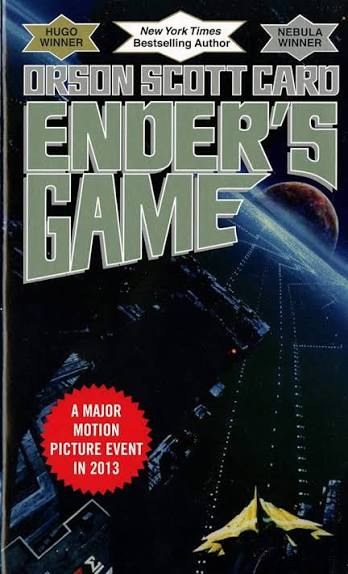
Gifted child Ender Wiggin is taken to military school where adults manipulate competition, isolation, and simulated war to prepare him for aliens. Ender's empathy makes him an effective strategist, and the tragedy is that institutions exploit the same quality that might prevent violence. What follows is a story concerned with childhood, manipulation, leadership, empathy, war, obedience, intention, and consequence, told through pressure on trust, identity, and ordinary decisions.
What I Liked
What worked for me was the battle-room games, tactical problem-solving, school pressure, and moral reversal of the final training. The book also benefits from this character choice: Ender's empathy makes him an effective strategist, and the tragedy is that institutions exploit the same quality that might prevent violence. I remembered the scenes around the battle-room games more clearly than the larger speeches.
What Could Be Better
The weaker part for me was that some children sound unusually adult, and the political subplot is less convincing than Ender's training. It did not erase what worked in Ender's Game, though it made the structure feel more visible than I wanted.
Context Behind the Book
Orson Scott Card is best known for the Ender series; the novel remains influential while his public views have complicated how many readers discuss its creator.