And while they are both busy telling themselves this the actual relationship underneath the fake one grows quietly and honestly in a way that neither of them is quite monitoring.
Olive is one of my favourite things about this book. She is competent and driven about her research and completely chaotic about everything adjacent to it and that contrast is both funny and real. She is not awkward in the bumbling romantic comedy way where she trips over things and says embarrassing things constantly. She is awkward in the more specific way of someone who has put everything into one area of her life and has less capacity left for everything else. It feels true rather than performed.
Adam is the harder character to write and Hazelwood writes him well. The book spends time letting you see him through Olive's initial assumptions, difficult, cold, intimidating, and then slowly reveals a different picture without ever making a big dramatic moment of the revelation. You just gradually understand him better and the understanding is more satisfying than a single explanation would have been.
The STEM world is the book's greatest asset and i want to stay on this because it is not just window dressing. Hazelwood writes the actual texture of academic life in science, the funding anxiety, the pressure from supervisors, the gender dynamics in research departments, the specific exhaustion of being a woman who has to be twice as careful about perception as the men around her, all of it sits inside the story in a way that makes the world feel completely real. This is clearly written by someone who lived some version of this and that specificity gives everything else in the book more weight than a generic setting would.
The humor works throughout. There are conversations between Olive and Adam, particularly in the earlier sections of the book when they are still pretending to be strangers pretending to date, that are genuinely funny in a way that comes from character rather than from comic set pieces. Hazelwood understands that the funniest moments in a relationship are usually the ones where two people accidentally reveal how much they are paying attention to each other.
The third act does what third acts in romance novels do, which is find a reason for the two characters to be separated by a misunderstanding, and i found the specific misunderstanding here slightly less convincing than the rest of the book. Olive and Adam are both shown to be careful thinkers throughout the story and the thing that separates them relies on both of them being less careful than usual at the same time, which felt like a small contrivance the book needed rather than a natural consequence of who they are.
This did not stop me finishing the book in one long sitting or caring about how it ended. Four stars. If you are looking for where to start with Emily Henry there is an argument for starting here instead, but if you want to understand why STEM romance became a whole genre in the wake of this book, this is the original and it still holds up.
Book Summary
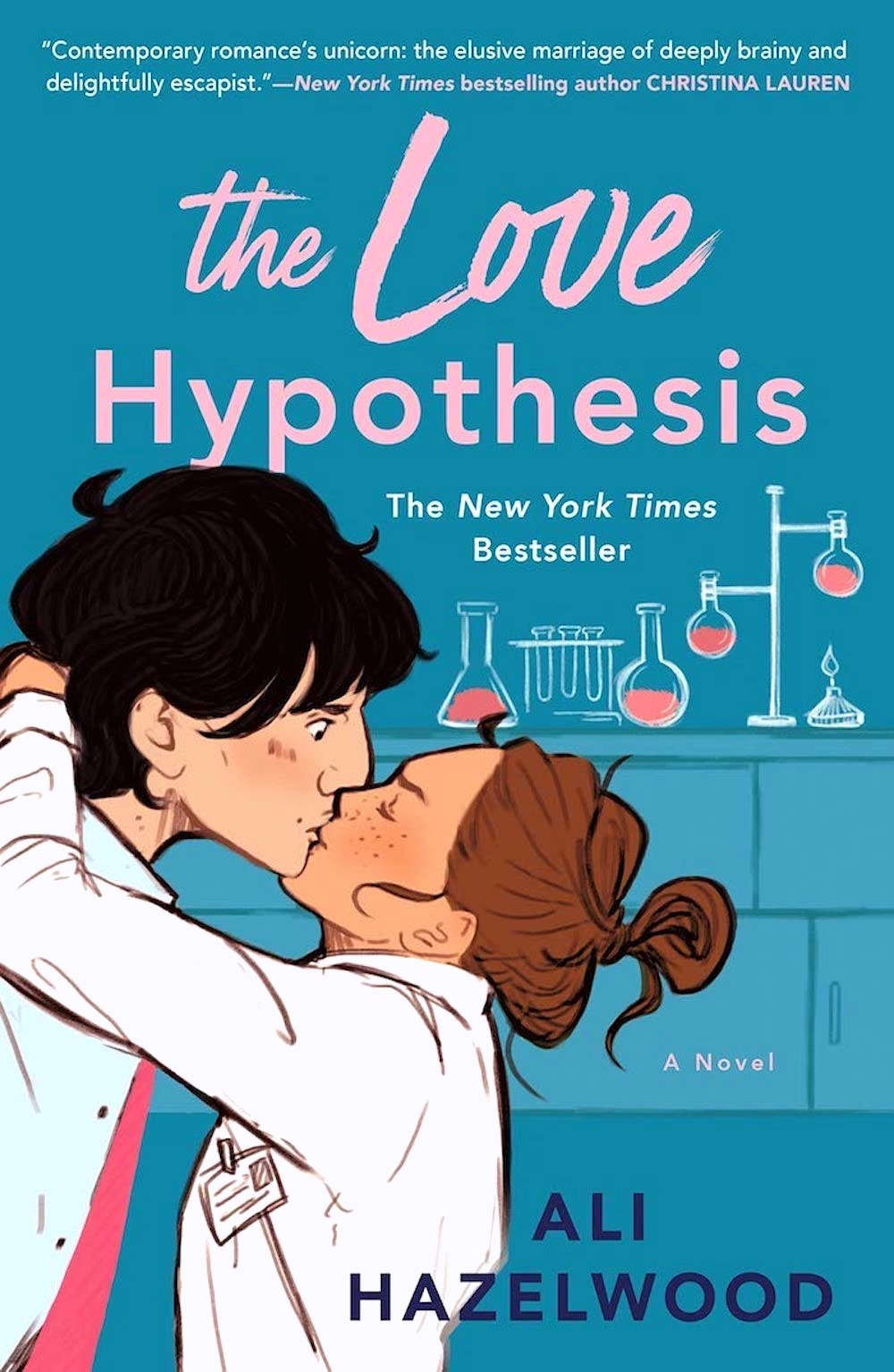
Olive Smith is a PhD student in biology who kisses a stranger in a university bathroom to avoid an awkward conversation with her ex and that stranger turns out to be Adam Carlsen, the most intimidating professor in her department who everyone is slightly afraid of.
To protect her research funding and avoid a complicated situation with her supervisor she needs people to believe she and Adam are actually dating. Adam agrees to go along with it for his own reasons.
The fake dating premise is the setup but what the book is really about is two people who are both very good at their work and very bad at letting anyone see them properly, slowly learning to do the second thing.
What I Liked
The STEM setting is the thing that makes this book different from most fake dating romances and it earns every bit of the attention it gets for it.
Hazelwood clearly knows what it actually feels like to be a woman in a science department, the specific way your competence gets questioned, the way funding works, the way your supervisor's mood can determine the shape of your entire career, and all of that sits inside the story as real texture rather than just backdrop.
Olive is a genuinely good protagonist because she is smart about science and quietly clueless about everything else and that combination is both funny and completely believable.
Adam is the kind of love interest who gets better the more you understand him. He seems intimidating from the outside and the book slowly reveals why he is the way he is without making it into a big dramatic reveal. It just becomes clear gradually and the clarity makes him more appealing rather than less.
The humor is also genuinely funny. Hazelwood has a light touch with comedy that never tips into trying too hard and there are scenes in this book that made me laugh out loud which is not something i say about most romance novels.
What Could Be Better
The fake dating premise does require a certain amount of willingness to accept that two adults would choose this solution over a simpler one and there are moments where the logic of why they cannot just be honest with the people around them gets a little thin.
Some of the secondary characters, particularly the female friends, are drawn fairly broadly and exist mostly to give Olive someone to talk to rather than being full people in their own right.
The conflict that creates the third act tension, the thing that pulls the two of them apart before the resolution, felt slightly unearned to me given how much time the book had spent showing you how perceptive both of them are. It relies on a misunderstanding that felt out of character for people who are supposed to be very good at reading evidence.
And some readers will find the writing itself a little functional at the sentence level. Hazelwood is a storyteller and a character builder first. If you are reading for prose style this is not quite that book.
Context Behind the Book
Ali Hazelwood writes romances featuring women in science and academia, combining familiar tropes with research culture, workplace pressure, and professional ambition.