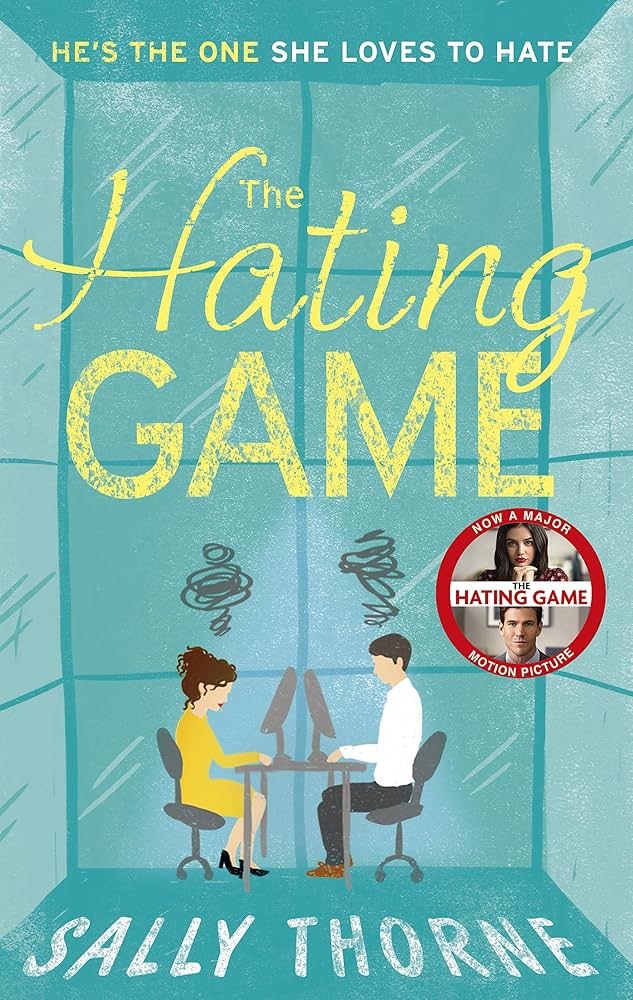
The stronger scenes are often the ones where Joshua does very little, but Lucy suddenly realizes she may have misunderstood him for much longer than she wants to admit.
The office rivalry gives their attraction useful pressure. Neither of them is flirting in a situation where nothing else matters. They want the same promotion, they are worried about being taken seriously, and both have built part of their professional identity around proving they are better than the person sitting opposite them. That makes attraction inconvenient in a way that works for the story. Trusting the other person emotionally becomes difficult when there is still a practical reason not to trust them professionally.
I especially enjoyed the elevator scenes and the more combative conversations between them. The banter works because there is usually something underneath it—jealousy, insecurity, curiosity, or a need to get a reaction from the other person. Once the romantic direction becomes obvious, the dialogue still has enough tension to keep the relationship from becoming immediately soft. Lucy and Joshua know how to irritate each other too well for that.
The book also becomes more interesting when insecurity starts showing through the competition. Lucy is not simply trying to defeat Joshua because she enjoys winning. Her ambitions are tied to how she sees herself at work and whether she believes other people take her seriously. Joshua’s reserve has its own history as well. Once those vulnerabilities begin appearing, their rivalry feels less like a cute office game and more like two people using competition to protect themselves from being read too clearly.
That said, the workplace behavior is probably the part I had the hardest time accepting. A lot of what happens between Lucy and Joshua would be wildly inappropriate in an actual office, especially given the promotion hanging over both of them. The novel operates according to romantic-comedy logic, so I was willing to accept a fair amount of it, but there were scenes where I had to stop treating the workplace as realistic altogether. A little more attention to the professional consequences would have made the rivalry easier for me to believe.
The repeated emphasis on their physical size difference also became noticeable. The book returns often to Lucy being tiny and Joshua being extremely large, and after a while the contrast felt less revealing than the story seemed to think it was. The attraction between them is already clear through dialogue, behavior, and tension, so the physical comparison did not need to carry quite so much of the romantic description.
I also think the power dynamics may land differently depending on the reader. Their competition is supposed to feel fairly balanced, but the mixture of workplace rivalry, attraction, and professional ambition occasionally makes that balance less clean than the romance wants it to be. I did not find it enough to break the story, though it kept me from treating every interaction as uncomplicated fun.
Where The Hating Game worked best for me was in the gradual change in Lucy’s understanding of Joshua. The plot itself is not especially surprising. The pleasure comes from watching old interactions acquire new meanings as Lucy learns more about him. A comment that once seemed hostile may look different later. A gesture she ignored becomes harder to dismiss. That slow re-reading of the relationship gives the romance more weight than another major twist would have.
I still think the novel could have used more patience around the professional side of their competition. Some emotional developments are easier to believe than the office circumstances surrounding them, and the exaggerated workplace behavior occasionally reminds you how carefully the setup has been constructed for romance. Even so, the chemistry is strong enough that I understood why the book became so popular.
What stayed with me was the rivalry itself—not simply because Lucy and Joshua are entertaining when they argue, but because competition gives both of them somewhere to hide. As long as everything can be treated as another contest, neither has to admit how closely they have been paying attention to the other. The romance becomes satisfying when that explanation finally stops working.
Book Summary
Coworkers Lucy and Joshua compete for the same promotion while turning mutual irritation into increasingly obvious attraction. The book becomes most personal when Lucy's energetic first-person voice creates momentum, while Joshua's reserve lets small gestures carry romantic weight. Its wider questions involve competition, insecurity, workplace identity, attraction, image, vulnerability, and assumptions, but they remain connected to what the characters risk and lose.
What I Liked
My favorite parts involved the office rivalry, elevator tension, combative banter, and gradual reinterpretation of Joshua's behavior. They worked especially well because Lucy's energetic first-person voice creates momentum, while Joshua's reserve lets small gestures carry romantic weight. In The Hating Game, the result felt specific rather than manufactured.
What Could Be Better
My reservation is that the workplace behavior is often unprofessional, the size contrast repeats, and the power dynamics may not work for everyone. Another reader may accept it, but I felt The Hating Game lose some control there.
Context Behind the Book
Sally Thorne is an Australian romance writer known for high-concept contemporary love stories, strong first-person voice, and combative chemistry.