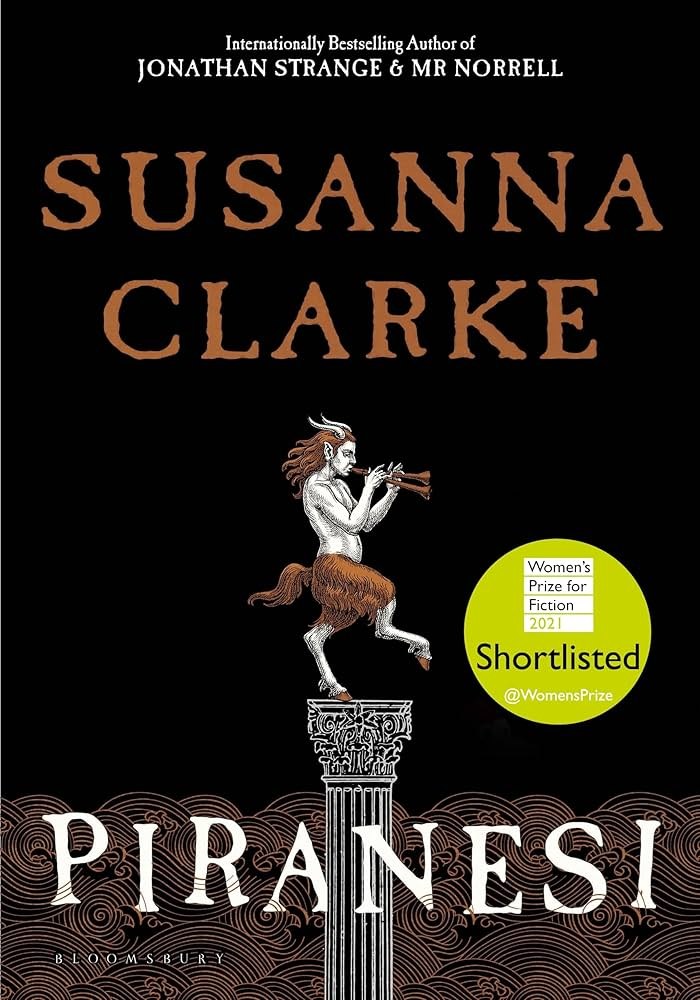
Piranesi's kindness and attention make him unforgettable, and the novel never treats innocence as stupidity. I disagreed with several decisions, but the fear connected to memory rarely felt invented when the House entered the scene.
The book circles around identity, memory, solitude, exploitation, knowledge, beauty, and the sacredness of attention. I did not agree with every conclusion, but I liked being asked to judge actions connected to identity, particularly around the House, rather than accept a ready-made moral.
The weaker stretch comes from the fact that the external world is less interesting than the House, and some explanations are deliberately simple. The issue did not ruin the experience, though it made the handling of memory, especially the House, feel arranged for effect.
The material I kept returning to was the House, journal entries, tides, birds, and the slow movement from wonder toward suspicion. The effect comes from accumulation around the House, not from one oversized speech.
Several scenes improve on reflection because the House acquires a different meaning later.
I would recommend it with one warning: the external world is less interesting than the House. Even so, the connection between identity and memory stayed with me.
Book Summary
A gentle man lives in an endless House of halls, statues, tides, and birds while questioning the identity of the only other person he knows. Piranesi's kindness and attention make him unforgettable, and the novel never treats innocence as stupidity. The plot uses that situation to examine identity, memory, solitude, exploitation, knowledge, beauty, and the sacredness of attention, especially when a private choice begins affecting people who had no say in it.
What I Liked
The best material for me was the House, journal entries, tides, birds, and the slow movement from wonder toward suspicion. I also responded to the way Piranesi's kindness and attention make him unforgettable, and the novel never treats innocence as stupidity. Together, those choices made the people in Piranesi feel more important than the premise.
What Could Be Better
I was less convinced because the external world is less interesting than the House, and some explanations are deliberately simple. I could understand the intention in Piranesi, yet the execution felt easier than the surrounding material.
Context Behind the Book
Susanna Clarke is known for combining scholarship, magic, hidden worlds, and unusual narrative forms; this compact novel preserves that depth with far less scale.