Alex has to ask whether the political life he wants can make room for the person he actually is. The conflict becomes much more interesting when identity and ambition are pulling in the same direction instead of being simple opposites.
Henry’s position is more painful because his freedom is much narrower. He has inherited expectations rather than chosen them, and the monarchy treats his private life as something connected to institutional survival. That makes his caution easy to understand even when it frustrates Alex. He is not only afraid of personal rejection. He is aware that one decision can affect his family, public image, and an institution that has been defining him since birth.
That difference between them gives the romance useful tension. Alex often believes action can fix a problem. Henry has spent his life learning that certain problems are survived by staying quiet. Neither response is completely irrational, which is why their disagreements mostly worked for me. The relationship is strongest when the book allows them to want the same thing while having very different ideas about what it might cost.
The ensemble friendships also give the book a lot of its energy. Alex and Henry are surrounded by siblings, friends, political staff, and family members who make the story feel social rather than sealed inside the central romance. I enjoyed the sense that these characters already had relationships and loyalties before the love story began. At the same time, the cast can become crowded, especially when the political plot starts moving quickly. A few secondary characters have strong personalities but limited space, so they occasionally feel more like part of the atmosphere than fully developed people.
My bigger reservation is the political world itself. The novel clearly wants to offer an optimistic version of politics, and I understand why. This is partly a romantic fantasy about institutions becoming more humane when people push against them. The problem is that some political conflicts are simplified enough that the story occasionally loses the complexity it gives to the romance. Campaign strategy, public reaction, media pressure, and institutional resistance can move in convenient directions because the emotional ending requires them to.
The final campaign material is probably where I noticed this most. It is energetic and satisfying on a wish-fulfillment level, but it is also openly idealistic. I did not mind the optimism, but I was always aware that the political world was being shaped to support the emotional conclusion. The novel is much sharper when it concentrates on what politics does to Alex and Henry privately than when it tries to explain politics itself.
The monarchy is treated in a similar way. Henry’s conflict with the institution is emotionally effective because his lack of freedom feels real, but the broader structure around him can become simplified into a clear obstacle that needs to bend. I wanted a little more messiness there. Institutions usually do not change because one emotional argument finally becomes undeniable, and the novel sometimes moves toward that kind of resolution more easily than I could completely believe.
Even so, I liked that the book does not separate identity from practical consequence. Being honest is not presented as a purely personal act. For Alex and Henry, honesty can affect elections, public approval, family relationships, security, and the way millions of strangers talk about them. That makes the right to choose one’s own life feel less abstract.
Privacy becomes important for the same reason. Their relationship means something partly because it belongs to them before it belongs to the public. Once that privacy is threatened, the novel asks whether public figures are ever allowed to have an identity that exists outside what other people believe they are entitled to know. That question gave the story more substance than the royal-romance premise alone suggests.
I also appreciated that the book is not embarrassed by its optimism. It clearly believes that families can change, political cultures can move, and institutions can be pushed toward openness. That can feel unrealistic at times, but it is also part of the novel’s appeal. The book is not trying to be a cynical political drama. It is imagining what happens when private honesty begins forcing public structures to adjust.
Still, the relationship remained much more convincing to me than the politics. The emails, the private jokes, the moments where Alex and Henry finally stop performing for everyone else—those are the sections I remember most clearly. They make the larger themes of identity and public duty feel personal instead of theoretical.
By the end, I was not thinking much about whether the political resolution was completely believable. I was thinking about how exhausting it would be to live a life where every personal decision could become public property. That is where Red, White & Royal Blue found its emotional weight for me.
Book Summary
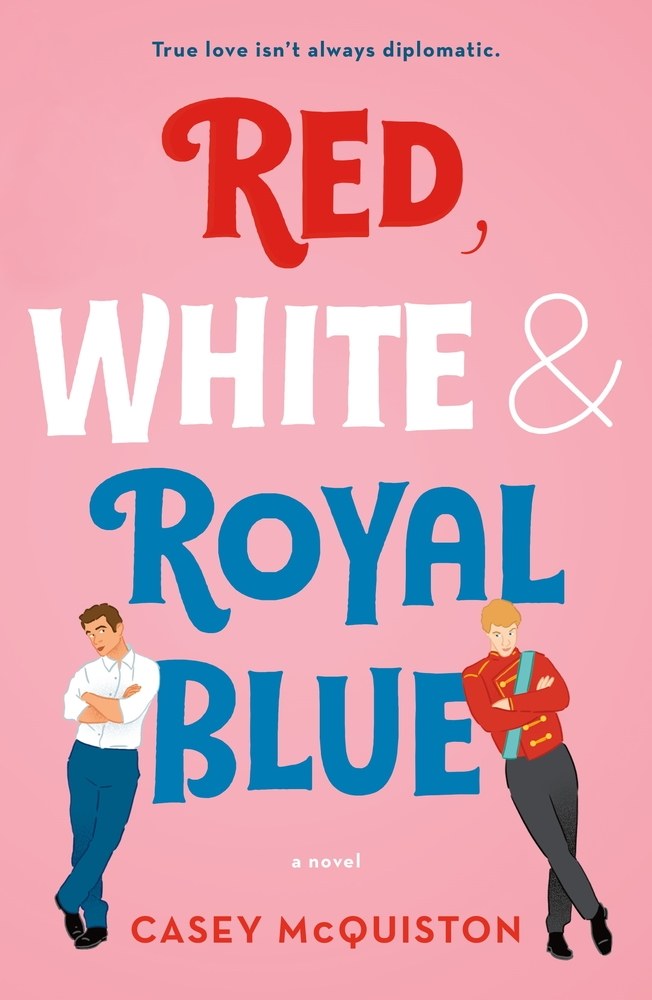
The son of an American president and a British prince turn a public rivalry into a secret relationship with international consequences. Alex's ambition and Henry's constrained public role create a romance where private honesty carries real political risk. What follows is a story concerned with identity, public duty, family, ambition, monarchy, politics, privacy, and the right to choose a life, told through pressure on trust, identity, and ordinary decisions.
What I Liked
I was most engaged by the emails, playful banter, ensemble friendships, and optimistic fantasy of institutions bending toward openness. Alex's ambition and Henry's constrained public role create a romance where private honesty carries real political risk. The combination gave Red, White & Royal Blue warmth, tension, or unease exactly where it needed it.
What Could Be Better
I had trouble with the fact that the politics are simplified, the cast is crowded, and the final campaign arc is deliberately wishful. A little more restraint or development around identity in Red, White & Royal Blue would have made the emotional result more convincing.
Context Behind the Book
Casey McQuiston writes queer romance with ensemble casts, humor, speculative touches, chosen family, and a strong belief that public structures can change.