Then the memories begin introducing things he has never experienced: snow, sunshine, music, war, physical pain, family love.
The memories themselves are sometimes beautiful and sometimes horrible, but what matters is what they do to Jonas afterward. Once he knows what love feels like, the emotionally controlled relationships around him become harder to accept. Once he understands pain, he also understands what it means that everyone else has been protected from it.
His relationship with the Giver is probably the part of the book I enjoyed most.
There is something sad about the two of them sitting together with knowledge that nobody else in the community is allowed to carry. The Giver has spent years holding memories of everything the society chose to forget. Jonas becomes the first person in a long time who can really understand the burden. Their connection feels warmer than most relationships in the novel, which I think is deliberate. In a world designed to eliminate emotional extremes, even an ordinary moment of trust starts to feel unusual.
The scene that changed the book most for me was Jonas discovering what “release” actually means.
Until then, the word sounds harmless. Almost polite.
That is part of what makes the revelation so effective. The community has found a clean word for killing, and because people have been raised without the knowledge needed to question it, the word works. Jonas watching his father calmly perform a release on a newborn child disturbed me more than a louder or more violent scene probably would have. His father is not presented as a monster. He simply does not understand the moral weight of what he is doing.
That was where the book's use of language really clicked for me. Control is not only maintained through rules. It is maintained by reducing what people are able to describe, remember, and even feel.
I do think the world becomes weaker whenever I start asking practical questions about it.
How did this community actually reach this point? How much of the outside world still exists? Why did earlier generations agree to remove color, choice, romantic love, and so many other parts of ordinary human life? The book gives hints, but not enough for me to feel that I fully understood the history behind Sameness.
I know some readers will see that vagueness as part of the point. I still wanted more.
The ending gave me a similar reaction. Jonas escaping with Gabriel is emotionally powerful, especially because he is finally making a decision that belongs entirely to him. But the final pages leave enough unanswered that I finished the book feeling both moved and slightly frustrated. I do not necessarily need every story to explain what happens next, yet here I wanted just a little more certainty.
Still, I would rather have an ending that makes me argue with it than one I forget five minutes later.
What I liked most about 'The Giver' is that its biggest questions are hidden inside a very simple story. Would you accept a world without war if it also meant losing love? Is freedom still worth having when freedom allows people to make terrible choices? Can someone understand happiness without knowing pain?
The book clearly has its own view, and I mostly agree with it: safety becomes a poor bargain when the price is almost everything that makes a person an individual.
What keeps the novel from feeling like a lecture is Jonas himself. We are not introduced to the community as outsiders who already know it is wrong. We see it through someone who once believed in it.
That difference matters.
For me, the most memorable part of 'The Giver' was not the escape or even the darker revelations. It was the slow process of Jonas learning to see first color, then emotion, then the moral reality of the world around him. The novel has gaps, and I still wish its society had been explained in greater depth, but its central idea stayed with me long after I finished reading.
Book Summary
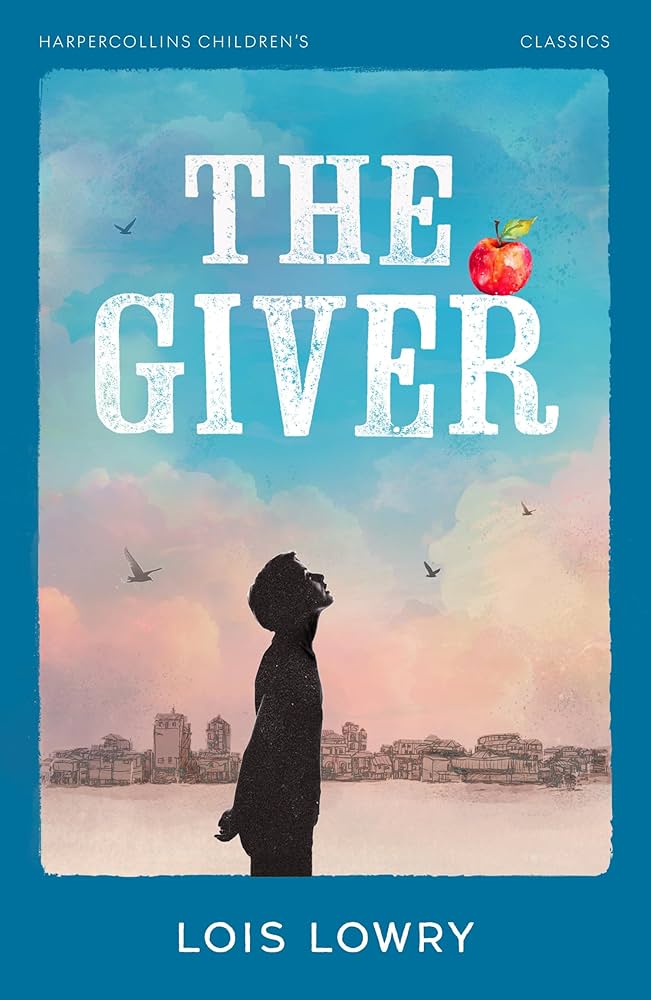
Jonas is only twelve when he is chosen to receive the memories that his community has deliberately kept from everyone else. As those memories begin to change the way he sees the world, things he once accepted without question start to feel very different. He notices color, begins to understand emotions more deeply, and slowly realizes how much has been sacrificed to keep his society peaceful and predictable.
That is really where *The Giver* became interesting to me. It is not just about memory or freedom in an abstract sense. The book keeps bringing those ideas back to Jonas's everyday life—his family, the words people use, the choices they are allowed to make, and eventually the people he learns to trust. The more he understands love, pain, individuality, and choice, the harder it becomes for him to accept a life built around avoiding risk at any cost.
What I Liked
What worked best for me was how quietly the book lets Jonas's world begin to change. His first glimpses of color, the time he spends with the Giver, and the eventual truth behind “release” all land without the story needing to become overly dramatic. I also liked Lowry's simple prose here. As Jonas learns more, his understanding of language, emotion, pain, and right and wrong grows with him. Because of that, I ended up caring more about Jonas and the Giver than I did about the dystopian setup itself.
What Could Be Better
The community became less convincing to me whenever I started wondering how it actually came to exist. We learn enough to understand Sameness, but not quite enough about the history behind it or why people accepted such extreme control in the first place. I had a similar problem with the ending. I understand why Lowry leaves it open, and the uncertainty does fit the story, but I still wanted a little more to hold onto after following Jonas that far. The ideas worked for me; a few parts of the world around them felt underexplained.
Context Behind the Book
Lois Lowry is known for children's and young-adult fiction about memory, loss, war, identity, and ethical choice; this became a foundational classroom dystopia.