Wealth is not merely an attractive background for the mystery. It influences how people behave, whom they trust, and which kinds of unpleasantness they are prepared to overlook. The respectable surface of affluent London life provides an amusing contrast to the self-interest operating underneath it.
David's Hampstead home becomes more than a desirable property. For Diana, it represents arrival. For Cat, it is part of a life she already considers hers. Their competing claims make the family relationship feel like a contest over ownership, even when everyone involved is supposed to be concerned with love.
The mystery surrounding Diana's previous husbands adds another complication. Three marriages ending in death are difficult to ignore, particularly once Cat begins asking questions. The possibility that Diana has been considerably less unfortunate than she appears gives the story its crime-fiction momentum, but the character conflict is just as important as the question of what happened in those earlier relationships.
I also like the fact that the premise does not demand an immediately lovable central character. There is room in fiction for people who are selfish, calculating, petty, and completely convinced that their own behavior is reasonable. In fact, a story about greed can become rather dull if everybody is too pleasant. The interesting part is watching people defend their actions while recognizing exactly the same faults in someone else.
Diana's son, Zeb, introduces another family interest into the situation. With both women pursuing their own agendas and the younger generation invested in what happens to the family wealth, the relationships surrounding David become increasingly difficult to separate from financial motivation.
The novel's darker comedy also comes from the distance between how these characters would like to be perceived and what their behavior suggests. Respectability becomes a performance. Wealth can make eccentricity seem charming, and an impressive address can create an appearance of stability that says very little about the people living there.
This is an appealing direction for Mackie, whose previous novels have also combined crime with uncomfortable observations about money, privilege, and human selfishness. Claws Out! appears interested in the absurdities of wealthy social life as much as in the machinery of its murder mystery.
The approach does bring a few limitations. When almost everybody in a story is deliberately unpleasant, it becomes harder to establish an emotional connection. A reader may remain interested in discovering what happens without feeling particularly concerned about who suffers the consequences. For a dark comedy, that distance can be useful, but it also means the characters need enough individuality to become more than collections of exaggerated flaws.
The sharp, openly satirical narrative voice may present a similar challenge. Some readers will enjoy its willingness to mock the characters, while others may find the constant cynicism slightly exhausting. There is a difference between a narrator who exposes people's ridiculous behavior and one who explains every joke after it has already landed.
The mystery also has to compete with the comedy. When the central conflict is already established so clearly, there is a risk that repeated confrontations begin to feel familiar before the larger revelations arrive. The story needs its investigation and shifting relationships to do more than continually remind us that Diana and Cat dislike each other.
Published criticism has raised questions about the predictability of certain developments and the degree to which its knowing narrative voice will appeal to every reader. Those reservations are worth considering, particularly for anyone approaching the book primarily as a traditional murder mystery rather than a satirical crime novel.
Still, the premise has a quality that makes darkly comic fiction enjoyable: the characters do not have to become better people for their situation to become increasingly interesting. Their competing desires are enough to create trouble, and their wealth makes that trouble particularly ripe for satire.
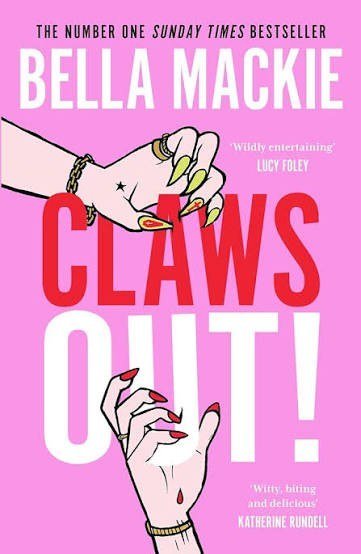
Claws Out! is built around a nasty little question: how far will someone go to obtain the life they want, and what happens when another person is equally determined not to let them have it?
Diana's three dead husbands provide the immediate mystery, but the rivalry over David's fortune gives the story its social edge. Beneath the luxurious houses, family connections, and respectable appearances is a world where affection and financial interest are not always easy to tell apart.
For readers who enjoy dark humor, morally questionable characters, and crime fiction that finds wealthy people faintly ridiculous, this is a premise with plenty to offer. It is not selling the comfort of a pleasant family drama. Quite the opposite. The entertainment comes from watching a family situation in which almost everyone wants something, and nobody seems particularly inclined to play fair.
Book Summary
Diana Leyland has already buried three husbands, but she is not ready to give up on marriage. Her latest target is David Farrand, a wealthy older man whose Hampstead home and comfortable bank balance offer everything she has been working toward. There is just one problem: his daughter, Cat, is suspicious of Diana's intentions and has no interest in watching a potential fortune slip away. As Cat starts investigating Diana's previous marriages, their increasingly vicious rivalry turns into a darkly funny game of manipulation, greed, and possible murder. *Claws Out!* mixes a twisted family mystery with sharp observations about London's wealthy social circles, where appearances are carefully maintained and almost everyone has something to gain.
What I Liked
The strongest aspect of the novel's premise is the rivalry between Diana and Cat. Neither woman occupies a particularly comfortable moral position, which makes their conflict more interesting than a conventional good-versus-evil mystery. The wealthy Hampstead setting also gives the story plenty of room for social satire, particularly around inheritance, entitlement, and the lengths people will go to maintain an expensive lifestyle. I particularly appreciate the decision to combine dark comedy with a murder mystery rather than relying entirely on suspense. The competing family interests, Diana's suspicious past, and the contrast between respectable appearances and selfish behavior give the story a distinctive personality.
What Could Be Better
The deliberately unpleasant characters may make it difficult to become emotionally invested in what happens to them. The rivalry also risks becoming repetitive when the same selfish motivations drive too many interactions. Although the satirical narration is part of the book's personality, its knowing tone will not appeal to everyone, and some of the mystery's developments may become apparent before their eventual revelation. Readers expecting a serious psychological thriller may find the exaggerated characterization and dark humor less satisfying than those approaching it primarily as a wickedly comic crime story.
Context Behind the Book
Bella Mackie is a British author and journalist known for combining dark humor with sharp observations about contemporary society. Her debut novel, *How to Kill Your Family*, became a major Sunday Times bestseller, followed by her second novel, *What a Way to Go*. She also wrote the bestselling nonfiction book *Jog On*, which explores the relationship between running and mental health. Her work frequently examines wealth, privilege, dysfunctional relationships, and morally questionable characters. *Claws Out!* is her third novel and continues her interest in darkly comic stories built around money, murder, and human selfishness.