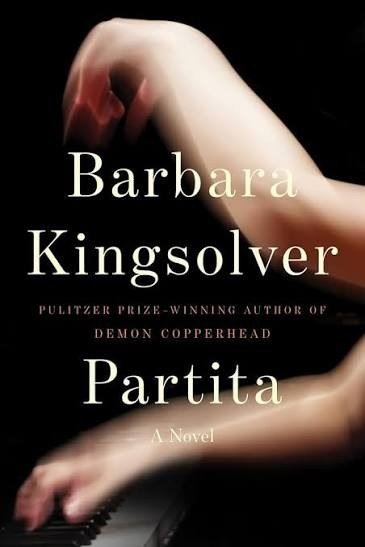
Partita book cover by Barbara Kingsolver
⏱️
Estimated Read Time
6–8 hours

Partita by — Book Review

✍️ Book by Barbara Kingsolver
Editorial Rating
★★★★★ 4.5
Epiloguely review by Shadab Alam
Reader Rating
☆☆☆☆☆ 0.0
No reader ratings yet
Rate This Book
A written review is optional
Published2026-10-06
SeriesStandalone
GenreLiterary Fiction / Family Drama
LanguageEnglish
PublisherHarper
ISBN-100063577542
ISBN-139780063577541

📝Epiloguely Editorial Review

Written and reviewed by .

Partita begins with a phone call, but the real disturbance comes from everything that call brings back with it.

Livia Cable is no longer the young pianist who once believed music might carry her somewhere far beyond the Tennessee farm country where she grew up. She is middle-aged now, married, teaching piano, and dealing with the remains of her mother’s life after her death. She has made something stable for herself. It may not resemble the future she imagined when she was younger, but she has learned how to live inside it.

Then Sigurd calls.

He knew her before she became Livia Cable, when she was Livia Bohusz, a talented music student trying to understand what her ability might mean and how far it could take her. Hearing his voice again pulls her toward a period she has spent years keeping in place rather than truly resolving.

That setup could easily have produced a familiar novel about first love returning in middle age. Kingsolver is interested in something less tidy. Sigurd matters, but the book keeps widening around him. The old relationship is connected to Livia’s ambition, her class background, the death of her brother Cyrus, her complicated mother, her damaged career, and the uncomfortable question of whether a life has to become extraordinary in order to count as a successful one.

Music gives the novel its shape.

The title refers to a partita, a musical form built from a sequence of movements, and the book itself moves back and forth through different periods of Livia’s life. Her memories do not arrive like a clean biography. One piece brings another back. A sound leads to a person. A person leads to an old humiliation or desire. What seemed settled in one period changes meaning when Livia looks at it again decades later.

That structure suits the character because Livia has spent much of her life understanding herself through music.

As a child, it gives her something that belongs to her when very little else feels secure. Her home is marked by grief and anger. Her brother’s death when she is young leaves damage that nobody in the family knows how to talk about properly, while her mother’s cruelty and later decline make home something Livia both belongs to and wants to escape.

Her ability at the piano seems to provide a route outward.

But talent creates its own problems.

Kingsolver is very good here on the embarrassment that can accompany ambition when someone grows up in a place where standing out can look dangerously close to thinking you are better than everyone else. Livia’s gift gives her opportunities, but it also separates her from the people she comes from. The further she moves into the classical music world, the more aware she becomes of money, education, confidence, and the invisible advantages other students seem to possess without even noticing them.

That class tension gives the music sections more weight than they would have if the book were simply about artistic talent.

Livia does not only have to become a better pianist. She has to learn how to exist in rooms where other people already know the rules.

The novel understands how exhausting that can be.

A scholarship may open a door, but it does not erase the fact that some students have spent their entire lives being prepared to walk through it.

The clothes, vocabulary, assumptions, contacts, and confidence surrounding elite institutions create differences that talent alone cannot always solve.

Sigurd enters Livia’s life during that period of uncertainty.

Their relationship is intense, political, physical, and tied to the version of herself she is still trying to become. He is involved in labor activism and brings another way of thinking about class into a life where Livia is already experiencing class difference personally. Their connection feels exciting partly because it is happening at a moment when almost everything in her life feels newly possible.

Kingsolver does not present youthful passion as meaningless simply because it does not last.

That is an important distinction.

Livia’s older self can see things about Sigurd and about herself that she could not understand when she was young, but hindsight does not erase the reality of what she felt. The relationship mattered because she was the person she was at that moment. Its consequences matter even more because they continue long after the relationship itself has ended.

Some early reviews have found the romantic writing a little excessive in places, and I understand that reaction. There are moments where the language around desire becomes more heightened than the quieter sections of the novel need. The book is generally more convincing to me when love is visible through memory, resentment, regret, or an ordinary detail rather than when the prose works hard to announce passion.

The marriage in Livia’s present life makes that contrast more interesting.

Charlie does not belong to the same dramatic register as Sigurd. He is familiar, steady, practical, and tied to home. It would have been easy to make him the boring husband standing between Livia and some grand lost love, but the novel is more intelligent than that.

There is real affection in the life she has built.

This is where Partita becomes much more than a question of which man Livia should choose.

Young love and mature love ask different things from her. So do artistic ambition and ordinary usefulness. The book keeps returning to whether greatness is the only meaningful destination for a gift.

Livia did not become the concert pianist she once seemed capable of becoming.

That fact could be described as failure.

Kingsolver keeps testing that word.

Livia still teaches music. She still brings it into other people’s lives. She still hears and understands it in a way that shapes how she moves through the world. The scale has changed, but the connection has not disappeared.

That becomes one of the novel’s most convincing ideas.

Our culture is very good at recognizing spectacular success. We know how to talk about the musician who fills concert halls, the writer who wins major prizes, the person whose talent becomes visible enough for strangers to admire it. We have less language for someone whose ability remains local, useful, private, or woven into a community.

Partita asks whether that smaller life is actually smaller.

I liked the book most when it stayed with that question.

Livia’s life contains disappointment. There is no attempt to pretend that losing a possible career does not hurt or that every abandoned ambition secretly leads to something better. Some losses remain losses.

But a different life can still become a real one.

The sections involving Livia’s mother complicate that idea further. Grief has changed the family long before Livia is old enough to understand what has happened. Her mother’s bitterness and later hoarding leave physical evidence of a life that has become difficult to manage, and sorting through what remains forces Livia into another kind of reckoning.

Objects are easier to inherit than explanations.

Families leave behind both.

Livia has spent years carrying beliefs about her mother, her brother, Sigurd, and herself. As the book moves between past and present, some of those beliefs remain true while others become harder to defend. Memory does not suddenly become unreliable in a cheap twist-driven way. Instead, Kingsolver shows how a memory can be accurate and still incomplete.

We remember what happened from the position we occupied when it happened.

Age changes the position.

That is one reason the dual timeline works so well here. The present is not simply waiting for the past to explain it. The older Livia keeps changing the meaning of what the younger Livia experienced.

The Appalachian setting also matters.

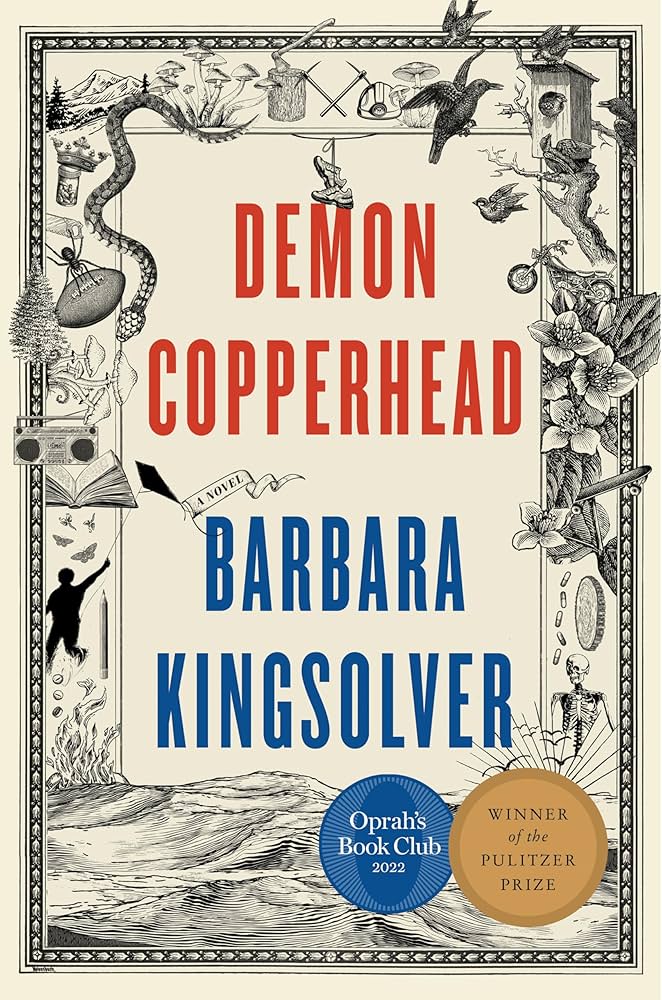
Kingsolver has spent much of her career writing about rural communities without treating them as picturesque scenery or as problems waiting for outsiders to explain them. Partita continues that interest, but on a smaller scale than Demon Copperhead. Rural Tennessee is both something Livia once wanted to escape and the place where she eventually makes a life.

The book does not force her to choose between loving home and recognizing its limitations.

That contradiction feels real.

People can be hurt by a place and still belong to it. They can leave because staying seems impossible and later discover that leaving did not remove the place from them.

The novel’s politics are present, particularly through Sigurd and the questions of class that surround Livia’s education, but they are generally more effective when they arise naturally through circumstance. A few ideological conversations are more direct than the rest of the book and can feel slightly arranged. The Financial Times raised a similar concern, noting that some of the political debate becomes heavy-handed even while praising the novel’s treatment of art, loss, and class.

Still, this is a much more intimate book than readers coming directly from Demon Copperhead may expect.

That is not a weakness.

The scale is different because the question is different.

Instead of asking how an entire social system shapes a young man’s life, Partita spends much of its time asking how one woman evaluates the distance between what she wanted at twenty and what she possesses decades later.

That distance contains grief, but not only grief.

There is also relief.

There are people she would not have known otherwise. Work that mattered even if it never made her famous. A marriage that does not resemble youthful obsession. A home she once thought she had to escape.

The novel is particularly good at resisting the idea that a life must be judged according to the most ambitious plan someone once had for it.

Young Livia believes talent creates an obligation.

Older Livia has to decide whether she still believes that.

That question reaches beyond music.

Most people have some imagined version of themselves that never happened. Sometimes the reason is failure. Sometimes bad luck. Sometimes money, family, illness, fear, or one decision made at the wrong moment. Sometimes we simply become someone else.

Partita understands how strange it is to mourn a person you never actually became.

Its weaker sections come mostly in the middle, where the movement between memories can slow and the love story occasionally receives more dramatic emphasis than it needs. The New York Times Book Review, as summarized by Book Marks, similarly noted several slower chapters before a much stronger final third. I think that is fair.

The book gathers force as the different parts of Livia’s history begin pressing against one another.

Kingsolver does not need a huge plot to create that effect. A telephone call is enough because the call reaches someone who has spent decades arranging the past into a shape she can live with.

By the end, the question is not whether Livia can recover the life she lost.

She cannot.

Nobody can.

The more interesting question is whether she can finally see the life she has without measuring it entirely against the one that disappeared.

That is where Partita worked best for me.

It is a novel about music, but also about the dangerous habit of confusing scale with value. It asks whether art matters less when it happens in a small room, whether love matters less because it changes form, and whether ambition has failed simply because life refuses to follow the original plan.

Those questions are quieter than the ones driving Demon Copperhead, but they are not smaller.

Book Summary

Livia Cable has built a quiet life in rural Tennessee. She teaches piano, is married to a steady man she has known since childhood, and has learned to live with the distance between the life she once imagined and the one she actually has. Then an old lover calls.

Decades earlier, Livia Bohusz was a gifted young pianist who escaped a painful home life through music and earned a scholarship that took her into a very different world. There she met Sigurd, a passionate political activist whose relationship with her changed the direction of her life. His unexpected return forces Livia to revisit not only that romance but also the death of her brother, her difficult relationship with her mother, the class barriers she crossed as a young musician, and the injury that ended the future she once thought was certain.

Moving between Livia’s past and present, Partita becomes less a story about whether she will reunite with an old lover and more a story about what happens to the lives we once expected to live.

What I Liked

The relationship between music and Livia’s sense of self is the strongest part of the novel for me. Kingsolver does not treat musical talent as a decorative character trait; it affects Livia’s class position, her confidence, her relationship with home, her ambitions, and the way she understands both loss and beauty. I also liked the contrast between her younger and older selves. The dual timeline allows the same choices and relationships to look different without simply announcing that the younger Livia was wrong.

The treatment of ambition is especially good. The novel refuses the easy idea that becoming less famous or less professionally successful automatically means accepting a lesser life. Livia’s work as a local teacher may not resemble the career she once imagined, but Kingsolver gives that work dignity without pretending the loss of her earlier future did not matter.

What Could Be Better

The romance occasionally becomes more heightened than the rest of the novel needs, particularly in some of the passages dealing with Livia and Sigurd’s younger relationship. Their connection is important, but the quieter moments often communicate more than the more dramatic language surrounding desire.

The middle section also moves more slowly than the opening and later chapters. Because the book depends heavily on memory and reflection rather than conventional plot momentum, some stretches can feel repetitive before the different threads begin coming together. A few political conversations are also more explicit than the novel’s subtler treatment of class and rural life.

Context Behind the Book

Barbara Kingsolver is an American novelist, essayist, poet, and nonfiction writer whose work frequently explores family, class, rural communities, environmental questions, and the relationship between individuals and larger social forces. Her novels include The Bean Trees, Animal Dreams, The Poisonwood Bible, The Lacuna, Flight Behavior, Unsheltered, and Demon Copperhead. Demon Copperhead won the 2023 Pulitzer Prize for Fiction, which Kingsolver shared with Hernan Diaz for Trust. She has also received the National Humanities Medal and numerous other literary honors. Kingsolver lives in southern Appalachia, a region that has shaped much of her fiction, including Partita.

Sources & References

Reader Reviews

0 published written reviews · Reader star ratings remain separate from the editorial rating.

No reader reviews yet Be the first reader to share a thoughtful review of at least 100 words. A quick star rating can still be submitted separately above.

📊Reader Rating Breakdown

0.0
★★★★★
No reader ratings yet

No reader ratings yet. Be the first reader to rate this book using the separate quick-rating stars above.

🎭Vibe Check

What's the vibe of this book?
💬 Open Reader Comments & Discussion

Use the separate comment-style discussion room for spoilers, endings, characters, theories, questions, and replies. Formal reader reviews stay on this page.