Parents may understand that academic competition puts enormous pressure on their children and still feel they have little choice but to participate. Refusing the system can seem irresponsible when everyone around them is doing whatever they can to secure an advantage.
The question is not simply whether private education is good or bad. It is why a family might feel compelled to invest so much in it even when the emotional and financial costs are becoming difficult to bear.
The relationship between parental love and expectation gives the story another interesting dimension. John and Helen want their children to have opportunities that may no longer be available to them. Yet the life a parent imagines as secure is not necessarily the life a child wants. The three Koh children grow up under expectations shaped by their parents' experiences, their changing financial circumstances, and the different societies in which they live.
That generational difference is central to the book's larger concern with immigration. Moving to another country does not automatically provide a fresh beginning. Adults arrive with qualifications, professional experience, memories, and ideas about how the world works. Their children may adapt to the new environment more easily, while the parents discover that much of what once gave them confidence has lost its value.
It is a difficult reversal. A parent who once knew exactly how to guide a child may suddenly need that child to explain the world.
The novel's geographical movement also gives its examination of success a wider frame. Seoul, Sydney, and Southern California offer different environments, but relocating does not free the family from the pressure to achieve. The meaning of a successful life keeps changing, and each new opportunity brings another set of expectations.
One of the more interesting aspects of Lee's approach is that education is not treated only as a source of misery. A hagwon can represent exhausting competition, but it can also provide employment, community, practical support, and opportunities for people whose circumstances have become uncertain. That complexity matters. It would be easy to condemn the entire system from a comfortable distance, but the people depending on it have practical reasons for remaining involved.
The novel also comes with a potential weakness, one that becomes apparent in some of the critical discussion surrounding its publication. A family saga covering more than fifteen years, three countries, and a large group of interconnected characters has an enormous amount of ground to cover. Such breadth gives the story its historical and social scope, but it can also leave less space for individual emotional developments.
There is another concern worth considering. When characters are presented primarily through their perseverance, generosity, and willingness to sacrifice, a novel risks making goodness feel too uncomplicated. I would want a story about ambition and education to leave room for envy, selfishness, questionable decisions, and the less admirable feelings that can accompany the desire to succeed. Those contradictions are often where family relationships become most revealing.
Still, the broader questions raised by American Hagwon are substantial. The book places private family choices against changing economic circumstances and asks how much responsibility individuals can reasonably carry for outcomes they cannot entirely control.
The promise that education can improve a person's future is not necessarily false. But it becomes much harder to live with when families begin treating every examination, school admission, and professional opportunity as a judgment on everything they have sacrificed.
That is the central tension I find most interesting about this novel. Parents work toward a future they hope will be better than their own, but that future keeps demanding more from them. Their children inherit not only opportunities but also the fear of wasting those opportunities.
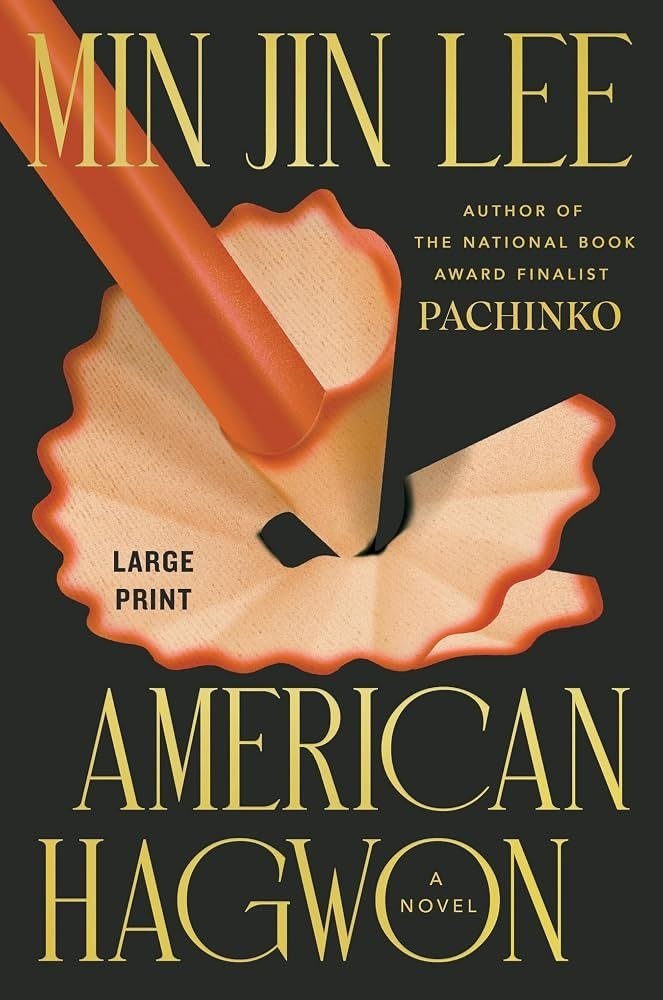
American Hagwon brings those pressures together through a story about family, migration, and the pursuit of stability in a world that rarely remains stable for long. Its subject extends beyond one community or education system. It raises a question that many families, regardless of where they live, will recognize: how much of life should be spent preparing for a better future, and what happens to the present while everyone is busy trying to secure it?
Book Summary
The Koh family has spent years believing that hard work, good education, and careful decisions will eventually lead to a secure life. But when a personal betrayal and the 1997 Asian financial crisis destroy much of what they have built, John and Helen Koh must reconsider almost everything they once trusted. Their journey takes them from South Korea to Australia and eventually to Southern California, where they struggle to rebuild their lives while trying to give their three children a better future.
Through the family's changing circumstances, American Hagwon explores immigration, education, ambition, class, parental sacrifice, and the uneasy relationship between success and happiness. At its center is a question that feels increasingly relevant: what happens when people do everything they were told would lead to a good life, only to discover that the rules have changed?
What I Liked
What makes the story particularly interesting is the way education becomes tangled with almost every part of the Koh family's life. The movement between South Korea, Australia, and America gives the novel a wider perspective on immigration and ambition, while the family's changing fortunes make the promise of a better future feel increasingly uncertain. I also appreciated the complexity surrounding hagwons. Rather than treating private education as entirely good or bad, the story explores why families continue depending on these institutions despite the financial and emotional pressure involved. The generational differences give the larger questions about success, sacrifice, and belonging a more personal dimension.
What Could Be Better
The novel's enormous scope can occasionally work against its more intimate material. Covering several countries, generations, and interconnected lives leaves a great deal to follow, and some individual character developments receive less space than the broader family story. There is also a risk that the characters' perseverance and willingness to sacrifice can make certain moral conflicts feel tidier than they should. I would have liked more room for the less admirable emotions that often accompany ambition, particularly resentment, envy, and the complicated expectations parents place on their children.
Context Behind the Book
Min Jin Lee is a Korean-American novelist best known for *Free Food for Millionaires* and *Pachinko*, which was a finalist for the National Book Award. Her writing frequently explores immigration, Korean identity, class, family expectations, and the pursuit of belonging. *American Hagwon* continues her exploration of the Korean diaspora, focusing on education, parental sacrifice, and the pressure to succeed across generations.