intelligence, and damaged relationship with her body make the investigation inseparable from family history. I could see fear and habit behind the behavior, especially when femininity was at stake.
The larger subject is family abuse, femininity, self-harm, class, memory, control, and the performance of care. I appreciated that family abuse is tied to money, family, work, and the oppressive town rather than left as an abstract idea.
The weaker stretch comes from the fact that the material is severe, several men are thinly drawn, and the last twist arrives very late. The problem matters because the surrounding chapters handle family abuse, particularly the oppressive town, with much more control.
The material I kept returning to was the oppressive town, mother-daughter dynamics, acidic voice, and clues hidden in domestic behavior. Whenever the oppressive town appears, the book stops arranging ideas and starts observing people.
I also noticed how often family abuse appears through routine while femininity remains unspoken.
My rating is 4.4/5. The ending left me with family abuse, not with a neat sense that every problem had been solved.
Book Summary
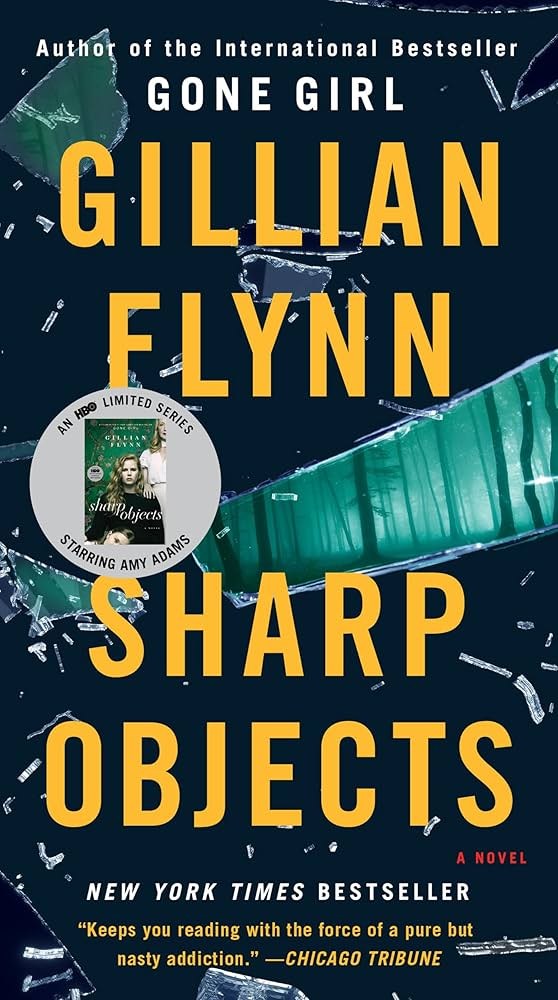
Reporter Camille Preaker returns to her hometown to cover the murders of young girls and is pulled back into her controlling mother's household. Camille's self-harm, intelligence, and damaged relationship with her body make the investigation inseparable from family history. The plot uses that situation to examine family abuse, femininity, self-harm, class, memory, control, and the performance of care, especially when a private choice begins affecting people who had no say in it.
What I Liked
What worked for me was the oppressive town, mother-daughter dynamics, acidic voice, and clues hidden in domestic behavior. The book also benefits from this character choice: Camille's self-harm, intelligence, and damaged relationship with her body make the investigation inseparable from family history. I remembered the scenes around the oppressive town more clearly than the larger speeches.
What Could Be Better
The weaker part for me was that the material is severe, several men are thinly drawn, and the last twist arrives very late. It did not erase what worked in Sharp Objects, though it made the structure feel more visible than I wanted.
Context Behind the Book
Flynn's debut established her interest in damaged female narrators, hostile hometowns, respectable families, and violence hidden inside care.