obsessed with learning why someone is destroying every copy by its mysterious author. I did not need another twist before the Cemetery of Forgotten Books entered the setup. I needed the people affected by memory around the Cemetery of Forgotten Books to feel specific, and mostly they did.
For me, the real argument concerns memory and stories. The plot matters because it forces memory and stories into practical choices, where a clean belief becomes harder to maintain.
The material I kept returning to was the Cemetery of Forgotten Books, Fermín, rain-soaked Barcelona, and the interlocking literary mystery. The writing is confident here because it lets the Cemetery of Forgotten Books carry meaning without a long explanation.
The weaker stretch comes from the fact that the romance can feel idealized, and some women are treated more as tragic inspirations than full participants. The material needed one more honest scene about stories, especially around the Cemetery of Forgotten Books, not another shortcut.
The pace is uneven, but the shifts usually follow a change in how the characters understand memory through the Cemetery of Forgotten Books.
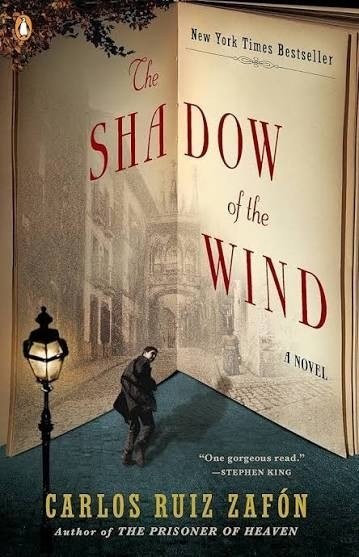
The experience of The Shadow of the Wind was uneven, but never empty. I am still caught on the question of memory and who gets to define it.
Book Summary
In postwar Barcelona, Daniel discovers a forgotten novel and becomes obsessed with learning why someone is destroying every copy by its mysterious author. The emotional pull comes from the fact that Daniel's investigation mirrors an older writer's life, while bookseller Fermín supplies humor, loyalty, and painful historical memory. The novel deals with memory, stories, censorship, obsession, fathers and sons, and the danger of turning a person into destiny without offering a completely clean answer.
What I Liked
I was most engaged by the Cemetery of Forgotten Books, Fermín, rain-soaked Barcelona, and the interlocking literary mystery. Daniel's investigation mirrors an older writer's life, while bookseller Fermín supplies humor, loyalty, and painful historical memory. The combination gave The Shadow of the Wind warmth, tension, or unease exactly where it needed it.
What Could Be Better
I had trouble with the fact that the romance can feel idealized, and some women are treated more as tragic inspirations than full participants. A little more restraint or development around memory in The Shadow of the Wind would have made the emotional result more convincing.
Context Behind the Book
Carlos Ruiz Zafón transformed Barcelona into a literary labyrinth, blending popular mystery, Gothic atmosphere, political history, and love for lost books.