🏆 Over 55 years of the Booker Prize · Over 55 years of arguments · This is the full story
i have been thinking about this piece for a while because i keep noticing that whenever the Booker Prize comes up in conversation people do not just talk about the books. They talk about the drama. The year the judges refused to follow the rules. The writer who publicly called the whole thing corrupt. The big question about whether letting American authors in was a great idea or the beginning of the end of what made the prize special. There is always something.
And i think that drama is actually part of why the prize matters so much. A prize nobody argued about would just be a list of books. The Booker Prize is an annual national conversation about what literature is for, who gets to decide what is good, and whether any of this can actually be separated from who knows who and whose turn it is. That last bit is a direct quote and i will get to it.
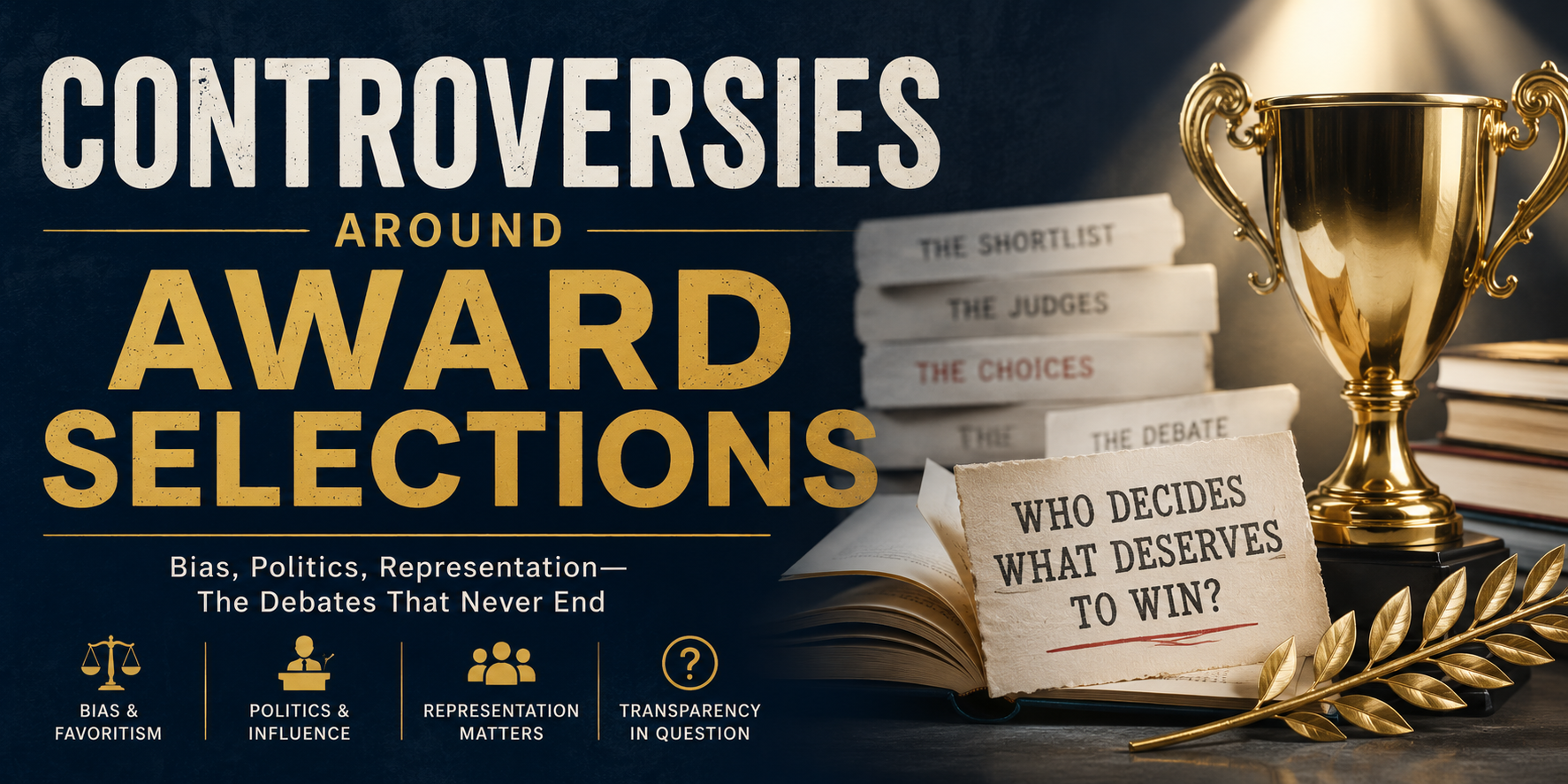
So here is my full rundown of the controversies that have shaped the Booker Prize since it started in 1969. Some of them are funny in hindsight. Some of them raised questions the prize has never fully answered. And a couple of them changed the prize in ways that are still being argued about today.
🔥
Controversies Covered
8 major moments
📜
Rule Change
2014 opened to all English writers
✊
Biggest Moment
2019 judge sit-in to break rules
💷
Prize Value
£50,000 to winner today
💬
Most Famous Quote
AL Kennedy 2001
"It's a pile of crooked nonsense. The winner is chosen by who knows who, who's sleeping with who, who's selling drugs to who, who's married to who, whose turn it is."
AL Kennedy, writer and former Booker judge, speaking in 2001 about the prize selection process
55+
Years of the Booker Prize and the arguments that came with it
2019
Year judges staged a sit-in and broke a rule that had stood since 1993
5hrs
How long the judges deliberated before refusing to name one winner in 2019
2014
Year American authors became eligible and changed the prize forever
🔥 The Controversies — In Full
i have put these roughly in the order they happened though a few of them are more ongoing debates than single events. The prize has been running for over fifty years and at almost every step there has been someone ready to point out that something has gone very wrong.
🔴 1980
Anthony Burgess Would Not Come Unless He Won
Anthony Burgess was nominated for Earthly Powers and he told the committee he would not come to the ceremony unless they guaranteed he would win. This is one of my favourite pieces of literary prize history because it is so nakedly human. The committee said they could not guarantee anything because the final decision was being made thirty minutes before the announcement. Burgess stayed home. William Golding won for Rites of Passage. You can imagine how that conversation went.
🔴 1981
John Banville Writes an Open Letter Calling the Prize Elitist
After being left off the 1981 shortlist Banville wrote a letter to the Guardian criticising the judges for elitism. He offered to take the prize money and buy every copy of the nominated books to give to libraries, saying this would ensure the books not only got bought but actually read, which he described as a unique occurrence. It is one of the most memorably sarcastic things a writer has ever done publicly about a prize. Banville eventually won in 2005 for The Sea and by then the prize had given him quite a lot to work with.
🔴 1983
The Chair Switched Her Vote with Minutes to Go
This one sounds like something from a novel. The 1983 judging panel was completely split between JM Coetzee's Life and Times of Michael K and Salman Rushdie's Shame. With only minutes before the scheduled announcement, the chair Fay Weldon cast her vote for Rushdie and then switched it to Coetzee while the result was literally being called in. Coetzee won. Nobody who was not in that room knows exactly what happened in those final seconds and that is somehow the most interesting thing about the story.
💬 The AL Kennedy Moment (2001): This is the one that people still bring up whenever the prize comes around. Scottish writer AL Kennedy had served as a judge on the 1996 panel and five years later she gave an interview where she said the prize was what she called a pile of crooked nonsense and described the selection process as being driven by who knows who, who is sleeping with who, who is selling drugs to who, who is married to who and whose turn it is. She was specifically talking about the year Graham Swift won for Last Orders. The prize administrators pushed back strongly. Kennedy never walked any of it back. Whether she was right or wrong she said what quite a lot of people suspected and nobody else was willing to say out loud.
📖 The Readability Debate (2011): In 2011 the judges came under fierce criticism because the shortlist was seen by many critics as being too easy to read. The chair of that year's panel had said they wanted books that people actually read rather than simply admire and former poet laureate Andrew Motion said that opened up a completely false divide between things that are high end and things that are readable as if the two are somehow in opposition which he said was patently not true. Poet Jackie Kay said it was a sad day when even the Booker was afraid to be bookish. Julian Barnes won that year with The Sense of an Ending which many saw as the prestige choice that rescued the whole thing. The debate raised a question the prize still has not fully settled which is whether it is supposed to reward the most important fiction or the most enjoyable fiction and whether those are always different things.
🌍 The American Question — The Biggest Rule Change in Prize History
This is the one that keeps coming back. In 2014 the Booker Prize Foundation announced that eligibility would be expanded to include any author writing in English, not just those from the UK, Ireland, the Commonwealth and Zimbabwe. American writers were now in. And the literary world had a lot of feelings about it.
🇺🇸 Why it happened: The foundation said the prize should recognise and celebrate authors writing in English whether from Chicago, Sheffield or Shanghai. They had initially looked at setting up a separate prize for American writers but decided that might dilute or jeopardise the main prize. After 18 months of consultation with publishers and booksellers they decided to open the door instead. The decision was announced in September 2013 and came into effect the following year.
😬 Why people were angry: The reaction was sharp. Writer and broadcaster Lord Bragg said the Booker would lose its distinctiveness and compared it to a British company being taken over by a worldwide conglomerate. Former winner Howard Jacobson called it the wrong decision. Former winner AS Byatt said it would make judging impossible. The worry was that American fiction is enormously strong and well-funded and would simply crowd out writers from smaller Commonwealth nations who had previously had a prize where they could compete on equal terms.
📊 What actually happened: The doomsayers turned out to be quite right in numerical terms. By 2015 five of the thirteen longlisted novels were by American writers. In 2016 Paul Beatty became the first American to win the prize for The Sellout. The following year George Saunders won for Lincoln in the Bardo. By 2018 thirty publishers had written a formal letter to the prize asking it to limit eligibility back to Commonwealth, Irish and Zimbabwean writers. Their argument was that the change had made the prize less global rather than more global because American dominance was squeezing out the very diversity the change was supposed to celebrate.
🤔 Where things stand now: The rule has not been reversed. American writers remain eligible. The debate has shifted rather than ended. Some people think the prize has benefited enormously from opening up and that the best novels in English should be eligible regardless of where the author grew up. Others still think it was a mistake that changed the character of the prize in ways that cannot be undone. i find myself somewhere in the middle on this one and i suspect that is where most readers land too.
💡
For what it is worth former winner John Banville took the opposite view from most of his contemporaries. He said he thought it was excellent that the prize was no longer closed to Americans adding that American fiction is very strong indeed. He did acknowledge it would make life very difficult for the judges. That feels like the most honest assessment of the whole situation that anyone gave at the time.
✊ 2019 — The Year the Judges Staged a Sit-In
This is the most dramatic single moment in the prize's recent history and honestly i love that it happened. Not because rules should always be broken but because what it revealed about the people running the prize and the people judging it is fascinating.
📜 The rule: Since 1993 the Booker Prize rules had stated clearly that there could only be one winner. This rule was brought in after the joint winners of 1974 caused its own controversy and the prize had stuck to it ever since. Before announcing their winner in 2019 the judges were told quite firmly that the rules say only one book can win. They understood the rule. They decided to break it anyway.
⏰ What happened in that room: The five judges deliberated for five hours. They could not separate Margaret Atwood's The Testaments from Bernardine Evaristo's Girl Woman Other. They were told repeatedly by organisers that splitting the prize was not allowed. According to Gaby Wood who ran the Booker Prize Foundation at the time the judges essentially staged a sit-in in the judging room until their decision was accepted. The chair of judges Peter Florence said their consensus was that it was their decision to flout the rules. He added that he believed laws are inviolable but rules are adaptable to circumstances.
🏆 Why it mattered beyond the drama: The two winners could not have been more different in terms of where they stood in the literary world at that moment. Margaret Atwood at 79 was one of the most famous authors alive, winning her second Booker for a sequel to The Handmaid's Tale that had been anticipated globally. Bernardine Evaristo was becoming the first Black woman ever to win the Booker Prize for Girl Woman Other. If the judges had been forced to pick one there is a genuine question about which one it would have been and what that would have said. The prize organisation insisted the decision did not set a precedent. The judges clearly did not care about that.
🤝 How the two winners handled it: They were both wonderful about it. Atwood said on stage that she would have thought she was too elderly and did not need the attention and she was glad Evaristo was getting some. Evaristo said it would have been embarrassing for her to be alone up there. They were gracious and funny and the whole thing turned into something that felt genuinely joyful despite all the institutional conflict around it. The books were both brilliant. i have read both of them and i still do not know which one i would have picked.
📌 Other Moments Worth Knowing About
The four big controversies above are the ones that defined the prize but there are a few other moments i think are worth knowing about if you follow the Booker seriously.
🌐 The 2002 Life of Pi Leak: A page on the Booker Prize website accidentally announced Life of Pi by Yann Martel as the winner a full week before the decision was meant to be made. It immediately became the favourite with bookmakers and more bets were placed on it than any other Booker nominee in history. As it turned out the leak was correct and Martel won unanimously. The bookies were not happy. The prize was embarrassed. And Life of Pi went on to sell millions of copies around the world which slightly softened the blow.
🎭 The Subjectivity Problem: This one is not tied to a single year but it comes up constantly. The selection process is entirely driven by the opinions of five judges who change every year. There is no consistent standard. One year the chair wants readability, the next year they want formal innovation, the year after that they want political urgency. Critics argue this means the prize is essentially just a snapshot of what five particular people happened to value in a particular year and calling that objective literary merit is misleading. Prize defenders say that is exactly what makes it interesting. Both of those things are true and i do not think the tension between them gets resolved.
🏛️ The Conflict of Interest Question (1974): In 1974 the prize had its first joint winners in Nadine Gordimer and Stanley Middleton. Less remembered is that one of the three judges that year, writer Elizabeth Jane Howard, was married to Kingsley Amis whose novel Ending Up was also in contention. Howard later claimed she had stepped back from judging once she realised her husband's book was involved. The archive notes at Oxford Brookes University tell a rather different story. The prize has since been very careful about conflict of interest rules and now runs with five judges rather than three partly for this reason.
💰 The Commercialisation Question: This one is more philosophical but i think it matters. Critics have argued for years that the Booker Prize creates a feedback loop where publishers begin selecting and commissioning books based on what they think will appeal to prize judges rather than on what genuinely pushes fiction forward. The prize creates commercial winners, those commercial winners shape what gets published, and what gets published shapes what future prizes have to choose from. It is a real tension and i do not think anyone has found a satisfying answer to it.
💭 What i Actually Think About All of This
After going through all of this i keep coming back to something that sounds obvious but i think is actually important. The Booker Prize is controversial because it matters. Prizes nobody cares about do not generate five hour judging room sit-ins or open letters to the Guardian or writers going on record to say the whole thing is crooked nonsense.
🤔 On the judging process: i think AL Kennedy was probably not entirely wrong that personal relationships shape prize decisions in ways that are hard to see from outside. That is true of almost every prize that has ever existed and it is worth being honest about. It does not make the winners undeserving. It does mean the idea of a single objectively best novel in any given year is a fiction that the prize kind of requires us to believe in.
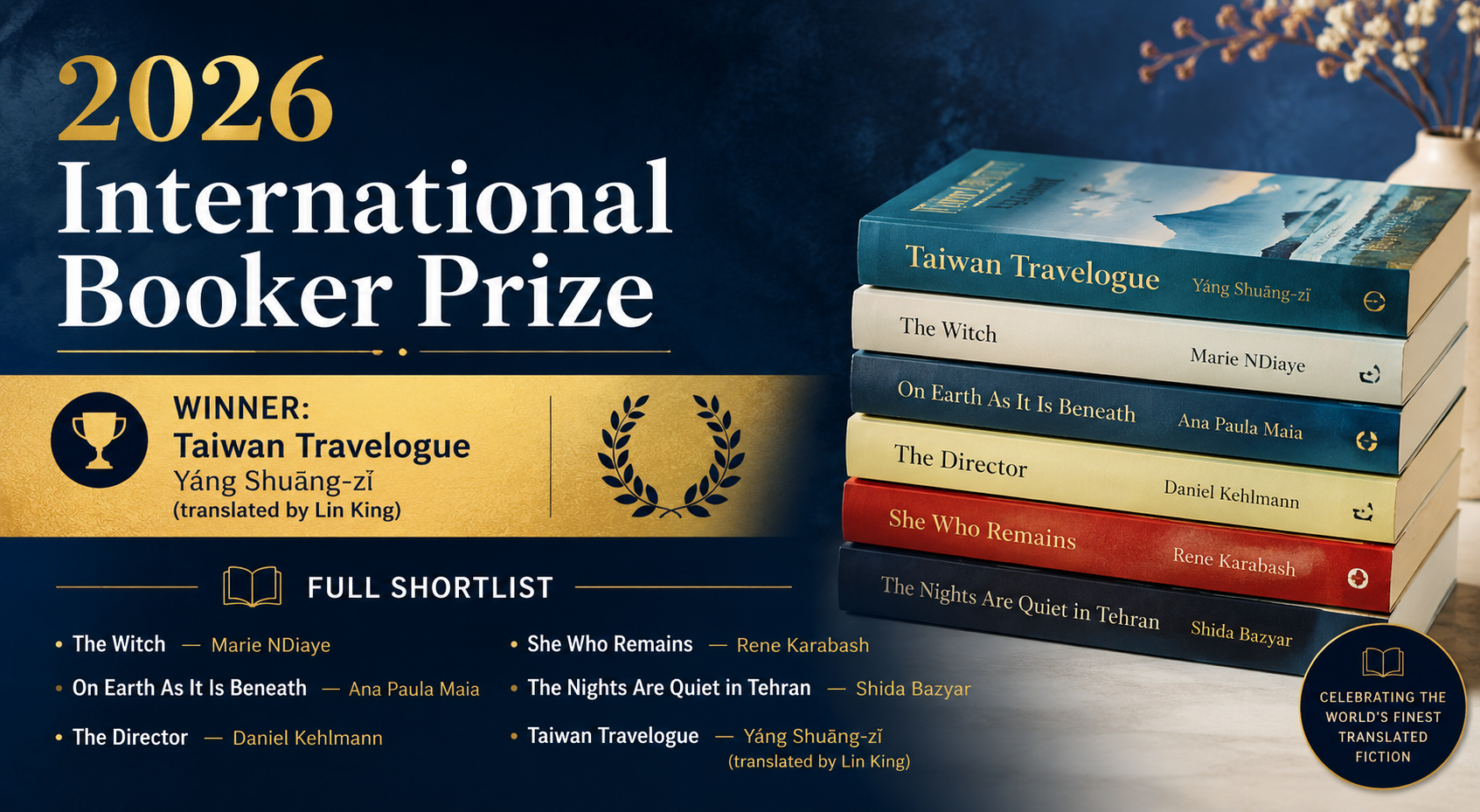
🌍 On the American question: My honest view is that i am glad American writers can enter but i do think the prize should be more careful about not letting the American literary world simply absorb it. The International Booker Prize which deals with translated fiction has found a much more interesting global voice in recent years. The main prize feels more like a contest between a few dominant literary cultures than it used to.
✊ On 2019: The judges were right to break the rules. Bernardine Evaristo should not have had to wait another year or lose to Margaret Atwood. And the rule that said there could only be one winner existed for institutional tidiness not for any good literary reason. Sometimes the right thing to do is to refuse to pick.
📚 On the prize overall: i still read the shortlist every year. i still argue about it with people i like. i still feel something when the winner is announced. That is what a prize is supposed to do and despite everything the Booker Prize keeps doing it. The controversies are not a sign something is broken. They are a sign people care. That feels like exactly what literature needs.
💡
The 2026 Booker Prize is already underway. The longlist of twelve or thirteen books will be announced on Tuesday 28 July 2026, the shortlist follows on Tuesday 22 September, and the winner will be announced on Monday 9 November 2026. The judging panel this year is chaired by classicist Mary Beard and includes poet Raymond Antrobus, musician Jarvis Cocker, journalist Rebecca Liu and novelist Patricia Lockwood. That is a genuinely unusual group of people and i suspect they will produce something to argue about.
📚 Read the Books Behind the Drama
Every winner and shortlisted novel mentioned in this piece is worth your time. Explore more Booker Prize reporting and literary award coverage across Epiloguely.
Explore More Literary News →