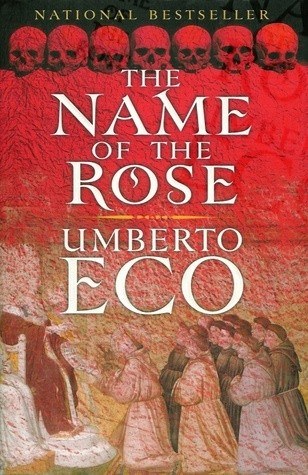
The Name of the Rose Review
| Published | 1980-09-01 |
| Series | Standalone |
| Genre | Historical Mystery, Literary Fiction |
| Language | English |
| Publisher | Bompiani (original); Mariner Books edition |
| ISBN-10 | 0156001314 |
| ISBN-13 | 9780156001311 |
πThe Name of the Rose β My Honest Review
Written and reviewed by Shadab Alam. The opinions and rating in this review are my own.
Summary:
A Franciscan friar and his novice investigate deaths inside a medieval monastery where theology, politics, books, and fear are tightly connected. William of Baskerville's rational curiosity makes him a compelling detective, while older Adso's narration adds uncertainty and regret. What follows is a story concerned with knowledge, censorship, interpretation, laughter, power, heresy, and the danger of one total explanation, told through pressure on trust, identity, and ordinary decisions.
β What I Liked
My favorite parts involved the forbidden library, intellectual detection, and the physical detail of monastic life. They worked especially well because William of Baskerville's rational curiosity makes him a compelling detective, while older Adso's narration adds uncertainty and regret. In The Name of the Rose, the result felt specific rather than manufactured.
β What Could Be Better
My reservation is that the density can interrupt the mystery, and readers uninterested in medieval debates may struggle. Another reader may accept it, but I felt The Name of the Rose lose some control there.
A Franciscan friar and his novice investigate deaths inside a medieval monastery where theology, politics, books, and fear are tightly connected. The same pressure returns through the forbidden library, which makes knowledge feel lived rather than arranged.
My main reservation is that the density can interrupt the mystery, and readers uninterested in medieval debates may struggle. I stayed involved, though my confidence dipped when knowledge became too convenient around the forbidden library.
I became most involved through the people caught in knowledge, especially around the forbidden library. William of Baskerville's rational curiosity makes him a compelling detective, while older Adso's narration adds uncertainty and regret. This gave the premise an emotional center rooted in censorship rather than theory.
The sections I enjoyed most involved the forbidden library, intellectual detection, and the physical detail of monastic life. I understood the people better through the forbidden library than through the more explanatory passages.
The book circles around knowledge, censorship, interpretation, laughter, power, heresy, and the danger of one total explanation. I did not agree with every conclusion, but I liked being asked to judge actions connected to knowledge, particularly around the forbidden library, rather than accept a ready-made moral.
Several scenes improve on reflection because the forbidden library acquires a different meaning later.
I would recommend it with one warning: the density can interrupt the mystery. Even so, the connection between knowledge and censorship stayed with me.
πShadab's Rating
πVibe Check
Read spoilers, debates, and detailed user reviews in our discussion room.
Discover Your Next Great Read
Handpicked recommendations from our collection of literary treasures