Robin's gratitude, anger, education, and hesitation make him a convincing participant in a system he increasingly understands. The person on the page is allowed to be inconsistent about colonialism, which made the choices easier to trust. I was most attentive during the silver-bar magic, cohort friendships, footnotes, and the direct link between language and imperial power. The attention paid to the silver-bar magic gives the larger question of colonialism a human scale.
For me, the real argument concerns colonialism and translation. The plot matters because it forces colonialism and translation into practical choices, where a clean belief becomes harder to maintain.
I did lose confidence when some characters become representatives of positions, and the moral framing leaves limited ambiguity. A little more patience would have made the material around colonialism easier to believe.
The pace is uneven, but the shifts usually follow a change in how the characters understand colonialism through the silver-bar magic.
One brief exchange about translation, tied to the silver-bar magic, did more for me than the longer explanations around it.
The book earns its place with me through the silver-bar magic. Its unresolved problem remains some characters become representatives of positions.
Book Summary
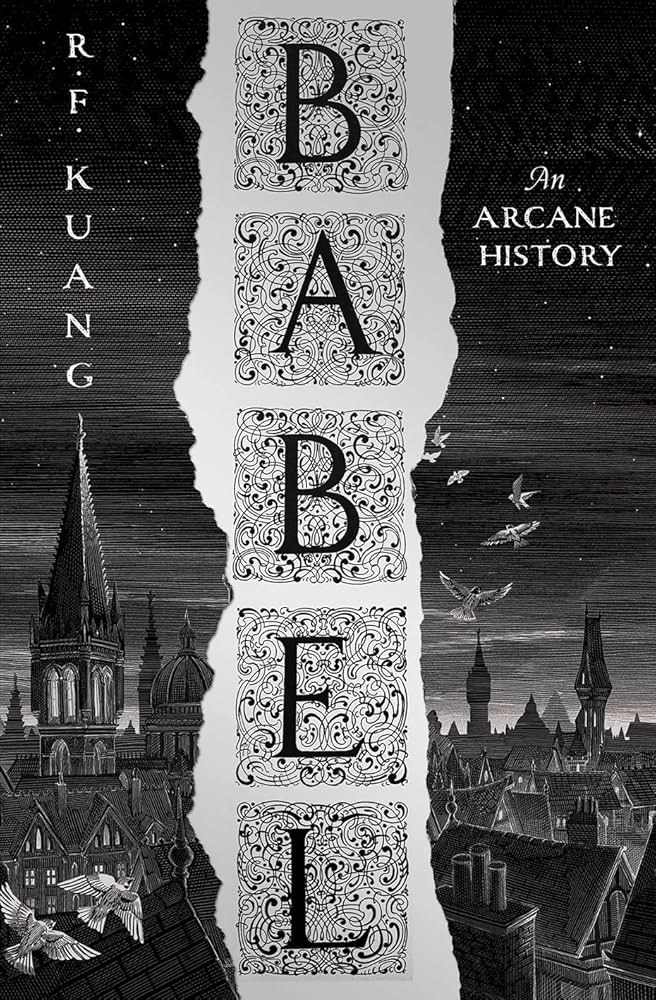
An orphan brought from Canton to Oxford studies magical translation at an institute whose power depends on empire, then must choose whether reform is possible. The book becomes most personal when Robin's gratitude, anger, education, and hesitation make him a convincing participant in a system he increasingly understands. Its wider questions involve colonialism, translation, complicity, friendship, violence, education, and institutional extraction, but they remain connected to what the characters risk and lose.
What I Liked
The best material for me was the silver-bar magic, cohort friendships, footnotes, and the direct link between language and imperial power. I also responded to the way Robin's gratitude, anger, education, and hesitation make him a convincing participant in a system he increasingly understands. Together, those choices made the people in Babel feel more important than the premise.
What Could Be Better
I was less convinced because some characters become representatives of positions, and the moral framing leaves limited ambiguity. I could understand the intention in Babel, yet the execution felt easier than the surrounding material.
Context Behind the Book
R. F. Kuang is a scholar and novelist whose work combines historical violence, speculative systems, ambition, and explicit arguments about power.