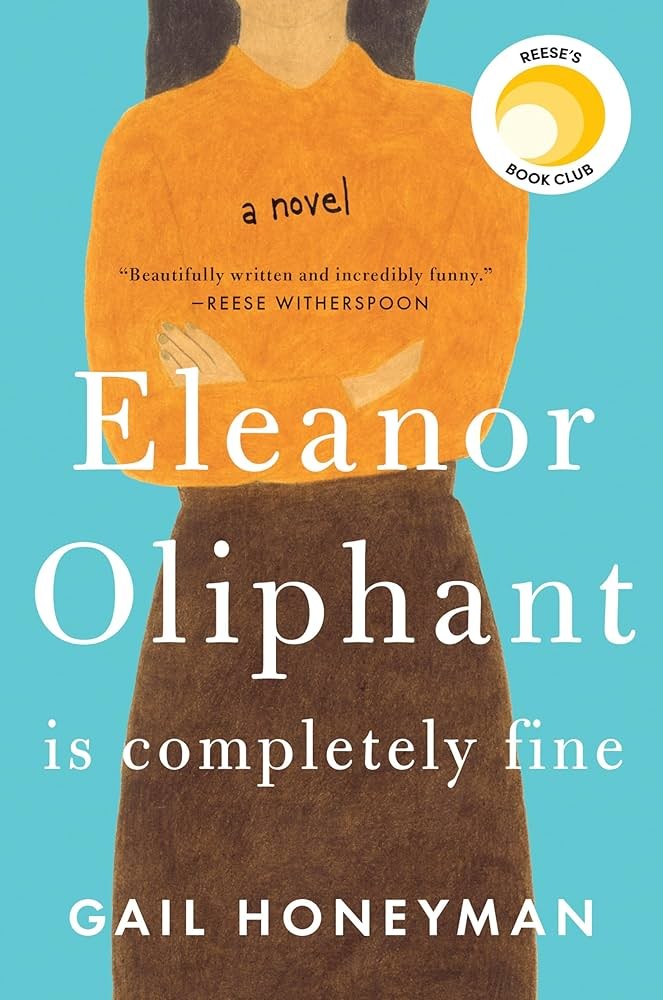
Eleanor Oliphant Is Completely Fine book cover by Gail Honeyman
⏱️
Estimated Read Time
9-11 hours

Eleanor Oliphant Is Completely Fine Review

✍️ Book by Gail Honeyman
Editorial Rating
★★★★★ 4.6
Epiloguely review by Shadab Alam
Reader Rating
☆☆☆☆☆ 0.0
No reader ratings yet
Rate This Book
A written review is optional
Published2017-05-09
SeriesStandalone
GenreContemporary Fiction, Literary Fiction
LanguageEnglish
PublisherPamela Dorman Books / Viking
ISBN-100735220689
ISBN-139780735220683

📝Epiloguely Editorial Review

Written and reviewed by .

Eleanor Oliphant Is Completely Fine initially looks like a story about an eccentric, fiercely independent woman whose routines separate her from everyone around her. Eleanor goes to work, comes home, eats the same meals, spends her weekends largely alone, and has developed a way of living that requires very little from other people. She insists she is fine, and for a while it is tempting to take that statement at face value. The longer the novel stays with her, though, the more obvious it becomes that her independence is partly a structure built to keep loneliness and painful memories at a manageable distance.

Eleanor’s voice is one of the reasons the book works as well as it does. She is observant, literal, judgmental, and often unintentionally funny. Everyday social customs that most people barely notice can seem absurd when she describes them, and her certainty about how people ought to behave creates some genuinely comic moments. At the same time, the humor gradually becomes harder to separate from sadness. What initially looks like social awkwardness begins to reveal how carefully Eleanor has arranged her life so that very little can surprise or hurt her.

The friendship with Raymond changed the book for me. He is not introduced as some ideal person who immediately understands Eleanor or knows how to fix her. He is untidy, ordinary, occasionally awkward himself, and simply keeps treating her as someone worth including. Their relationship develops through small interactions rather than a dramatic emotional breakthrough.

A conversation, an invitation, helping another person together, or simply having someone call again begins to disturb the isolation Eleanor has accepted as normal.

That gradual change felt much more convincing to me than a story in which one friendship instantly transforms a lonely person. Eleanor does not suddenly become socially effortless. She still misunderstands people, judges them, retreats into old habits, and struggles with situations that other characters find ordinary. What changes is that she begins to have experiences outside the narrow routine she has built for herself.

The distinction between solitude and isolation is probably the idea I carried away most strongly. Eleanor has spent years telling herself that she does not need anyone. In one sense, she is capable of taking care of herself. She works, pays her bills, maintains her home, and survives without depending much on other people. But the novel keeps asking whether being capable of surviving alone is the same thing as actually wanting to live that way.

Her past gradually provides an answer.

As more of Eleanor’s history becomes visible, some of the habits and reactions that once seemed merely unusual take on a different meaning. Her insistence that everything is fine begins to sound less like confidence and more like something she has needed to believe. The novel handles this best when it lets a small reaction or an uncomfortable silence reveal what Eleanor cannot yet explain herself.

Those quieter sections affected me more than the larger revelations.

I did have reservations about the humor in the early part of the book. There are moments when Eleanor’s differences themselves seem very close to becoming the joke. As the reader learns more about her, the tone changes and those same behaviors become much more complicated. Looking back, some of the comedy feels different once its connection to trauma is understood.

That shift may be intentional, but it still left me uneasy in a few places.

I also found the later revelation less surprising than the novel seemed to expect. Enough clues are placed along the way that I began forming a fairly clear idea before Eleanor reached the same point. The revelation still matters emotionally, but it did not have quite the shock the structure appears designed to produce.

For me, the novel was more successful when it concentrated on recovery rather than mystery.

Recovery here does not mean that Eleanor discovers one explanation for her past and everything becomes easy. Some of the strongest moments come from much more ordinary changes: accepting help, recognizing that another person cares, being embarrassed and surviving it, or allowing herself to admit that a life can be lonely even when it looks perfectly organized from the outside.

Raymond matters because he becomes part of that process without taking ownership of it. He does not rescue Eleanor. He gives her another kind of relationship to experience, one where kindness does not immediately demand something in return.

That is an important difference.

The book also understands that friendship can alter a life without needing to become romance. I appreciated that the emotional importance of Raymond does not depend on turning him into a conventional romantic reward for Eleanor’s growth. What matters is that another person continues showing up.

At times, Eleanor Oliphant Is Completely Fine explains its emotional ideas more directly than I needed. I generally preferred Eleanor’s routines, awkward conversations, and gradual willingness to let people closer. Those scenes gave loneliness a recognizable shape without having to define it.

What stayed with me was the contradiction at the center of Eleanor herself. She is genuinely independent in many ways, yet she has also confused independence with having no one close enough to hurt her.

The novel becomes most convincing when that distinction begins to break down.

I finished with mixed feelings about some of the humor and the way the later revelation is handled, but I believed Eleanor’s loneliness and, more importantly, the slow change in how she understands it. The friendship with Raymond gave that change a human scale. Instead of offering a neat lesson about trauma, the better parts of the book show something smaller: a person who has spent years saying she is completely fine beginning to realize that she no longer has to be fine entirely by herself.

Book Summary

Eleanor follows a rigid solitary routine until a small act of help and an awkward friendship expose the trauma beneath her insistence that she is fine. Eleanor's literal judgments are funny and painful because the reader slowly understands how carefully her life avoids vulnerability. What follows is a story concerned with loneliness, trauma, friendship, routine, self-perception, recovery, and the difference between independence and isolation, told through pressure on trust, identity, and ordinary decisions.

What I Liked

My favorite parts involved the friendship with Raymond, gradual social change, dry voice, and balance between humor and loneliness. They worked especially well because Eleanor's literal judgments are funny and painful because the reader slowly understands how carefully her life avoids vulnerability. In Eleanor Oliphant Is Completely Fine, the result felt specific rather than manufactured.

What Could Be Better

My reservation is that the late revelation is signaled, and early humor sometimes risks making Eleanor's differences the joke. Another reader may accept it, but I felt Eleanor Oliphant Is Completely Fine lose some control there.

Context Behind the Book

Gail Honeyman is a Scottish novelist whose debut became widely read for its unusual narrator and blend of dark trauma with hopeful social connection.

Reader Reviews

0 published written reviews · Reader star ratings remain separate from the editorial rating.

No reader reviews yet Be the first reader to share a thoughtful review of at least 100 words. A quick star rating can still be submitted separately above.

📊Reader Rating Breakdown

0.0
★★★★★
No reader ratings yet

No reader ratings yet. Be the first reader to rate this book using the separate quick-rating stars above.

🎭Vibe Check

What's the vibe of this book?
💬 Open Reader Comments & Discussion

Use the separate comment-style discussion room for spoilers, endings, characters, theories, questions, and replies. Formal reader reviews stay on this page.