when the clean detention setup stays close to physical detail and conversation.
The people gave reputation its real pressure through the clean detention setup. The rotating narrators begin as school stereotypes but become more human as their private pressures emerge. The best scenes let action expose what the character cannot say about bullying.
I did lose confidence when the solution raises concerns about mental-health representation, and some romances resolve predictably. My hesitation comes from execution rather than the idea itself, especially where reputation should carry scenes built around the clean detention setup.
The larger subject is reputation, bullying, sexuality, family pressure, labels, secrets, media, and public judgment. I appreciated that reputation is tied to money, family, work, and the clean detention setup rather than left as an abstract idea.
I also noticed how often reputation appears through routine while bullying remains unspoken.
The book leaves enough room for disagreement about reputation, especially around the clean detention setup, which made my own reaction more precise.
I can forgive the uneven parts because the clean detention setup gives reputation a form I can still picture.
Book Summary
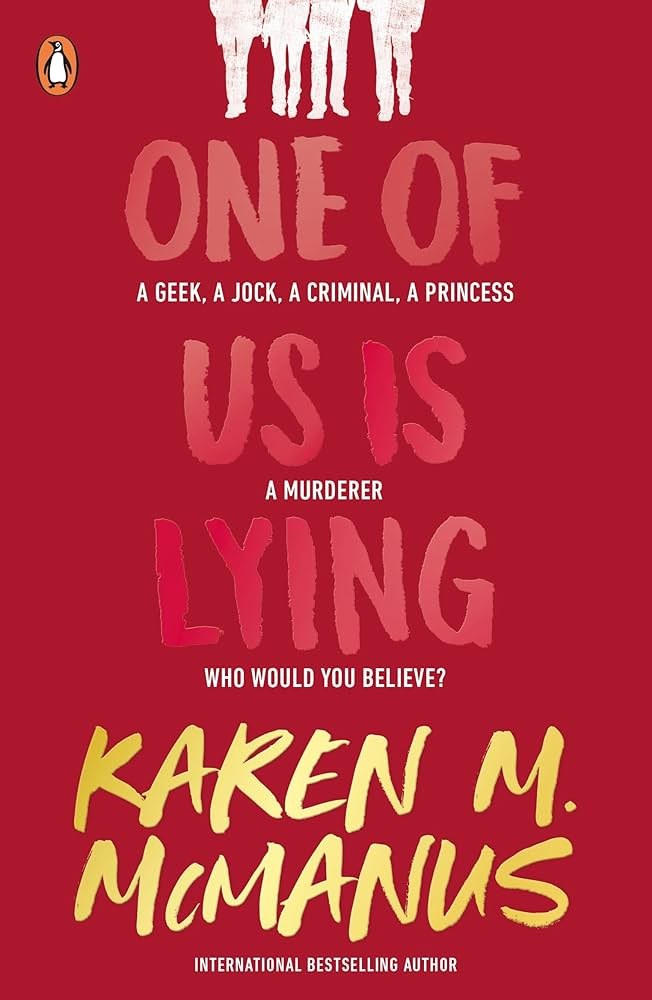
Five students enter detention and only four leave alive. This makes each survivor a suspect with a secret that could have been exposed. At the center of the book, The rotating narrators begin as school stereotypes but become more human as their private pressures emerge. Its main concerns include reputation, bullying, sexuality, family pressure, labels, secrets, media, and public judgment, though the plot keeps those ideas tied to relationships and consequence.
What I Liked
I liked the clean detention setup, shifting suspicion, teen secrets, and changing relationships among the four survivors. The rotating narrators begin as school stereotypes but become more human as their private pressures emerge. Those details gave One of Us Is Lying a distinct emotional shape, and the writing trusted the scenes instead of explaining every idea twice.
What Could Be Better
My main problem was that the solution raises concerns about mental-health representation, and some romances resolve predictably. One of Us Is Lying remained readable, but those choices reduced the force of scenes that should have landed harder.
Context Behind the Book
Karen M. McManus is known for young-adult mysteries built around contained groups, hidden secrets, shifting suspicion, and easily readable ensemble structures.