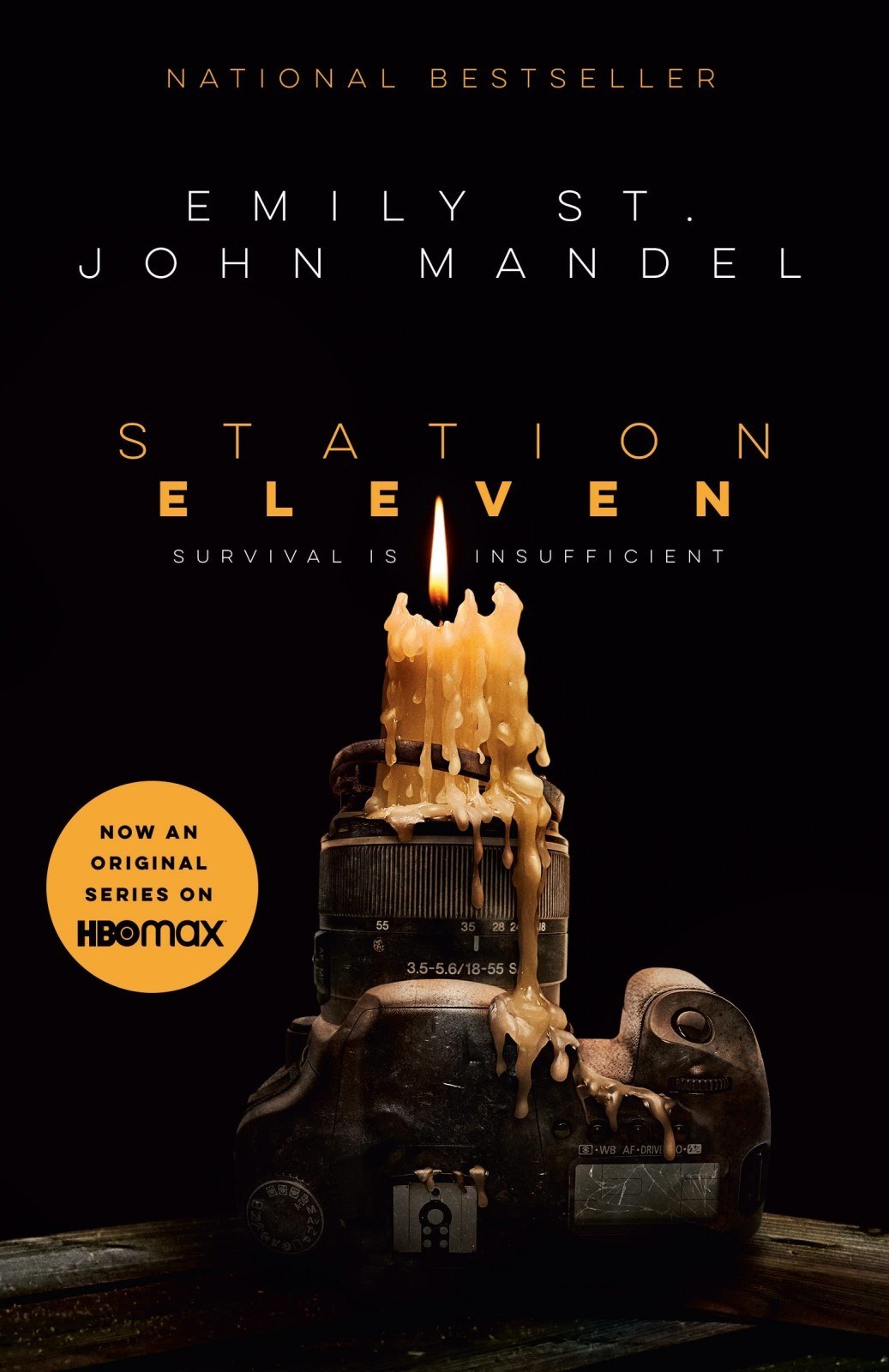
Kirsten's post-collapse life is compelling, but the emotional center is the web of ordinary connections formed before anyone knew they mattered. I disagreed with several decisions, but the fear connected to survival rarely felt invented when the Traveling Symphony entered the scene.
The book circles around art, survival, fame, community, memory, chance, and what people choose to preserve. I did not agree with every conclusion, but I liked being asked to judge actions connected to art, particularly around the Traveling Symphony, rather than accept a ready-made moral.
The weaker stretch comes from the fact that some coincidences are too convenient, and the prophet storyline is less subtle than the rest. The issue did not ruin the experience, though it made the handling of survival, especially the Traveling Symphony, feel arranged for effect.
The material I kept returning to was the Traveling Symphony, Museum of Civilization, nonlinear timelines, art, and objects carrying memory. The effect comes from accumulation around the Traveling Symphony, not from one oversized speech.
The quietest pages connect art to survival more convincingly than the louder scenes do.
The best recommendation I can give is specific: read it for the Traveling Symphony, and be prepared for some coincidences are too convenient.
Book Summary
A pandemic collapses modern life, connecting an actor's death, a traveling theatre group, a museum of lost objects, and a dangerous prophet. Kirsten's post-collapse life is compelling, but the emotional center is the web of ordinary connections formed before anyone knew they mattered. The plot uses that situation to examine art, survival, fame, community, memory, chance, and what people choose to preserve, especially when a private choice begins affecting people who had no say in it.
What I Liked
My favorite parts involved the Traveling Symphony, Museum of Civilization, nonlinear timelines, art, and objects carrying memory. They worked especially well because Kirsten's post-collapse life is compelling, but the emotional center is the web of ordinary connections formed before anyone knew they mattered. In Station Eleven, the result felt specific rather than manufactured.
What Could Be Better
My reservation is that some coincidences are too convenient, and the prophet storyline is less subtle than the rest. Another reader may accept it, but I felt Station Eleven lose some control there.
Context Behind the Book
Emily St. John Mandel writes interconnected literary novels about memory, art, chance, catastrophe, and systems larger than any one character.