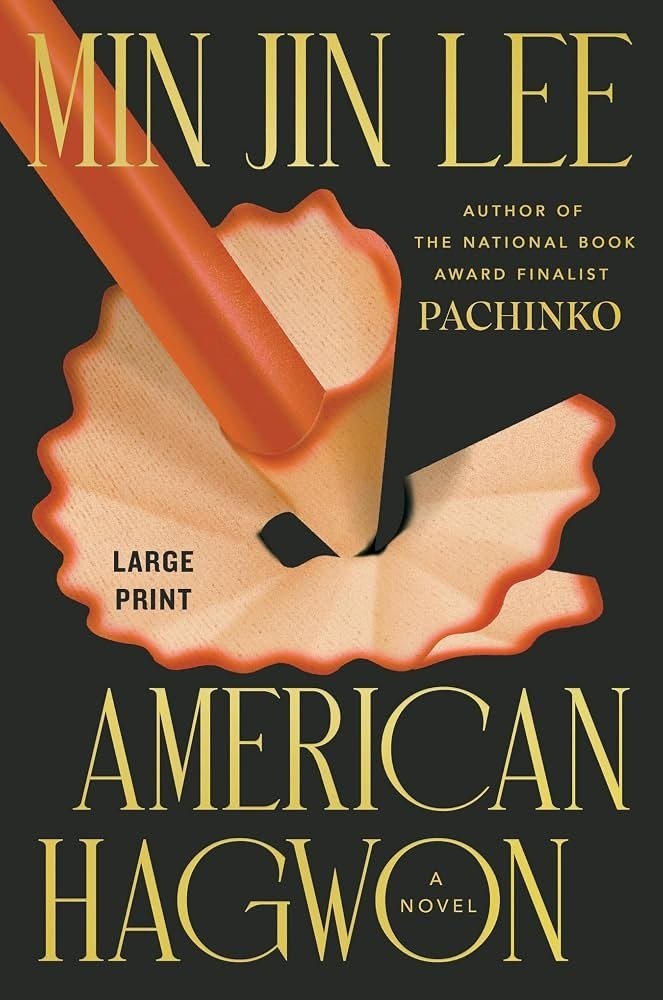
There is something uncomfortable about the idea at the center of American Hagwon. We grow up hearing that education is the safest investment a family can make. Study hard, get into a good university, find respectable work, and eventually life will become easier. It sounds reasonable, especially when parents have spent years sacrificing their own comfort to make those opportunities possible for their children.
Min Jin Lee builds her new novel around what happens when that promise begins falling apart.
The story follows John and Helen Koh and their three children, Bo, DH, and Mido. The family has worked its way into a relatively comfortable life, but a betrayal involving someone close to John and the devastating financial crisis of 1997 leave them facing a future they never prepared for. They eventually move across countries, carrying the same hopes into places where their previous achievements and experience no longer guarantee much.
What makes the premise interesting is that their difficulties are not simply the result of making foolish decisions. The family has followed a recognizable path toward stability, yet circumstances beyond its control threaten everything it has achieved. That makes the novel's treatment of ambition more complicated than a familiar warning about working too hard.
Education becomes especially important once the family begins rebuilding. The word hagwon refers to the private tutoring academies that play a significant role in South Korea's highly competitive education system. In the novel, these institutions become tied to the Koh family's hopes for the next generation and, eventually, to their efforts to establish themselves in America.
I find the contradiction at the center of that idea particularly compelling. Parents may understand that academic competition puts enormous pressure on their children and still feel they have little choice but to participate. Refusing the system can seem irresponsible when everyone around them is doing whatever they can to secure an advantage.
The question is not simply whether private education is good or bad. It is why a family might feel compelled to invest so much in it even when the emotional and financial costs are becoming difficult to bear.
The relationship between parental love and expectation gives the story another interesting dimension. John and Helen want their children to have opportunities that may no longer be available to them. Yet the life a parent imagines as secure is not necessarily the life a child wants. The three Koh children grow up under expectations shaped by their parents' experiences, their changing financial circumstances, and the different societies in which they live.
That generational difference is central to the book's larger concern with immigration. Moving to another country does not automatically provide a fresh beginning. Adults arrive with qualifications, professional experience, memories, and ideas about how the world works. Their children may adapt to the new environment more easily, while the parents discover that much of what once gave them confidence has lost its value.
It is a difficult reversal. A parent who once knew exactly how to guide a child may suddenly need that child to explain the world.
The novel's geographical movement also gives its examination of success a wider frame. Seoul, Sydney, and Southern California offer different environments, but relocating does not free the family from the pressure to achieve. The meaning of a successful life keeps changing, and each new opportunity brings another set of expectations.
One of the more interesting aspects of Lee's approach is that education is not treated only as a source of misery. A hagwon can represent exhausting competition, but it can also provide employment, community, practical support, and opportunities for people whose circumstances have become uncertain. That complexity matters. It would be easy to condemn the entire system from a comfortable distance, but the people depending on it have practical reasons for remaining involved.
The novel also comes with a potential weakness, one that becomes apparent in some of the critical discussion surrounding its publication. A family saga covering more than fifteen years, three countries, and a large group of interconnected characters has an enormous amount of ground to cover. Such breadth gives the story its historical and social scope, but it can also leave less space for individual emotional developments.
There is another concern worth considering. When characters are presented primarily through their perseverance, generosity, and willingness to sacrifice, a novel risks making goodness feel too uncomplicated. I would want a story about ambition and education to leave room for envy, selfishness, questionable decisions, and the less admirable feelings that can accompany the desire to succeed. Those contradictions are often where family relationships become most revealing.
Still, the broader questions raised by American Hagwon are substantial. The book places private family choices against changing economic circumstances and asks how much responsibility individuals can reasonably carry for outcomes they cannot entirely control.
The promise that education can improve a person's future is not necessarily false. But it becomes much harder to live with when families begin treating every examination, school admission, and professional opportunity as a judgment on everything they have sacrificed.
That is the central tension I find most interesting about this novel. Parents work toward a future they hope will be better than their own, but that future keeps demanding more from them. Their children inherit not only opportunities but also the fear of wasting those opportunities.
American Hagwon brings those pressures together through a story about family, migration, and the pursuit of stability in a world that rarely remains stable for long. Its subject extends beyond one community or education system. It raises a question that many families, regardless of where they live, will recognize: how much of life should be spent preparing for a better future, and what happens to the present while everyone is busy trying to secure it?