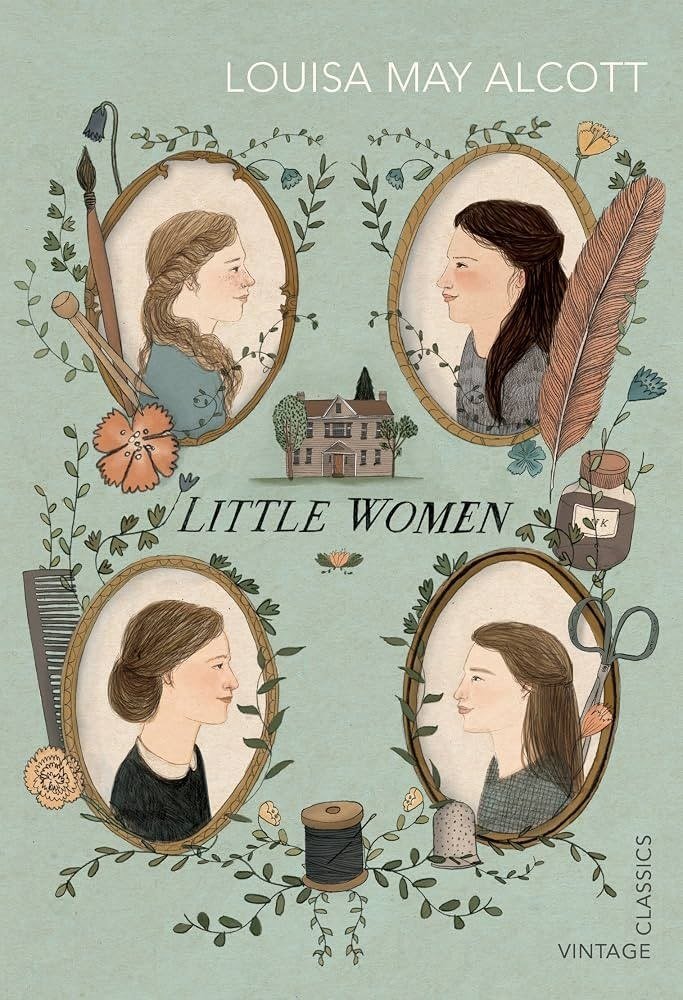
The premise of Little Women fits into one sentence, but its treatment of ambition is messier and more personal.
The four March sisters grow up during and after the American Civil War, learning what ambition, love, illness, work, and family require. I did not need another twist before the warmth of the March household entered the setup. I needed the people affected by ambition around the warmth of the March household to feel specific, and mostly they did.
I became most involved through the people caught in ambition, especially around the warmth of the March household. Jo's hunger to write drives the novel, while Meg, Beth, and Amy offer different answers to how a woman should live. That tension kept me involved whenever the pace slowed around ambition.
The sections I enjoyed most involved the warmth of the March household, believable sisterly conflict, and the emotional importance of ordinary domestic events. This material keeps the story from turning ambition into an argument with character names attached.
For me, the real argument concerns ambition and family duty. The plot matters because it forces ambition and family duty into practical choices, where a clean belief becomes harder to maintain.
My main reservation is that the moral lessons can be obvious, and some romantic choices remain divisive. I wanted the story to trust the uncertainty around family duty, especially in scenes involving the warmth of the March household, instead of pressing the point again.
I found myself rereading the section around the warmth of the March household, because it changes the emotional meaning of ambition without announcing the change.
The book works better as a study of ambition than as a perfectly balanced plot. The warmth of the March household is the part I remember first.
What I Liked
I was most engaged by the warmth of the March household, believable sisterly conflict, and the emotional importance of ordinary domestic events. Jo's hunger to write drives the novel, while Meg, Beth, and Amy offer different answers to how a woman should live. The combination gave Little Women warmth, tension, or unease exactly where it needed it.
What Could Be Better
I had trouble with the fact that the moral lessons can be obvious, and some romantic choices remain divisive. A little more restraint or development around ambition in Little Women would have made the emotional result more convincing.
Context Behind the Book
Louisa May Alcott drew on her own family and financial struggles, creating a domestic world that holds real ambition, disappointment, and change.