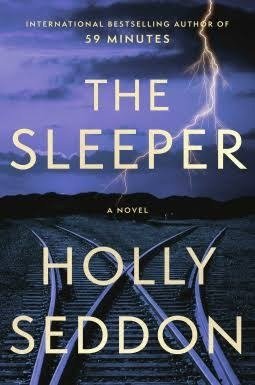
The Sleeper has the kind of premise that could easily overwhelm the people living inside it. A lightning strike, a parallel reality, an authoritarian Britain, a Cold War that never ended, and a protagonist who discovers that she technically does not exist in the world around her give Holly Seddon plenty of machinery to manage. What makes the novel work is that Maya’s first concern is not political theory or alternate-history speculation. She simply wants to understand where her life has gone.
That personal disorientation gives the opening real urgency. Maya recognizes London physically, yet almost every assumption she has about it has become unreliable. Familiar streets, institutions, books, relationships, and historical events have all been reshaped by a different political timeline. Seddon uses those differences effectively because the alternate Britain is frightening not only when it is openly authoritarian but when everyday life has adjusted to authoritarianism as if it were ordinary.
Making Maya a librarian is a particularly good choice. Books and libraries naturally become politically charged in a society built on censorship and control, but Seddon does not need to turn Maya into an action hero to make her useful to the resistance. Her profession is built around information, preservation, access, and memory—the exact things authoritarian systems want to regulate. The resistance therefore feels connected to who Maya already is rather than like an arbitrary thriller transformation.
Arthur introduces the novel’s most emotionally complicated idea. In Maya’s original life he is her husband, the person whose absence she feels most intensely. In this reality he is not her husband at all, and his position inside the political establishment makes him both familiar and dangerous. The tension comes from Maya knowing a version of Arthur that this Arthur has never lived. Seddon uses that difference to ask whether love belongs to individual people or to the exact sequence of experiences that made those people who they are.
That question gives the speculative premise more substance than a simple “what if history changed?” exercise. Maya herself exists because her parents met around the fall of the Berlin Wall, so changing one historical event does not merely create different governments. It erases relationships, births, careers, memories, and entire versions of people. The novel becomes increasingly interested in how much identity depends on circumstance. A person who seems kind in one life may have been shaped differently in another, and recognizing someone does not mean you truly know them.
The thriller side is generally strong. Maya’s involvement with the resistance pushes her deeper into danger, and the contrast between her lack of experience and the seriousness of the mission keeps the tension high. Publishers Weekly praised the world as painstakingly rendered and frighteningly believable, and that is one of the book’s strengths. The alternate-history setup feels detailed enough to be unsettling without becoming a textbook about geopolitical divergence.
There are weaknesses in the same ambitious structure. Maya occasionally makes decisions that seem implausibly reckless given how dangerous her surroundings are, and some readers may find the shifting realities and timelines harder to follow early on. The middle also loses some of the velocity created by the opening before the final stretch accelerates again. A few of the speculative mechanisms remain less fully explained than readers who prefer tightly defined parallel-universe rules may want.
Those limitations matter less because Seddon is ultimately more interested in emotional consequences than scientific explanation. The Sleeper is not really trying to prove how a parallel world could exist. It wants to know what it would feel like to arrive in one where everybody you love is either gone or has become someone else. That shift turns a clever thriller concept into a story about grief, memory, political freedom, and the frightening fragility of the lives we assume were always destined to happen.