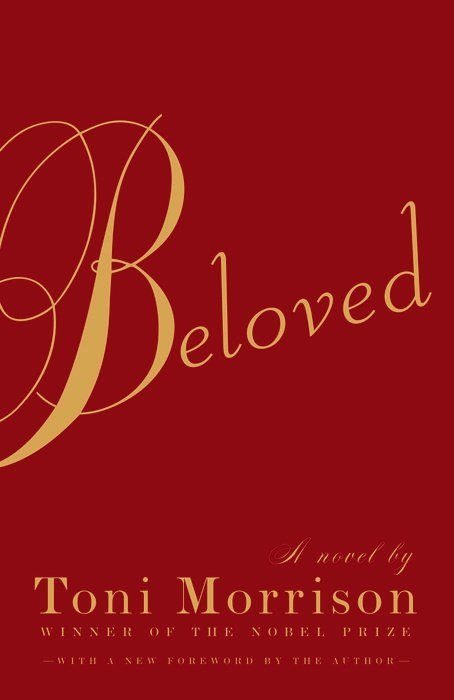
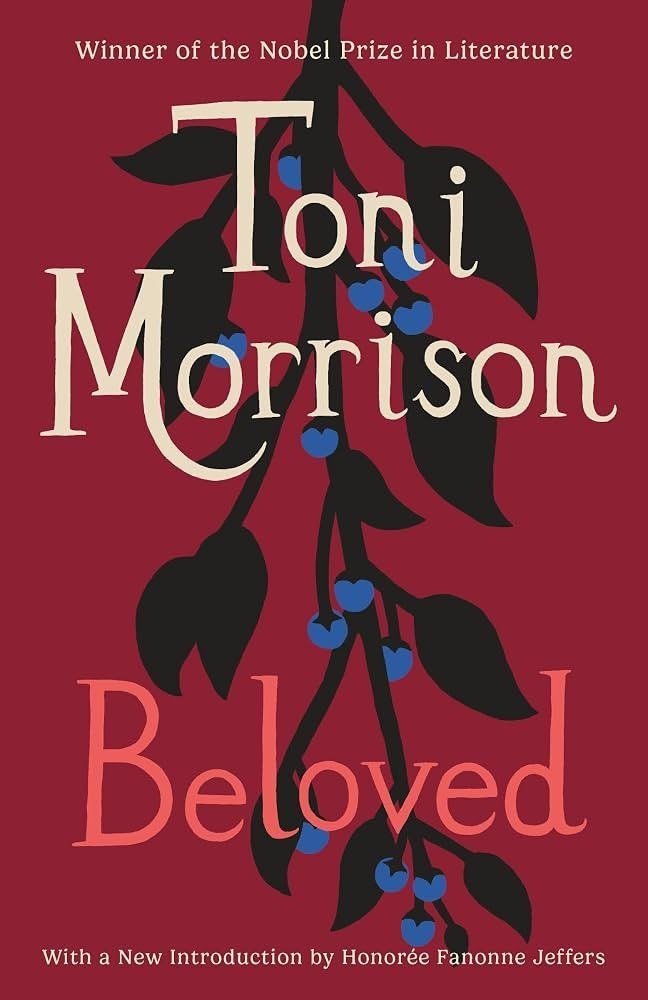
Beloved is a ghost story, but the ghost haunting Toni Morrison’s novel is far larger than the mysterious presence inside 124 Bluestone Road. The past itself refuses to remain buried. Sethe has physically escaped slavery, yet freedom has not erased what happened at Sweet Home or the impossible decisions she was forced to make afterward. Morrison turns haunting into both a supernatural event and a way of describing traumatic memory: something may be over in time while remaining completely alive inside the people who survived it.
Sethe is one of the novel’s most difficult and unforgettable characters because Morrison refuses to make her choices easy to judge. Her love for her children is absolute, but slavery has distorted the circumstances in which that love must operate. The novel’s central act is horrifying precisely because it emerges from a mother’s determination that her children will never be returned to bondage. Morrison never asks readers simply to approve or condemn Sethe. She asks them to understand the world that made such a decision imaginable.
Beloved’s arrival transforms memory into something almost physical. She can be read as a daughter returned from the dead, as Sethe’s guilt, as the accumulated trauma of slavery, or as several of these things simultaneously. Morrison never reduces her to a puzzle with one correct solution. Her presence becomes increasingly demanding because the past, once invited fully into the present, can consume everything around it. Sethe’s desire to compensate for what she has done gradually turns love into another form of captivity.
Denver’s development provides an important counterweight to that inward collapse. At the beginning, she is isolated inside a house dominated by Sethe’s memories and Beloved’s haunting. Yet she eventually recognizes that survival requires reaching beyond the boundaries of 124. Her movement toward the surrounding Black community gives the novel one of its most hopeful ideas: trauma isolates, but healing often requires other people. Morrison does not pretend community can erase history, but she shows that isolation allows history to become even more destructive.
Paul D carries a different version of the same history. His experiences at Sweet Home, imprisonment, forced labor, and repeated displacement have taught him to seal away parts of himself simply to continue living. His relationship with Sethe offers the possibility of companionship between two people who understand something of each other’s suffering, yet shared trauma does not automatically produce easy intimacy. Morrison is especially perceptive about the emotional damage inflicted on people whose bodies, relationships, and identities were treated as property.
The novel’s structure can be demanding because time does not move neatly forward. Memories interrupt the present, perspectives change, language becomes fragmented, and crucial information emerges in pieces. That difficulty is not ornamental. Morrison builds the form around the way traumatic memory behaves: repetitive, nonlinear, incomplete, and capable of making something decades old feel immediate. Readers looking for a straightforward historical narrative may initially feel disoriented, but that disorientation becomes part of the novel’s emotional method.
Beloved is also remarkable for refusing to make slavery merely a historical backdrop. Its violence reaches into motherhood, sexuality, masculinity, family, language, memory, and even a person’s ability to imagine a future. The supernatural elements do not make that history less real; they allow Morrison to represent damage that ordinary realism might struggle to contain. This is why the book can be both historically grounded and mythic without either quality weakening the other.
What remains after the novel is not simply horror. Morrison is equally concerned with the possibility of reclaiming the self after a system has tried to reduce human beings to property. Sethe cannot undo what happened, and remembering alone cannot repair everything. Yet Denver’s growth, the community’s intervention, and the possibility of connection suggest that the past does not have to possess every part of the future. Beloved earns its status as a classic because it refuses easy consolation while still making room for survival, dignity, and human connection.
What I Liked
The novel’s greatest strength is Morrison’s refusal to simplify Sethe. Her actions are disturbing, but the book forces the reader to confront the system that made those actions possible rather than judging them in isolation. I also liked the way supernatural horror and historical reality merge until Beloved can function simultaneously as a person, a memory, and a larger embodiment of unresolved trauma. Denver’s gradual movement toward independence and community gives the novel emotional range beyond suffering alone, while Morrison’s nonlinear structure makes memory feel active rather than safely historical.
What Could Be Better
Beloved can be a difficult novel to enter because its chronology, shifting perspectives, fragmented memories, and symbolic passages deliberately resist straightforward explanation. The identity and meaning of Beloved remain ambiguous, which is one of the novel’s strengths but may frustrate readers who prefer clear answers. Some sections also demand slow rereading because Morrison often reveals crucial information indirectly rather than explaining it immediately. The difficulty feels purposeful, but it does make the novel considerably less accessible than a conventional historical narrative.
Context Behind the Book
Toni Morrison was an American novelist, editor, essayist, and professor whose fiction transformed the representation of Black history, memory, family, and identity in American literature. Beloved, her fifth novel, was inspired in part by the historical case of Margaret Garner, an enslaved woman who escaped to Ohio in 1856 and killed her young daughter rather than allow her to be returned to slavery. Beloved won the Pulitzer Prize for Fiction in 1988. Morrison received the Nobel Prize in Literature in 1993, becoming the first Black woman to receive the literature prize, and her other major novels include The Bluest Eye, Sula, Song of Solomon, Jazz, Paradise, and A Mercy.