Cal has learned to listen for those layers, but his American background means he can never completely forget that he is interpreting a culture he entered as an adult. The result is a kind of investigation built less around dramatic interrogations than around noticing when ordinary speech suddenly has too much weight.
Lena becomes especially important because she does not share Cal’s instinct that every dangerous truth must eventually be followed to its source. She has lived around Ardnakelty’s rivalries long enough to know that exposing something and solving something are not always the same act. Her concern is practical: she and Cal have created a life together, and she understands how quickly local conflicts can absorb people who thought they were standing outside them. That difference between them gives the relationship real tension without turning either person into an obstacle for the other. Cal’s need to understand and Lena’s desire to protect what they have are both reasonable, which makes their disagreements much more convincing than a standard thriller argument where one partner simply tells the detective to stop investigating.
Trey also gives the trilogy’s final book a larger sense of consequence. She is no longer merely the angry, neglected child Cal met in The Searcher, but she still carries the history of what Ardnakelty has done to her family and what she has learned about surviving there. Cal and Lena have become part of her support system, yet neither can erase the fact that Trey understands local cruelty in ways Cal never fully will. Her presence keeps the novel connected to the first two books because the question of belonging has always looked different for her than it does for Cal. He chose Ardnakelty; Trey inherited it, along with everything that inheritance demands.
One of the novel’s best ideas is that land itself becomes part of the conflict. In rural communities, property can carry family history, economic survival, pride, and power all at once, which means a dispute over land is rarely only about acreage. As the investigation opens onto a scheme threatening the broader village, Rachel’s death begins to look less separate from the community’s future than it first appeared. French uses that expansion carefully, moving from one young woman’s death toward questions about who owns a place, who benefits when it changes, and who gets to decide what kind of future is acceptable. The crime plot therefore becomes inseparable from the larger fear that Ardnakelty may not remain the community its residents think they are protecting.
That wider concern also gives The Keeper a melancholy quality. This is not simply a book about preserving a charming rural way of life from outside interference, because French is too skeptical for that kind of nostalgia. Ardnakelty contains cruelty, prejudice, secrecy, and people perfectly capable of exploiting one another without assistance from outsiders. At the same time, there are forms of knowledge, loyalty, and social connection there that become harder to maintain as economic and cultural pressures change. The novel allows both ideas to remain true: a community can contain things worth preserving and still need to change.
The slow pace is likely to be the clearest dividing line for readers. French is comfortable spending pages on conversations in shops, pubs, kitchens, and fields before giving the reader another obvious piece of the mystery. For me, much of that material earns its place because the investigation depends on understanding the social structure around the crime, but there are stretches where the book asks for more patience than a conventional suspense reader may want to give. The plot is not absent; it is simply buried under character, atmosphere, and local history until enough pressure has accumulated for it to move. Anyone approaching The Keeper primarily for rapid twists may find the first half unusually restrained.
Once the story tightens, however, that earlier patience pays off. The later revelations carry weight because the people involved are no longer names attached to clues; they belong to relationships the novel has spent hundreds of pages establishing. French does not need to suddenly transform the book into an action thriller to create tension because by then even a conversation can threaten Cal’s place in the community. The danger is social as well as physical, and that makes the final movement feel consistent with everything that came before. Reviews have repeatedly emphasized that this series is as interested in community, emigration, and belonging as it is in solving crimes, and The Keeper may be the clearest expression of that approach.
I also appreciated the way the novel handles justice. Cal comes from a policing background where justice theoretically has procedures, evidence, arrests, and official outcomes, even if his experiences have taught him how imperfect those systems can be. Ardnakelty has its own forms of judgment, many of them informal and sometimes disturbing, and Cal has spent three books learning that applying an outside moral framework is not always simple. The Keeper does not ask him to abandon his principles, but it does force him to think harder about what an answer actually accomplishes once it is known. Solving a crime and repairing a community are not identical tasks, and sometimes the truth creates responsibilities rather than closure.
That moral ambiguity is one reason the book feels more literary than procedural. The mystery matters, but French is just as interested in how people live after the truth becomes available. Who will leave, who will stay, who will forgive, and who will carry knowledge that can never be made harmless are questions that remain after the investigative mechanics have done their work. The title itself can be read in several ways because keeping something may mean protecting a person, holding a secret, preserving a place, or accepting responsibility for what belongs to you. French does not reduce those possibilities to one neat explanation, and the novel is stronger for it.
As a conclusion to the Cal Hooper trilogy, the book also understands that closure does not require every part of Ardnakelty to become peaceful. Cal’s real journey has always been about deciding whether he can belong somewhere after spending much of his life believing professional competence and independence were enough. By the third novel, belonging means more than being accepted at the pub or knowing which neighbor is likely to lie to him. It means allowing other people’s problems to become partly his, accepting that loyalty can constrain his choices, and recognizing that home is valuable precisely because it creates obligations. That feels like a satisfying destination for a character who originally arrived hoping mainly to be left alone.
I do think the novel works much better if you have read The Searcher and The Hunter first. The central mystery can be followed on its own, but Cal’s relationship with Trey, his engagement to Lena, his changing attitude toward the village, and the significance of certain loyalties all gain weight from the earlier books. The trilogy has never been built around cliffhangers in the conventional sense, so reading order matters less for plot mechanics than for emotional accumulation. Starting with The Keeper would give you the facts, but it would remove much of the satisfaction of seeing how these people have changed around one another.
What stayed with me most was not the solution to Rachel’s death but the way the novel treats belonging as something both comforting and dangerous. Cal wanted a place where he could stop being a detective and become simply another person living his life, but by now Ardnakelty matters too much for him to remain neutral when something threatens it. That is the irony running through the whole trilogy: the more successfully he becomes part of the community, the less freedom he has to walk away from its problems. French turns that contradiction into a strong final chapter for Cal because the question is no longer whether the village will accept him. The harder question is what he is willing to carry now that it has.
Book Summary
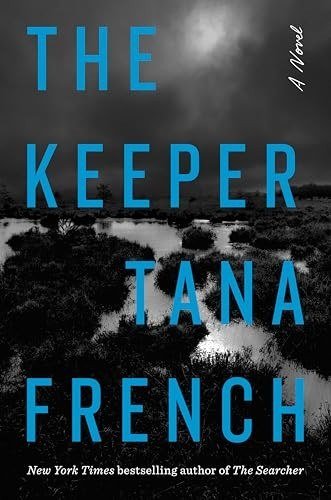
Retired Chicago detective Cal Hooper has finally begun to feel settled in Ardnakelty, the remote Irish village where he once came looking for a quieter life. He is engaged to Lena, remains close to Trey, and has learned enough about the village to understand that belonging there means respecting a complicated network of loyalties, grudges, and things people deliberately leave unsaid. That fragile balance breaks when Rachel Holohan, a young local woman who was preparing to marry Eugene Moynihan, is found dead in the river. What first looks like a personal tragedy begins exposing old disputes, local power, land, money, and a scheme with consequences much larger than Rachel herself.
Cal cannot approach the death as he once would have approached a murder in Chicago because Ardnakelty is no longer simply a place he happens to live. The people involved are his neighbors, friends, and future family, while Lena has far less interest in sacrificing their hard-won peace for the village’s secrets. As suspicion spreads and old resentments sharpen, Cal has to decide how much truth a community can survive, what justice looks like when everyone is connected, and whether becoming part of a place also means accepting responsibility for the things that place would rather keep hidden.
What I Liked
The strongest part of The Keeper is the way French makes Ardnakelty feel like an active force in the story rather than a backdrop for a murder. Every conversation carries history, and Cal’s years in the village allow him to hear meanings he would have missed when he first arrived. I also liked the conflict between Cal and Lena because neither position is treated as obviously correct: Cal feels responsible for understanding what happened, while Lena knows that some truths can drag an entire household into consequences it never chose. The mystery gains weight from those relationships, and the questions about land, local power, belonging, and who gets to control a community’s future give the crime much broader stakes.
The dialogue is another major strength. French rarely has characters explain themselves completely, so much of the pleasure comes from noticing what they avoid saying, what they joke about, and when an apparently casual remark changes the direction of a scene. Trey’s continued development also gives the trilogy emotional continuity, while Cal’s transformation from outsider to someone with real obligations makes the final book feel earned. The ending works because it resolves the immediate story while leaving enough moral complexity for the village to remain believable rather than magically repaired.
What Could Be Better
The deliberate pacing will not work equally well for everyone. The novel spends a significant amount of time establishing conversations, village dynamics, land disputes, and interpersonal tension before the mystery begins moving with anything resembling conventional thriller speed. I generally liked that approach because the social structure is part of the investigation, but there were places where a slightly tighter middle section could have preserved the atmosphere without reducing momentum. Readers expecting a fast police procedural or frequent twists may therefore find the book more demanding than the premise initially suggests.
I would also hesitate to recommend this as an entry point to the series. French provides enough information to understand the immediate crime, but Cal, Lena, and especially Trey carry emotional histories that are far more meaningful if you have watched them develop across The Searcher and The Hunter. The novel’s greatest payoff comes from seeing what Ardnakelty now means to Cal, and that change is difficult to appreciate fully without knowing the man who first arrived there wanting distance from everyone.
Context Behind the Book
Tana French is an Irish-American novelist best known for psychologically rich crime fiction that places as much emphasis on character, memory, identity, and social environment as on solving the central mystery. Her earlier books include the Dublin Murder Squad novels beginning with In the Woods, as well as The Wych Elm, The Searcher, The Hunter, and The Keeper. Her work has received major crime-writing honors including the Edgar, Anthony, Barry, and Macavity Awards, the Los Angeles Times Book Prize for Mystery/Thriller, and the Irish Book Award for Crime Fiction. French grew up in several countries, including Ireland, Italy, the United States, and Malawi, before training as an actor at Trinity College Dublin. Her background in performance is often visible in the attention she gives to spoken language, rhythm, and the difference between what characters say and what they actually mean. The Keeper is the third and concluding novel centered on retired Chicago detective Cal Hooper, bringing the rural-Ireland sequence begun in The Searcher to a close.