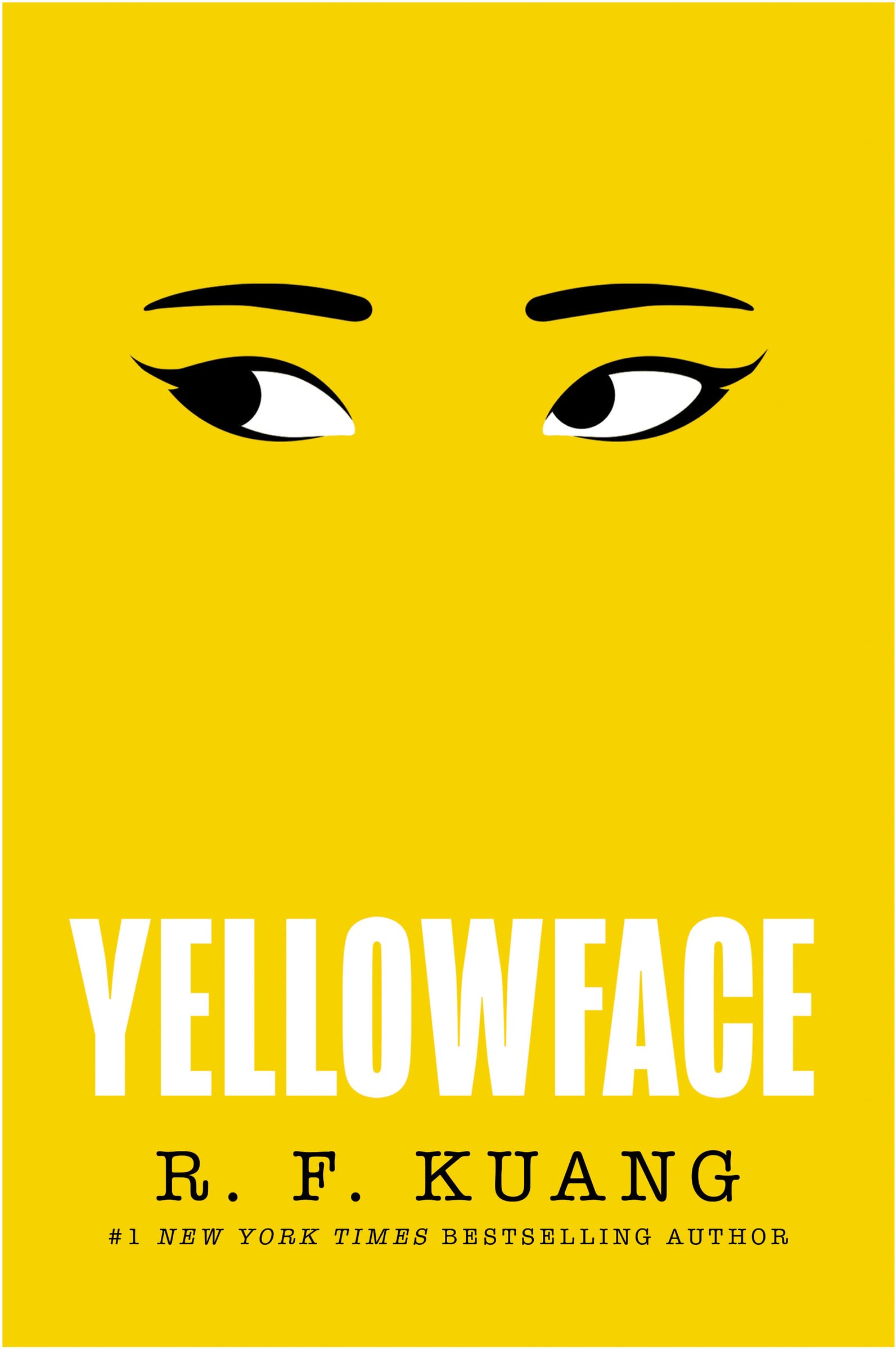
I want to start by saying that this book made me uncomfortable in a way that very few books manage and i think that is exactly what it was trying to do. Not uncomfortable in the way of graphic content or difficult subject matter in the conventional sense. Uncomfortable in the way of being asked to spend 336 pages inside the head of someone who is doing something wrong and understanding completely how they got there.
June Hayward is a writer. She is not a very successful one. She went to Yale and she writes literary fiction and she has published one novel that nobody really noticed and she has been watching her college friend Athena Liu, who is Chinese American and brilliant and warm and successful, become exactly the kind of writer June always wanted to be. The envy June feels toward Athena is specific and complicated because June genuinely likes Athena and the two things coexist in her the way envy and affection often do in real friendships between people at different levels of success.
What happens next is the shape of the book. June becomes Juniper Song. She is not quite claiming to be Asian but she is not correcting anyone who assumes she might be. The book gets praised and she gets celebrated and for a while everything works the way she told herself it might. Then the internet starts asking questions.
The final third accelerates in a way that i found slightly at odds with the more careful psychological portrait of the first two thirds. Things start happening in a more plot-driven way and while this keeps the pages turning it moves June into a more reactive mode when the book is most interesting when she is in a rationalizing mode. This is a small complaint about a book that does most of what it is trying to do extremely well.
Then Athena dies. It is a freak accident in June's apartment and June is the only witness and in the immediate aftermath of shock and grief June finds herself holding Athena's unpublished manuscript. It is about Chinese laborers in the First World War and it is extraordinary and June takes it home. She tells herself she will figure out what to do with it. She does figure out what to do with it. She changes the name on the cover and publishes it as her own.
Kuang writes the social media sections of this novel with the same precision she brings to everything else and this is where i think the book is doing its most interesting work. The pile-ons and the counter pile-ons and the way people perform their moral positions online and the speed at which a conversation that started about a real wrong gets hijacked by everyone who wants to make it about something slightly different. It is uncomfortably accurate to how these things actually go and i kept thinking of specific controversies i had followed online while reading it which i suspect was entirely the point.
The publishing industry satire is the sharpest sustained satirical writing i have read in years. Kuang has clearly absorbed every think piece and every industry conversation and every piece of diversity-speak that has circulated in literary circles over the last decade and she knows exactly how to take it apart. The way editors and publicists talk about Athena's work once June is attached to it and the way the marketing around diversity in fiction works and does not work and who benefits from it and who does not. All of it is observed with the cold accuracy of someone who has been on the receiving end of exactly the system she is describing.
June as a narrator is the central achievement. She explains herself constantly and her explanations are not entirely wrong which is what makes them so uncomfortable to read.