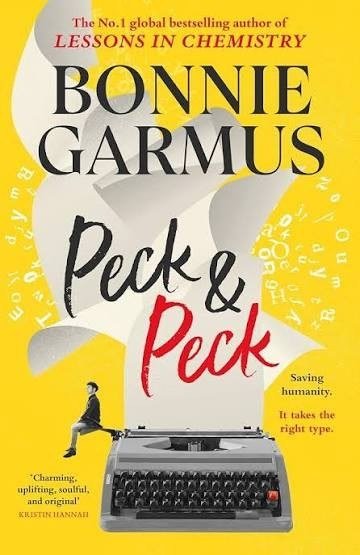
Peck & Peck book cover by Bonnie Garmus
⏱️
Estimated Read Time
7–9 hours

Peck & Peck by β€” Book Review

✍️ Book by Bonnie Garmus
Editorial Rating
β˜…β˜…β˜…β˜…β˜… 4.5
Epiloguely review by Shadab Alam
Reader Rating
β˜†β˜†β˜†β˜†β˜† 0.0
No reader ratings yet
Rate This Book
A written review is optional
Published2006-10-13
SeriesStandalone
GenreLiterary Fiction, Coming-of-Age, Humorous Fiction
LanguageEnglish
PublisherScribner
ISBN-139781668251065

πŸ“Epiloguely Editorial Review

Written and reviewed by .

There is something immediately appealing about a novel that treats poetry as if people might actually fight over it.

In Peck & Peck, Bonnie Garmus takes one of the least commercially sensible passions a young person could choose and builds an entire workplace around people who treat it as a matter of life and death. Batter Gray does not want the career his parents or friends might consider practical. He has an ear for poetry, reads it seriously, and believes words matter enough to organize a life around them.

Unfortunately, belief does not pay student loans.

That tension gives Batter an easy vulnerability from the beginning. He is young, newly out of college, uncertain about the future, and surrounded by people who appear to have chosen more respectable paths. Before Peck & Peck enters his life, his affection for poetry looks less like a gift than a slightly embarrassing refusal to become practical.

Then he gets the job he has wanted.

The joke, naturally, is that dream jobs tend to become ordinary jobs the moment somebody gives you a desk.

Peck & Peck is supposed to represent the highest level of literary seriousness. It is prestigious, secretive, intimidating, and packed with people who have strong opinions about what deserves publication. Batter enters that world at the bottom, handling the work nobody important wants to do while trying not to attract the wrong kind of attention.

That setup is one of the novel's strongest ideas because Garmus understands the contradiction inside creative institutions. A magazine can exist to defend originality while still developing its own bureaucracy, hierarchy, petty rivalries, and ridiculous rules.

Art may be the mission.

Workplace politics still decides who gets invited to lunch.

The staff itself sounds deliberately excessive. There are thirty-nine editors, rival leaders, assistants with their own agendas, and an internal culture where rejecting mediocre poetry is not enough. Bad submissions are literally burned. That exaggeration gives the novel its comic energy, but it also makes a recognizable point about gatekeeping.

People who decide what counts as good art eventually acquire power.

Once that happens, taste stops being entirely innocent.

I like that Batter is not introduced as a literary genius whose greatness everyone else is simply too stupid to recognize. His advantage is attention. He listens. He notices language. He understands poetry instinctively, but he is still capable of making poor decisions, misreading situations, and getting himself into increasingly absurd trouble.

That makes the coming-of-age element more convincing.

Batter is not only trying to prove that poetry matters. He is learning how institutions work, how adults protect status, how loyalty can become dangerous, and how difficult it is to keep believing in an ideal once the people representing it disappoint you.

The Peck brothers appear to embody that contradiction.

A literary journal named after them should suggest unity, but the brothers are rivals rather than partners in any comfortable sense. Their conflict turns the office into a place where aesthetic judgment, ego, and personal history become difficult to separate.

The idea of twins also fits a larger pattern in Batter's life. Advance descriptions reveal that Batter himself was born an identical twin but lost his brother at birth. The novel repeatedly returns to dualities: acceptance and rejection, truth and deception, good judgment and bad judgment, loyalty and self-interest. Google Books

That could have felt overly symbolic, but it makes sense in a novel about editing.

Every submission creates a choice.

Keep it or reject it.

Original or derivative.

Worth saving or worth burning.

The problem, of course, is that human beings rarely divide that cleanly.

The workplace satire seems strongest when Garmus lets that contradiction remain funny. Peck & Peck may claim to worship creativity, but the institution is still full of people competing for authority.

Editors who believe themselves devoted to art are also capable of insecurity, pettiness, vanity, and cruelty.

That is more interesting than simply making the journal corrupt.

Creative organizations are usually messier than that. People can genuinely care about literature and still behave terribly while defending their place within it.

Publishers Weekly sees the journal as an analogy for the ruthless corporate culture of the period, and that comparison makes sense. Batter chooses poetry partly because it seems different from conventional professional life, only to discover that prestige, hierarchy, and ambition follow him there too. PublishersWeekly.com

You cannot necessarily escape corporate behavior by working somewhere full of poets.

That is a good joke because it is also believable.

The early-1980s New York setting helps. The city is rougher than the polished literary image Batter may have imagined, and the contrast between his idealistic attachment to poetry and the daily practical reality of work gives the novel room to be both nostalgic and unsentimental.

There is also a strong thread about finding the kind of work that actually fits a person.

Batter's problem is not that he lacks interests. He knows exactly what he cares about.

The problem is that the world has not provided an obvious way to turn that interest into adulthood.

That makes his situation surprisingly contemporary despite the 1980s setting. Plenty of people still reach their twenties knowing what they love but not knowing whether loving it qualifies as a plan.

Garmus seems interested in that anxiety without treating practical concerns as shallow. Student loans are real. Rent is real. Parents worry for reasons that are not always unreasonable.

The novel's argument is not simply that everyone should follow a passion and ignore money.

It is closer to saying that practicality can also become a form of fear.

That is where Batter's journey becomes more than a quirky publishing story.

He has to decide what kind of compromise still allows him to recognize himself.

The poetry itself matters because it gives the novel a reason to keep asking what originality actually means.

The staff at Peck & Peck treats originality as almost sacred. That sounds admirable until someone has to define it.

Is originality something completely new?

Is it a familiar idea expressed in a voice nobody has heard before?

Can someone learn originality?

Can editors recognize it reliably?

And perhaps most importantly, what happens when the people responsible for rewarding originality become more interested in protecting their own authority?

Those questions give the publishing satire some depth.

The novel also has fun with typography and fonts, thanks largely to Batter's mother, who is a type designer. Kirkus notes that Batter has been raised to recognize typefaces instinctively, and that detail seems very much in keeping with Garmus's style: something strange enough to be funny but specific enough to make a character memorable. Kirkus Reviews

I suspect readers will divide on exactly this sort of material.

For some, the fonts, editorial eccentricities, strange names, absurd office traditions, and exaggerated characters will create the charm.

For others, it may become too cute.

Kirkus describes the novel as charming but occasionally twee, which is probably the most useful warning to give readers who found the quirky parts of Lessons in Chemistry either delightful or irritating. Kirkus Reviews

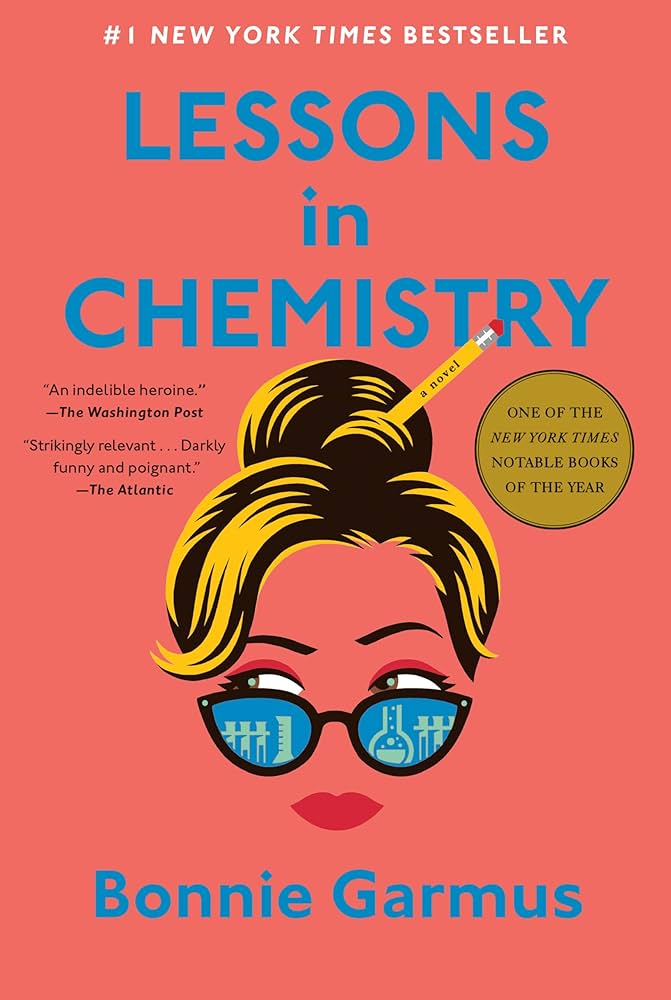
That comparison with Lessons in Chemistry will follow this book everywhere.

It is unavoidable.

Garmus's debut became enormously successful, and Peck & Peck arrives under the pressure of being the second novel after a phenomenon. The easiest mistake would have been to recreate Elizabeth Zott under another name.

Batter Gray seems deliberately different.

He is younger, less certain, and entering a world rather than fighting one from an established position. His struggle is not primarily about proving his professional competence against discrimination. It is about figuring out what competence, integrity, and adulthood mean in the first place.

That makes this feel more like a bildungsroman than a repeat of the earlier book.

Still, the Garmus trademarks appear to remain.

Unusual names.

Eccentric supporting characters.

An intelligent outsider.

A workplace full of absurd rules.

A dog with suspiciously strong narrative importance.

And underneath the comedy, a sincere belief that people's oddest interests may be the things most worth protecting.

The book apparently becomes more complicated as Batter makes increasingly serious mistakes. Advance reviews mention mishaps that extend well beyond awkward office politics, including trouble with the law and accusations surrounding arson. I would rather not spoil those developments, because the escalation seems to be part of the fun. PublishersWeekly.com

What matters more is that Batter does not remain a passive observer.

He starts at Peck & Peck thinking that getting inside the institution will validate his love of poetry.

Instead, being inside forces him to decide what that love actually requires from him.

That distinction is important.

Loving art is easy when the art is beautiful.

It becomes harder when institutions built around art become ugly.

The novel also seems to care about grief more than its comic premise initially suggests. Batter's lost twin exists in the background of his identity, and advance descriptions suggest that questions of absence and belonging gradually become more central.

That gives the story emotional room beyond office satire.

A person can be shaped by someone they never really knew.

That is a strange idea, but not an unbelievable one.

Family stories do this all the time. A missing person, an early death, or an event that happened before someone can remember it may still affect how parents speak, worry, compare, or imagine what might have been.

If Garmus handles that quietly, it could become one of the more affecting parts of the book.

Where I expect some readers to struggle is the pacing.

Both Kirkus and Publishers Weekly note that the story slows in the middle. Publishers Weekly says the book runs somewhat long, while Kirkus describes repeated workplace conflicts that bog down the narrative before the final section gathers momentum. Kirkus Reviews

At 432 pages, that matters.

A quirky workplace can be enjoyable for a long time, but eccentricity needs movement. If every new chapter simply introduces another bizarre rule or another difficult editor, charm can turn into repetition.

The stronger material sounds like the moments when Batter's choices have consequences.

That is where character replaces atmosphere.

I also think the novel's affection for poetry will be important to whether readers connect with it. You do not need to be a poetry reader, but the book clearly wants the act of caring deeply about poems to feel reasonable rather than pretentious.

That is harder than it sounds.

Fiction about writers and publishing can become too impressed with its own literary world. Peck & Peck appears to avoid some of that problem by making the institution ridiculous while preserving genuine respect for the art.

The editors may be absurd.

The poems are not.

That distinction is probably the heart of the book.

People can corrupt the structures surrounding art without making the art itself meaningless.

There is also something appealing about setting this story before the internet transformed publishing. Manuscripts are physical objects. Decisions take place in rooms. Editors control access more visibly. A rejection has weight because there are fewer alternative routes around the gatekeepers.

That makes Peck & Peck's power easier to see.

It also gives the act of burning rejected work a wonderfully ridiculous physicality.

Today, rejection might mean a form email.

Here, apparently, they have an incinerator.

That is the sort of joke Garmus can probably stretch because it serves both the comic world and the novel's larger concern with judgment.

Who decides what survives?

That question applies to poems, careers, reputations, relationships, and even memories.

The title itself suggests doubling, repetition, and rivalry.

Peck and Peck.

Two names that are the same but belong to different people.

That seems appropriate for a novel interested in the idea that two people can look at the same thing and reach completely different conclusions.

Poetry depends on that possibility.

So does criticism.

So does adulthood.

By the end, advance reviews suggest the novel becomes warmer and more emotionally generous than its cutthroat workplace premise might imply. Booklist called it poignant and heartwarming, while Publishers Weekly emphasized its tender-hearted quality beneath the antic comedy. Simon & Schuster

That sounds consistent with Garmus's strengths.

Her humor works best when it is protecting something sincere.

In this case, that something appears to be creative work itself: the strange, impractical human urge to make something original even when there is no guarantee anyone will want it.

That is the part of Peck & Peck I find most appealing.

Batter is not pursuing poetry because it is safe.

He pursues it because it is the thing he hears differently from everyone else.

A career built around that ability may be absurd.

But so is spending a life pretending the ability does not matter.

Book Summary

Batter Gray has always loved poetry, which would be useful if poetry were a sensible career plan. In early-1980s New York, while his friends move into respectable jobs, Batter is folding T-shirts and trying not to think too much about his student loans. Then he lands an entry-level position at Peck & Peck, an elite and deeply dysfunctional poetry quarterly where thirty-nine editors judge submissions according to one uncompromising rule: find originality, reward creativity, and burn the rest.
Batter begins at the bottom of the organization, but the strange world around him quickly becomes impossible to observe from a safe distance. The magazine is divided by rivalries, dominated by the Peck brothers, and populated by editors who treat literature with the seriousness of warfare. What begins as a dream job gradually becomes a story about ambition, integrity, artistic judgment, grief, work, and whether loving something impractical is enough reason to build a life around it.

What I Liked

The publishing setting is the strongest part of the premise for me. Peck & Peck is prestigious enough to feel intimidating but strange enough to become comic, and Batter's position at the bottom of that hierarchy gives him a useful view of how artistic institutions actually operate. I also like that the novel treats poetry as something worth caring about without making the literary world sacred. The editors can be vain, cruel, ridiculous, and competitive while the poems themselves still matter.
Batter also seems like a good choice after Elizabeth Zott because he is not simply another highly competent outsider. He is young and uncertain, and his mistakes appear to be an important part of the story. The recurring material about fonts, his family, the lost twin, and the strange office culture gives the book an identity that feels separate from Lessons in Chemistry even though Garmus's comic style remains recognizable.

What Could Be Better

The main concern is pacing. Advance reviews from both Kirkus and Publishers Weekly suggest that the middle section becomes repetitive and that the 432-page story could have been tighter. The eccentricity may also be too deliberate for some readers. A large cast of strange editors, typography jokes, workplace rituals, and exaggerated personalities can be charming, but if every scene reaches for quirkiness, it risks making the characters feel constructed rather than naturally odd.
I would also be cautious about expecting another Lessons in Chemistry. The setting, protagonist, and emotional concerns are quite different, and readers looking specifically for another Elizabeth Zott-style story may be disappointed even if Peck & Peck succeeds on its own terms.

Context Behind the Book

Bonnie Garmus is an American novelist best known for her debut, Lessons in Chemistry. That novel became a major international bestseller, was translated into more than forty languages, received numerous literary and popular-reading honors, and was adapted into an Apple TV+ limited series. Peck & Peck is Garmus's second novel. Rather than returning to the scientific world of her debut, she moves into early-1980s New York publishing and builds the story around poetry, creativity, workplace hierarchy, and a young man trying to work out what sort of life he actually wants. Simon & Schuster

Sources & References

Reader Reviews

0 published written reviews Β· Reader star ratings remain separate from the editorial rating.

No reader reviews yet Be the first reader to share a thoughtful review of at least 100 words. A quick star rating can still be submitted separately above.

πŸ“ŠReader Rating Breakdown

0.0
β˜…β˜…β˜…β˜…β˜…
No reader ratings yet

No reader ratings yet. Be the first reader to rate this book using the separate quick-rating stars above.

🎭Vibe Check

What's the vibe of this book?
πŸ’¬ Open Reader Comments & Discussion

Use the separate comment-style discussion room for spoilers, endings, characters, theories, questions, and replies. Formal reader reviews stay on this page.