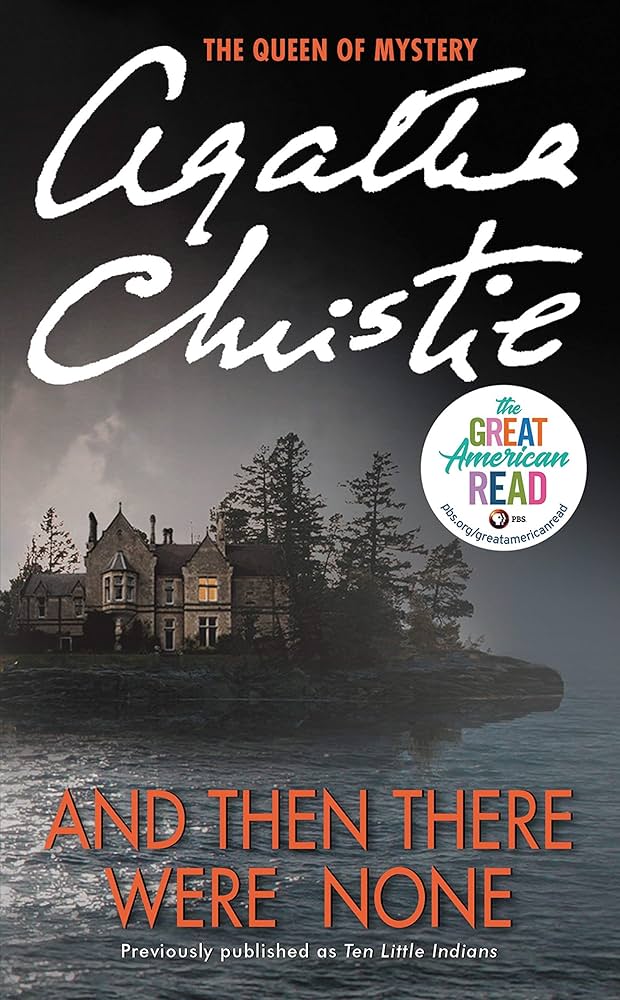
Here, there is no one to trust. Every character is a suspect. Every character is also a potential victim. The reader is alone with ten people who are all hiding something, and the atmosphere that generates is not cozy in the slightest.
What Christie does brilliantly in the opening chapters is establish all ten characters quickly and distinctly enough that you can keep them separate in your mind, while simultaneously making every single one of them plausible as either killer or victim. This is a harder trick than it sounds. She gives each of them a particular texture, a specific way of thinking and responding, a private guilt that is separate from whatever the gramophone recording accuses them of. By the time the deaths begin, you have a genuine stake in several of them, which transforms what could have been a mechanical exercise in elimination into something with real emotional weight.
The nursery rhyme structure is one of the most inspired decisions Christie ever made. It imposes a pattern on the killings, which means both the characters and the reader know in advance what the shape of the horror will be. That foreknowledge makes it worse, not better. Knowing that the deaths will follow a specific sequence, that there is an organizing intelligence behind them, that someone on this island is watching and planning and choosing the moment for each one, creates a sustained dread that never quite releases until the final pages. Christie understood that anticipation is more disturbing than surprise, and she uses the rhyme to keep the reader permanently off-balance.
The ending deserves special mention. Christie had to include an epilogue, a found document that finally explains everything, because without it no solution was possible at all. Some readers find this slightly unsatisfying, a sense that Christie had to reach outside the story's own rules to provide the answer. I disagree. The epilogue is a piece of writing that is genuinely chilling in its calm, its logic, its sense of a mind that is completely at peace with what it has done. It is the one moment where the killer is fully present on the page, and it is the most disturbing part of the book.
The psychological dimension of the book is more interesting and more serious than Christie is usually credited for. These are not innocent people. Every one of the ten has genuinely done something terrible, even if none of them has technically broken the law in a way that could be proven.
Christie said she was pleased with this novel, that she felt she had done something genuinely difficult and done it well. She was right on both counts.
Book Summary
Ten strangers, each with a dark secret buried somewhere in their past, receive invitations to a grand house on a small island off the coast of Devon. Their host, mysteriously signed as U.N. Owen, does not appear to greet them. That evening, after dinner, a gramophone record begins to play in the drawing room, and a disembodied voice reads out a charge of murder against every person in the room. Each of the ten has been responsible for a death that was never legally proven, never punished, never fully accounted for. Before they can process what they have heard, one of them is dead.
Then another. The deaths follow the sequence of a children's nursery rhyme hanging on the wall of every bedroom, counting down from ten to none.
What I Liked
The technical construction is extraordinary, a puzzle that should be impossible and yet works completely. The nursery rhyme structure creates a sustained, specific kind of dread that never lets up. The psychological dimension, the question of guilt and justice and who has the right to punish crimes the law cannot reach, gives the book a moral seriousness unusual for the genre. The epilogue is quietly one of the most chilling pieces of writing Christie ever produced.
What Could Be Better
The epilogue, while necessary and brilliantly written, does require Christie to step slightly outside the story's established frame to deliver the solution, which some readers find slightly unsatisfying as a mystery conclusion. And a handful of the ten characters, particularly those who die early, are sketched thinly enough that their deaths carry less weight than the book might ideally want them to.
Context Behind the Book
Agatha Christie wrote And Then There Were None in 1939, near the peak of her powers, and considered it her most technically accomplished work. She herself adapted it for the stage in 1943, though she changed the ending to give the play a survivor, acknowledging that the novel's conclusion was too complete for theatre. It has been adapted for film, television, radio, video games, and graphic novels multiple times across multiple countries, and its core premise of strangers isolated with a killer among them has become one of the foundational templates of modern thriller fiction.