István moves through europe, through different jobs and different women and different social worlds, never quite belonging to any of them, never quite choosing his next direction so much as being pointed into it by circumstance or by other people who see something in him they want. He ends up on the edges of serious wealth in london, working for a rich family, and that section of the book is where i think szalay is most interesting because he refuses to make the class transition feel like arrival. István does not become a different person when he enters a wealthier world. He stays the same person in different rooms and that is its own kind of sadness.
The thing the booker judges said that i keep thinking about is that szalay leverages absence. We never get a physical description of istván. We never get direct access to his thoughts. We know he cries at one point because someone tells him not to. We know he is balding because he notices another man's hair. Everything is oblique, seen through behaviour rather than stated, and the result is that by the end you feel like you have spent a long time with someone real in a way that more explicitly emotional novels sometimes fail to achieve. The book trusts the gaps to do their work and they do.
I want to say something about the ending, which i will not describe in detail, but which brings a second major tragedy into a life already shaped by one. What szalay does in those final pages is very quiet. There are passages near the end with almost no words at all, just white space on the page, and that choice lands harder than anything he could have written there. It is the kind of ending that makes you close the book slowly and sit with it for a minute before you do anything else.
It is not a book for everyone. If you need warmth or a character you can root for in a straightforward way, this will frustrate you. István is not sympathetic in any conventional sense and the book does not try to make him so. But if you are willing to meet it on its own terms, which means accepting the distance and the flatness and the refusal to explain, you will come out of it having read something that does not feel like anything else. I would give it four and a half out of five, with the half point off for a stretch in the middle that tests your patience a little more than it needs to.
Book Summary
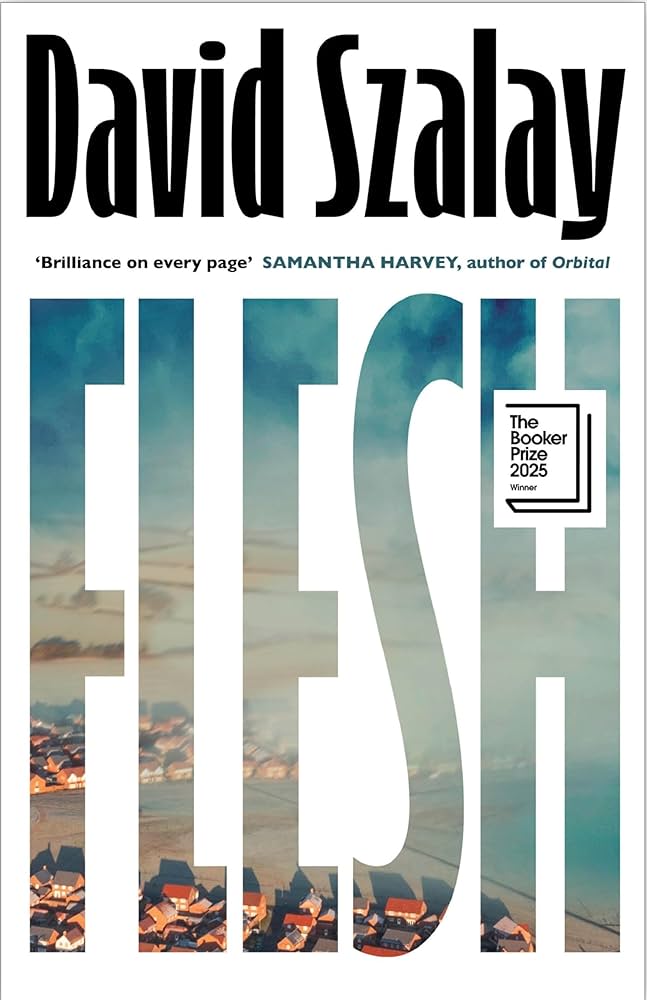
István grows up poor and isolated in Hungary, pulled into a brief relationship with an older woman that ends in tragedy and sends him to prison as a teenager. what follows is a life that keeps moving forward without him quite choosing it, through luck and other people's self-interest, from a housing estate in Budapest to the edges of London's wealthy world. it won the 2025 Booker Prize and it is unlike almost anything else published that year.
What I Liked
The prose is what gets you first. Szalay writes in short, flat, declarative sentences that do not explain themselves and do not ask for your sympathy and somehow, by the end, have accumulated into something that genuinely moves you. It is a difficult trick to pull off and he does it better here than in anything else i have read from him. The booker judges said they had never read anything quite like it and i think that is honest. Most novels about a man's life across decades lean on interiority, on giving you access to what the character thinks and feels.
What Could Be Better
The detachment that makes the book so interesting is also the thing that will lose some readers entirely and i think that is worth being honest about. There are stretches where the flatness of the prose tips from deliberate to just slow, where you are waiting for the book to do something and it keeps not doing it.
Context Behind the Book
David Szalay was born in Montreal in 1974, grew up in London, studied at Oxford, and now lives in Vienna. He has written radio dramas for the BBC and six works of fiction translated into over twenty languages. All That Man Is was shortlisted for the Booker Prize in 2016. Flesh won it in 2025. This makes him the first Hungarian-British writer to take the prize.