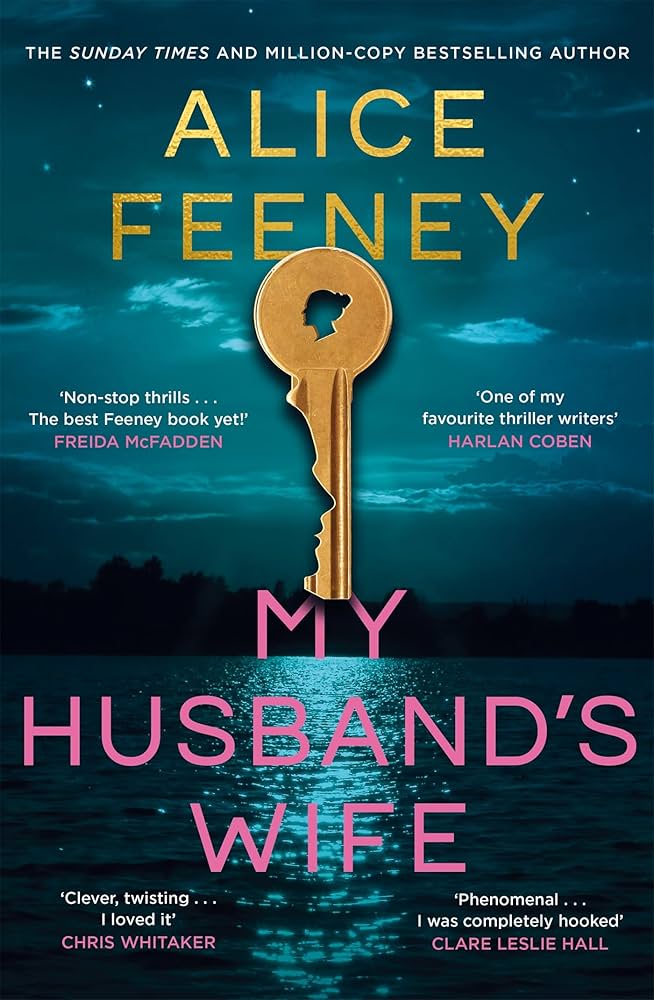
Feeney avoids all of these outcomes by doing something deceptively simple: she alternates between eden's present-day perspective and birdy's perspective from six months earlier, building the two storylines separately and letting the reader feel the gap between them widen before bringing everything together. The dual timeline is not new in psychological thrillers, but feeney uses it here with unusual precision, each strand withholding specific information in ways that are frustrating in exactly the right way, the frustration of sensing that you are close to something rather than the frustration of being kept arbitrarily in the dark.
Feeney is also one of the few thriller writers who makes her protagonists feel like real people rather than genre functions. Eden is prickly, occasionally self-absorbed, deeply talented, and not always likable, which makes her far more interesting to spend time with than a conventionally sympathetic victim. Birdy is the more emotionally available of the two, a woman facing death with a particular combination of stoicism and suppressed terror that is rendered with real sensitivity. The relationship between them, which develops slowly across the alternating chapters and is not what it initially appears to be, is the emotional core of the book, and it holds up far better than the mechanics of the plot alone would sustain.
If there is a weakness, it is that the sheer complexity of the plot requires a few coincidences and a few moments of suspended disbelief that more patient readers will notice. The machinery underneath the story occasionally shows through the surface, particularly in the second act, where certain events seem arranged to serve the plot's needs rather than emerging naturally from the characters' psychology. And feeney's relentlessly propulsive pacing, which is one of her great strengths, occasionally moves past emotional moments that the book would have benefited from inhabiting a little longer.
Spyglass itself deserves a specific mention. Feeney has always been good at atmosphere, at the feeling that a place is doing something to the people inside it, and the old cliffside manor in hope falls is one of her best settings. It has the quality of a house that has outlasted multiple lives and holds the residue of all of them. The devon setting, the sound of the sea, the particular quality of isolation that comes from being somewhere beautiful and slightly too remote, all of it is evoked without melodrama, which makes it more effective rather than less.
The twists, when they come, come fast and they come well. Feeney has a gift for the specific kind of misdirection that makes you feel clever for having nearly figured something out just before the rug is pulled, and that gift is fully deployed here.
Book Summary
Eden Fox is an artist on the morning of her first major exhibition. She goes for a run through Hope Falls, the small English village she and her husband Harrison recently moved to from London, and returns to their home, a cliffside manor called Spyglass, to find that her key no longer fits the lock. When she knocks, another woman answers the door. This woman, who looks eerily similar to Eden, tells her calmly that she is Eden Fox and that the person on the doorstep is a stranger. Harrison, Eden's husband, confirms it. He says he does not know who this woman is. Someone is lying. Someone has taken Eden's name, her house, and her husband.
What I Liked
The opening premise is one of the most instantly gripping in recent psychological thriller fiction, and Feeney has the skill to sustain it rather than letting it collapse under its own weight. The dual timeline between Eden and Birdy is managed with exceptional precision, each strand holding back exactly the right information until exactly the right moment. The Spyglass setting is atmospheric and beautifully realized. And the final twist assembly is genuinely impressive, coherent without being predictable.
What Could Be Better
The plot machinery occasionally shows through the surface in the second act, where certain events feel arranged to serve the story's needs rather than arising naturally from character. The relentless pace, while a strength, sometimes moves past emotional moments that deserved more time. And the level of coincidence required to make the central situation possible, while ultimately explained, asks more of the reader's credulity than the very best thrillers need to.
Context Behind the Book
Alice Feeney was a BBC journalist for fifteen years before becoming a novelist, and that background in storytelling, in knowing what information to withhold and when to release it, is visible in everything she writes. She lives in the Devon countryside, the same setting that provides the setting for My Husband's Wife. Her novel His and Hers was adapted as a number one global Netflix show in 2026. My Husband's Wife is her eighth novel and has been widely described by readers and fellow authors as her best.