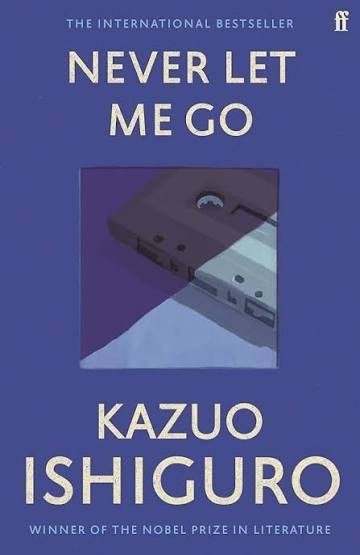
By the time the full reality becomes clear, the frightening part is not simply what will happen to them. It is how completely they have learned to regard it as ordinary.
That bothered me more than a dramatic rebellion probably would have.
Kathy, Ruth, and Tommy also kept the story from becoming nothing more than an idea about mortality. Their relationships are messy in very recognizable ways. Ruth can be controlling and insecure. Tommy carries his own frustrations. Kathy often notices more than she says. They hurt each other over things that seem small, even though their time together is far more limited than they realize.
Knowing that gives those ordinary memories a strange weight.
There were moments when I wanted to shake the characters, though. Why does almost nobody seriously resist? Why isn't there more anger? Why do people who understand what is going to happen still move toward it?
I think that frustration is partly intentional. These characters were raised inside the same system that will eventually consume them. They were never given a normal life from which to imagine an alternative. Still, I occasionally wanted the book to spend more time inside that tension rather than simply allowing the acceptance to stand.
The lack of detailed science-fiction explanation may also divide readers. We do not get an elaborate history of how this society developed or a technical explanation for everything it does. Normally that might bother me more, but here I think too much world-building would have weakened the story. The institution matters mainly because of what it has taught these people to accept.
The question of personhood is handled in a similarly quiet way. Art, memory, love, friendship and private desire all become evidence that these students have inner lives as complicated as anyone else's. The tragedy is that proving their humanity does not necessarily mean the world will treat them as human.
Some of the strongest scenes are almost painfully understated. A conversation that initially seems ordinary can become much sadder once you understand what the characters are really hoping for. Silence often carries as much weight as dialogue.
And that is probably what stayed with me most.
Never Let Me Go could easily have been written as a story about escaping an evil system. Instead, it asks something more uncomfortable: what if people can become accustomed even to something completely unacceptable?
I still wanted more resistance, and a few parts left me wishing the novel would push harder against the limits it creates. But the emotional restraint ultimately worked for me far more often than it frustrated me.
Book Summary
Kathy looks back on her years at an English boarding school, remembering friendships, jealousy, small arguments, and moments that seemed ordinary at the time. Slowly, those memories reveal why she and the other students were really raised there.
What makes Never Let Me Go unsettling is how calmly Kathy tells the story. She rarely reacts to the truth in the way you expect her to, because this strange and cruel system has always been normal to her. Through her memories, the novel becomes less about a shocking science-fiction idea and more about mortality, love, personhood, art, and what happens when people are taught to accept limits they never chose.
What I Liked
The relationship between Kathy, Ruth, and Tommy was what kept me most involved. Their friendship is affectionate, competitive, frustrating, and sometimes quietly cruel in a way that feels believable. Even after the larger truth about their lives becomes clear, the book never forgets those smaller emotions.
I also loved the restraint in Kathy's narration. She can describe something deeply disturbing with almost no outrage, and that makes it more uncomfortable rather than less. The school memories work the same way. At first, they can feel almost nostalgic, but their meaning changes as we understand what Hailsham was really preparing the students for.
The delayed revelation worked particularly well for me because the novel never seems desperate to shock the reader. It lets the unease build slowly.
What Could Be Better
The characters' acceptance of their situation was probably the hardest part for me. I understand why that passivity belongs in the novel, but there were moments when I wanted someone to become angrier, ask harder questions, or simply refuse what had been planned for them.
Readers looking for detailed explanations of how this society works may feel the same frustration. The book is much more interested in how people live inside the system than in explaining the science or politics behind it.
That choice fits the story, but I still think a little more exploration of why resistance feels so impossible would have made some of the later emotional moments stronger.
Context Behind the Book
Kazuo Ishiguro is known for narrators who carefully edit their pasts while exploring dignity, regret, memory, and the stories people need to continue.