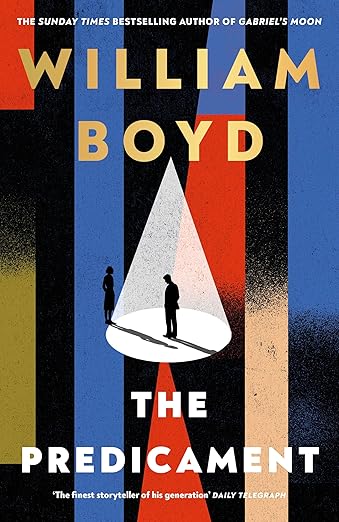
I came to this having read gabriel's moon about six months ago and liked it a lot without quite loving it. It was smart and well paced and gabriel dax was an interesting character but i felt like boyd was still finding his footing with the series and some of the plotting felt a little careful, like he was being precise rather than free. The predicament is looser and more confident and the difference shows on every page.
The setup is that gabriel dax, travel writer and reluctant mi6 operative, has been pulled back into the life of secrets he tried to leave at the end of the first book. The reason he came back is faith green, his handler, and boyd is honest about what that reason actually is in a way that most spy novels would soften into something more professional. Gabriel is in love with her or something close enough to love that the distinction does not matter much and that emotional reality shapes everything he does in this book including the decisions that nearly get him killed.
He is sent to guatemala in 1963 to cover a presidential election that is less stable than it looks from the outside. What boyd does with guatemala is the thing i want to spend the most time on because it is genuinely excellent. The country he describes feels real and specific and politically complicated in a way that goes beyond background colour. You understand why things are the way they are and who benefits from them being that way and the cia and mafia involvement in what happens there is presented as something banal and methodical rather than dramatic which makes it feel more rather than less sinister. There is a scene in a hotel bar that is one of the best things boyd has written in years. Nothing much happens in it but the atmosphere is so precisely observed that i read it twice.
Gabriel's attempts to get out of guatemala and the route that takes him to west berlin make up the middle section of the book and this is where boyd shifts gears. West berlin in late 1963 is familiar territory for anyone who reads spy fiction and boyd knows that. He does not try to make it feel new. Instead he leans into the particular atmosphere of the city and trusts that the familiarity is part of what he is using rather than a problem to solve. What gabriel stumbles onto there is the plot element i am not going to describe in detail because it is the structural surprise of the book and it lands better if you do not know it is coming.
I will say that the way boyd handles the kennedy material is careful and considered and not exploitative which was my main concern going in. He does not pretend to have new information or a revisionist theory. He is using a historical event as the pressure that forces gabriel to make a choice about what kind of person he actually is and that is the right way to use history in a novel. It is a tool for revealing character not a subject in itself.
Faith green deserves a paragraph of her own. She is one of the most interesting women in any of boyd's recent novels and i mean that specifically. She is not a romantic object even though gabriel thinks of her that way sometimes. She has her own agenda and her own loyalties and her own calculations about what gabriel is worth to her in various different ways and boyd never lets you quite get to the bottom of her which is the right quality for a spy handler in a cold war novel. I want to know more about her and i suspect the third book will give me that.