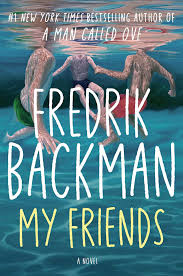
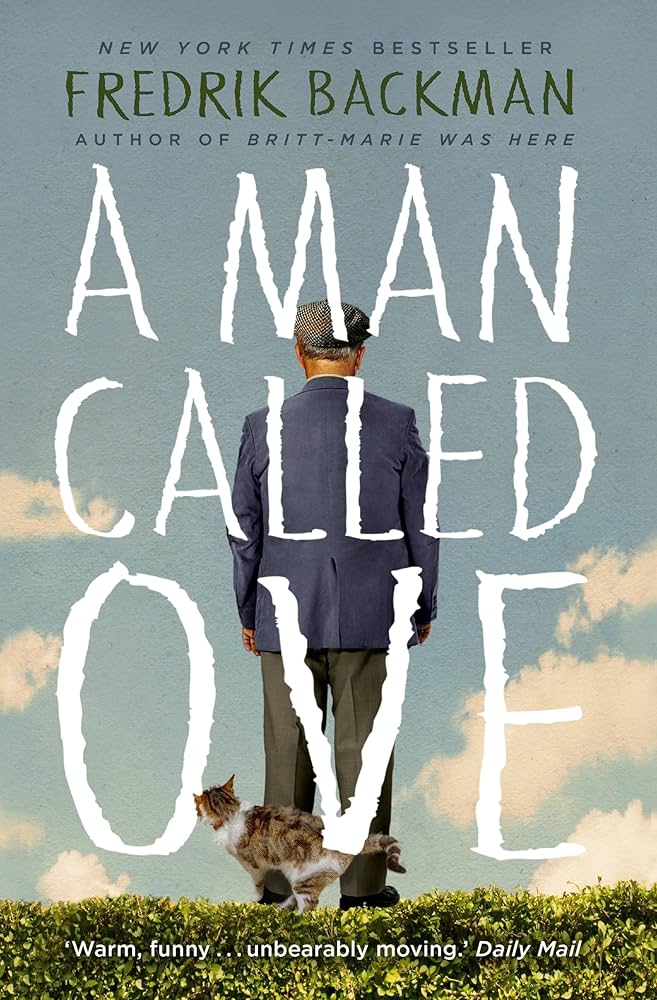
I read a man called ove on a plane about eight years ago and spent the last forty pages crying quietly while pretending to be asleep because i was embarrassed about what was happening to my face. I have read most of backman's books since then and none of them quite got me the way that one did until my friends which did something similar to me in the last hundred pages except this time i was at home and did not have to pretend anything.
The book has two timelines running alongside each other. In the present louisa is a young woman and an aspiring artist who becomes almost obsessed with a painting she sees at a gallery, one of those famous paintings that people study in school, and in the corner of it almost invisible unless you are really looking there are three small figures sitting at the end of a pier. The painting is fictional but it feels completely real. Louisa becomes determined to find out who those figures were and the novel follows her trying to do that.
The other timeline is the past and it is the better of the two. Four teenagers in a small swedish town in roughly the late nineties or early two thousands. Leo, who is the centre of the story, and three others who find each other the way people sometimes do when they are young and on the outside of things and they recognise something in each other that they have not seen anywhere else. There is music involved and art and the specific intensity of teenage friendship which is different from adult friendship because when you are that age the people around you are not a comfort, they are the whole world, and losing them would not be a disappointment but a catastrophe.
Backman writes teenagers really well and i want to say that specifically because a lot of literary fiction about young people makes them either too wise or too stupid and he does neither. Leo and his friends are smart and funny and clueless and brave and cowardly depending on the day and the situation and they talk to each other the way people who have known each other for years actually talk which means half the meaning is in what does not get said. There is a scene where leo is trying to explain something to one of his friends and cannot find the words and the friend understands anyway and i read it twice because i thought it was one of the better pieces of writing about the gap between what we feel and what we can communicate that i had read in a long time.
The dual timeline structure is not always easy to make work but backman uses it well here. You start the book knowing that something happened to this group of friends, something significant enough that one of them made it into a famous painting, and the whole past section is building toward what that thing was. The tension of knowing you are heading somewhere specific without knowing exactly where keeps you reading through the sections that might otherwise feel slow. There are some of those. Backman is not an efficient writer and my friends has passages where he takes more time than the story strictly requires. I did not mind this as much as i sometimes do because the characters are good enough that spending extra time with them feels like a reward rather than a delay.
Louisa in the present timeline is doing something slightly different from the teenage characters. She is trying to understand something outside herself rather than trying to understand herself and that orientation gives her a different quality than leo and his friends.