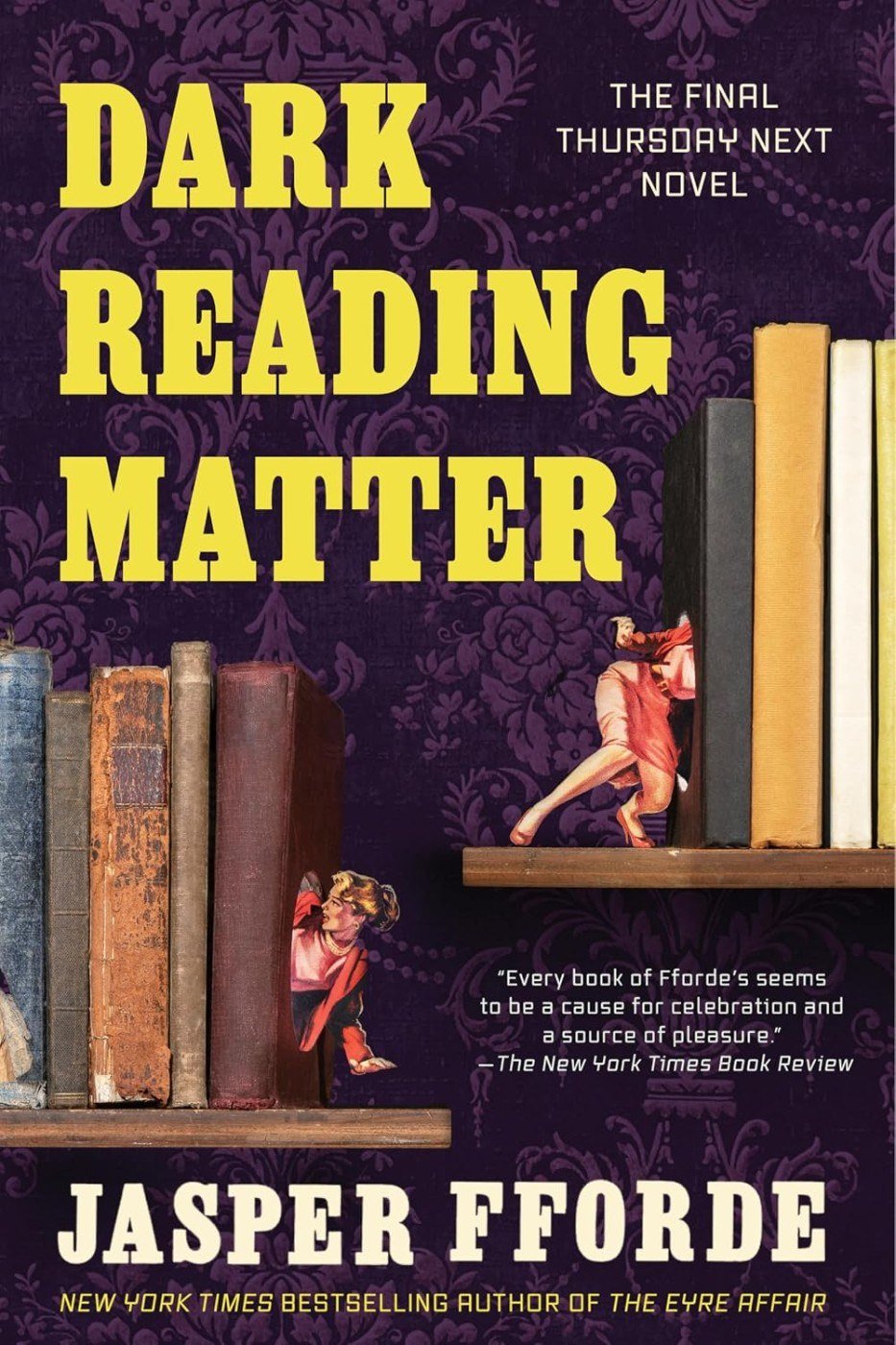
Dark Reading Matter is exactly the kind of finale Jasper Fforde was likely to write: messy, self-aware, funny, ridiculous, and constantly playing with the fact that it is a novel. Thursday Next knows she is entering her eighth and final adventure, and Fforde uses that awareness as part of the plot rather than simply as a farewell joke. Characters worry about narrative devices, continuity can become suspicious, and even readers are occasionally pulled into the machinery of the story. For longtime fans, that creates the feeling that the series is not merely ending but actively examining the rules that allowed it to exist in the first place.
The central threat is deliberately absurd. Dark Reading Matter is imagined as a kind of underworld for discarded books, deleted passages, and unrealized literary ideas, while outside forces want to exploit it for control over fiction itself. Fforde connects that idea to concerns about corporate power, artificial intelligence, censorship, and stories being engineered to deliver the “correct” message. The satire works best when those ideas remain inside jokes, bizarre situations, and Thursday’s practical attempts to stop everything collapsing. When the commentary becomes too visible, however, the novel can feel like it is explaining the joke after already making it.
There is a lot happening at once. Martians are loose, a portal to hell has appeared at a Shakespeare theme park, children’s literature has been infiltrated by extremists, Thursday’s daughter Tuesday is experimenting with reality, and BookWorld is facing a crisis of imagination. That abundance is part of the appeal, but it is also the book’s main weakness. Kirkus enjoyed the combination of plot devices, literary references, dad jokes, and existential silliness, while Publishers Weekly found the same mixture exhausting and overly self-referential. I can understand both reactions because the novel is entertaining precisely when it is close to becoming too much.
Thursday remains the reason the chaos works. After seven previous novels, she no longer needs to prove that she can survive impossible literary situations, so the emotional question becomes whether she can actually reach an ending that feels like hers. Landen, Tuesday, old allies, returning enemies, and even the Reader become part of that final movement. The novel is therefore much more rewarding if you already know the series, because many jokes and emotional callbacks depend on relationships built across earlier books.
I would not recommend starting the Thursday Next series here. The main plot can be understood, but the pleasure of seeing old ideas, characters, and running jokes return would be largely lost. The book is written as a finale rather than a fresh entry point, and its constant manipulation of series history assumes a reader who already understands why Thursday, BookWorld, and Fforde’s fictional rules matter. That also explains why some of the excess feels easier to forgive: this is not trying to introduce a world neatly but to throw almost everything left in that world onto the page before the curtain closes.
What stayed with me most was the affection underneath all the nonsense. Fforde jokes about bad books, publishers, genres, readers, artificial intelligence, and the absurd seriousness of literary culture, but the satire comes from someone who clearly loves reading and the strange relationship people form with fictional worlds. Rating: 4.2/5. It is uneven and sometimes overstuffed, but as a farewell to Thursday Next it has enough imagination, warmth, and ridiculous literary invention to make the chaos feel appropriate.
What I Liked
The strongest part is the way Fforde turns the ending of the series into part of the story itself. Thursday’s awareness that she is inside her final adventure creates jokes but also gives the book an unexpected sense of mortality. I also liked the Dark Reading Matter concept and the satire around AI, censorship, corporate control, and the commercialization of fiction. Longtime readers will probably get much more from the callbacks and returning characters than newcomers.
What Could Be Better
The novel can become overloaded with meta-jokes, fake endings, continuity tricks, font changes, literary references, and simultaneous subplots. Some of that experimentation is funny, but too much of it occasionally makes the story harder to follow than it needs to be. The satire also loses some sharpness when the novel explains its themes too directly instead of trusting the absurd situations to make the point.
Context Behind the Book
Jasper Fforde is a British novelist best known for the Thursday Next series, which began with The Eyre Affair in 2001. His other books include the Nursery Crime novels, Shades of Grey, Red Side Story, The Constant Rabbit, Early Riser, and The Last Dragonslayer series. Before becoming a novelist, he spent roughly two decades working in the film industry. His fiction is known for wordplay, alternate realities, literary parody, genre mixing, and stories that treat books themselves as physical worlds with rules, bureaucracy, and consequences.