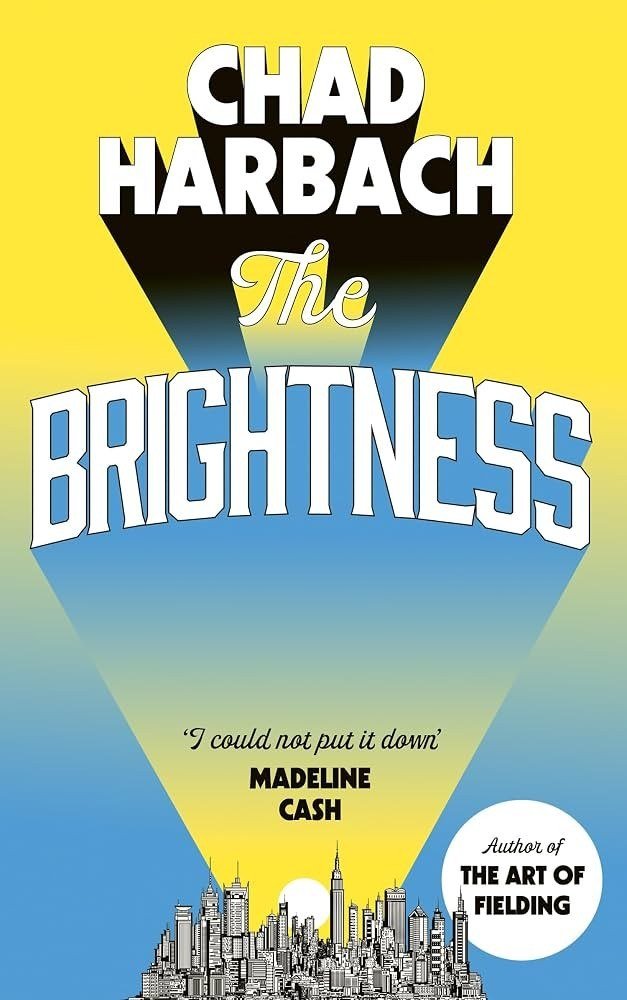
The Brightness is a big novel, but its best moments are surprisingly intimate. Chad Harbach returns to Westish College fifteen years after The Art of Fielding, yet he does not try to recreate the baseball-centered energy of his debut. Instead, the focus shifts toward Pella and Irma, two women at different stages of adulthood who are both trying to understand what they want from relationships, work, friendship, and themselves. The familiar setting gives returning readers a sense of continuity, but the novel is much more interested in how people change after the version of life they once imagined stops fitting.
Pella is especially compelling because her life looks more settled than it actually feels. She is engaged to Mike, helping Owen with his destination wedding, and surrounded by people who assume she is moving toward a recognizable adult future. Internally, however, she is far less certain, and Harbach lets that uncertainty remain messy rather than turning it into one clear problem she needs to solve. Her friendship with Irma becomes one of the book’s emotional anchors because both women are intelligent and observant, yet neither is especially good at understanding herself in real time.
Irma’s campus storyline gives the novel its most volatile material. A politically charged prank involving two football players becomes a scandal that spreads well beyond Westish, pulling in questions about sexual assault, feminism, victimhood, media attention, and the difference between intention and consequence. Harbach is strongest when he resists turning those questions into simple positions and instead shows how quickly people begin speaking past one another. The controversy changes friendships and reputations, but it also exposes how difficult it is to separate genuine moral concern from ego, performance, and the desire to be seen as correct.
The novel also spends a great deal of time on art, literary ambition, jealousy, and the strange emotional life of creative success. Owen, now a bestselling novelist, carries some of that material, and the metafictional references to The Art of Fielding are clever without completely taking over the story. Harbach seems interested in the gap between making something successful and becoming the kind of person who knows what to do with that success. That concern fits naturally beside Pella and Irma’s stories because all of them are trying to work out whether achievement actually clarifies a life or simply creates a new set of problems.
My main reservation is that the novel’s scale occasionally works against it. At more than six hundred pages, there are subplots and social observations that could have been tightened, and some critics have noted that the book loses a little momentum near the end. The campus politics material is also ambitious enough that certain characters or situations can feel arranged to carry an argument rather than simply existing on their own. Still, the strong dialogue and character work usually pull the book back from becoming too schematic.
What stayed with me most was Harbach’s interest in contradiction. Pella can love Mike and still feel trapped by the future they are building. Irma can be intelligent and politically serious while still making choices that hurt people. Owen can be successful and insecure at the same time. Rating: 4.5/5. The Brightness is long and occasionally overextended, but its friendships, messy ambitions, campus tensions, and close observation of people trying to become adults make it an absorbing return to Westish.
What I Liked
The character relationships are the strongest part of the novel, especially Pella and Irma’s friendship. Harbach allows affection, competition, admiration, jealousy, and disappointment to exist together without forcing those feelings into a simple conflict. I also liked the way art and ambition sit beside the campus storyline rather than feeling like a separate theme. The book is at its best when people say something intelligent while still misunderstanding themselves completely.
What Could Be Better
The length occasionally makes the novel feel more expansive than necessary, and a few subplots could have been trimmed without losing the larger emotional picture. The campus controversy is also so carefully structured that some scenes feel designed around an argument rather than around natural character behavior. The final stretch slows slightly compared with the energetic middle, even though the character resolutions remain satisfying.
Context Behind the Book
Chad Harbach is an American novelist and founding editor of the literary magazine n+1. His debut novel, The Art of Fielding, was published in 2011 and became a major bestseller and critical success. He also edited the essay collection MFA vs NYC: The Two Cultures of American Fiction. The Brightness is his second novel, arriving fifteen years after his debut and returning to the fictional Westish College while shifting the focus toward Pella, Irma, friendship, art, and contemporary campus life.